
Do springtails jump?
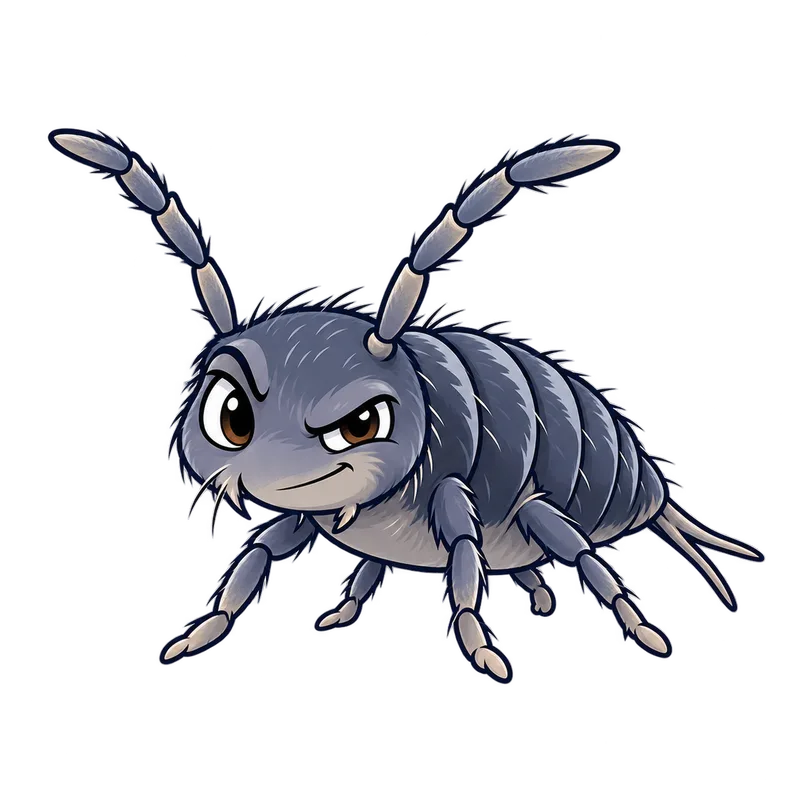
Yes, springtails do jump, using an instantaneous leaping reflex that pops them several inches into the air. These tiny, harmless micro-arthropods grow to little more than 1/8 inch long and use their sudden escape behavior to confuse predators and avoid approaching shadows when disturbed.
What is actually going on
You are wiping down the baseboards in a damp basement corner on a humid Tuesday morning when you notice what looks like a light dusting of coarse black pepper scattered along the floor. You reach down with a sponge, and suddenly, the pepper comes alive. Dozens of tiny dots vanish in an instant, popping several inches into the air as if flicked by invisible springs. It is enough to make you pull your hand back and wonder what on earth you just disturbed.
Yes, springtails jump. In fact, that sudden, jerky leaping escape behavior is the single most reliable way to tell what they are when you find them indoors. These primitive micro-arthropods grow to little more than 1/8 inch long, looking to the naked eye like moving dust specks. Outdoors, they live in damp soil, leaf litter, and organic mulch by the tens of thousands per cubic foot. They do not bite humans, they do not feed on blood, and they will not chew up your drywall or wooden framing. Instead, their diet consists strictly of algae, bacteria, fungi, and mold spores.
So why are they suddenly bouncing around your living space? Springtails are classified as occasional invaders, meaning they live outside by preference but wander indoors when the weather turns on them. Heavy spring rains, melting snow, or severe summer heat will saturate or dry out their native soil habitats, forcing them to migrate in search of moisture. They slip through tiny foundation cracks, gaps around basement windows, and utility line penetrations, seeking out the damp, mold-prone micro-climates inside your home.
You might wonder why a creature so tiny bothers to jump at all, especially since they cannot cover much distance in a single bound. For a soft-bodied bug the size of a pinhead, that instantaneous leap is an essential defensive reflex designed to confuse predators and escape sudden air currents or approaching shadows. When you get close to a cluster of them, that reflex triggers all at once, creating the signature popcorn effect that catches you off guard.
Springtails are constantly active outdoors, recycling organic debris in the topsoil. When weather extremes happen, their subterranean world fills with water or dries to a crisp, leaving them with no choice but to move. Foundations have microscopic gaps, and a home offers a dependable micro-climate if there is enough moisture inside to keep them from drying out. They are not looking to colonize your living room permanently, but rather surviving a temporary displacement.
The real story behind an indoor appearance is almost always an issue of moisture balance. If a basement wall weeps a tiny amount of condensation or a crawlspace lacks proper airflow, those microscopic conditions mimic the forest floor. Springtails find that pocket of dampness, settle in where mold is growing, and multiply or gather until someone walks past and triggers their escape reflex.
How to tell for sure
Houses tend to harbor a few different kinds of tiny crawling or hopping creatures, so you want to confirm what you are looking at before you decide on a fix. Springtails are microscopic, measuring less than 1/8 inch long, and they usually show up in grayish white, brown, or dark clusters around moisture sources like basement drains, laundry rooms, and window sills. When you get close to them, they jump.
Several other small pests share similar damp indoor habitats, but their movement gives them away. Booklice are soft-bodied, translucent bugs that also love damp, moldy spaces and measure up to 1/12 inch long. However, booklice crawl smoothly and never jump. If the bugs stay firmly on the surface and run instead of popping into the air, you are dealing with booklice rather than springtails.
Silverfish grow larger, usually between 7 mm and 12 mm long, and have a distinctive teardrop shape covered in metallic silvery scales with three tail-like filaments at the rear. They move with a rapid, wiggling, fish-like run and do not jump. Camel crickets are much larger, measuring from 1/2 inch to 1 1/2 inches long. They are brown, wingless, and humpbacked with oversized hind legs built for heavy leaping. While they jump, their size makes them impossible to confuse with tiny springtails.
Fleas jump, but they are blood-sucking parasites that target mammals and leave itchy bites. Springtails lack the mouthparts to bite humans or pets, so finding a jumping bug that leaves you alone points straight to springtails.
What usually comes next
When you have confirmed that you are dealing with springtails, your most effective practical decision is to tackle the indoor humidity rather than chasing the bugs with a spray bottle. Insecticides offer only a temporary fix because they do not stop new waves of insects from migrating through your foundation walls. Instead, focus on drying out the environment.
Springtails possess a thin cuticle that depends on high relative humidity. If you drop the relative humidity in your basement or crawlspace below 50% using a dedicated dehumidifier or air conditioning, you pull the plug on their survival. That dry air stops mold growth, which starves them of their food source, and induces fatal desiccation across the population. Think of a dehumidifier as an environmental switch that naturally halts an invasion.
Alongside lowering the humidity, you can vacuum up active clusters right away using a machine equipped with a HEPA filter or a disposable bag. Seal that vacuum bag inside a plastic trash bag immediately and take it out to your exterior garbage bin so the captured bugs cannot wander back inside. Once the air is dry and the immediate clusters are cleared, springtails usually stop showing up for good.
When to get help
Springtails are harmless pests that do not transmit disease, damage wooden structures, or pose a medical threat, so you rarely need emergency intervention for them. However, certain situations call for backup.
Call a professional pest management company if you experience a severe, relentless infestation where thousands of springtails keep pouring into living areas for more than three weeks despite a running dehumidifier and sealed gaps. That kind of persistence usually signals a hidden plumbing leak, a chronic sub slab water accumulation, or structural drainage failures that require professional waterproofing or trade remediation.
If moisture infiltration stems from major foundation flaws or unventilated dirt crawlspaces, a licensed contractor can install proper drainage barriers and perimeter treatments that you cannot manage on your own. Meanwhile, if anyone in your household suffers from severe asthma or respiratory allergies, accumulated dead insect bodies in wall voids can sometimes aggravate their symptoms, making professional extraction a sensible choice to clear out the residue.