
Vine weevil larvae vs other white grubs in UK pots: what differs?
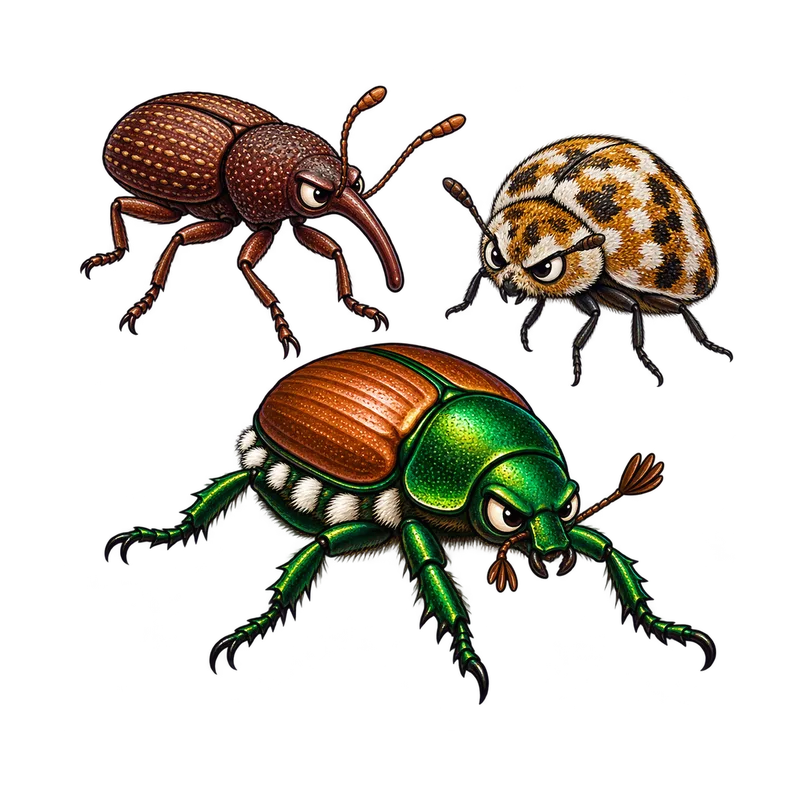
Vine weevil larvae are completely legless, grow up to three-eighths of an inch long, and live inside potted plants. Other white grubs have six distinct legs near their heads and live in open lawn turf. Whether you find them in pots or turf depends on where the soil came from.
What is actually going on
Picture stepping out into the greenhouse on a cool October evening. You give your favorite potted fuchsia a gentle tug, and instead of staying put, the entire plant lifts right out of the compost with zero resistance. You shake out the root ball, and out tumble a dozen plump, ivory-white grubs curled into tight little commas. It is an unpleasant surprise, and it immediately makes you wonder what is eating your container plants and whether the same pests are living in the lawn outside.
The short answer is that vine weevil larvae are completely legless, grow to about three-eighths of an inch long, and live almost exclusively inside potted plants where they chew through roots during autumn and winter. Other white grubs, such as chafers, belong to the scarab beetle family and have six distinct legs near their heads. More importantly, those scarab grubs live in open lawn turf and rarely show up in container pots unless you have shoveled raw garden soil into your potting compost.
People often mix them up because both pests present as whitish, C-shaped grubs nestled in the soil. But their habits and body structures are entirely different. Vine weevil larvae are the bane of container gardening across the United Kingdom. Because adult vine weevils are flightless and reproduce without mating, every single female is an independent egg-laying machine. They crawl up onto pot rims during spring and summer, drop hundreds of eggs into the compost, and leave the hatching larvae to quietly dismantle your plant from the ground up.
How to tell for sure
If you want to know which pest you are dealing with, you need to un-pot the suspect container plant. Think of it like turning a baked cake out onto a plate, tipping the root ball gently so you can inspect the outer edge of the potting media without destroying what is left of the roots.
Look closely at any C-shaped grub you find. A vine weevil larva is smooth, plump, and usually completely legless behind its light brown head capsule. If you squint at it, it looks a bit like a tiny, pale comma tucked among the roots. If you see six small, jointed legs right behind the head, you are looking at a scarab grub or some other beetle larva rather than a vine weevil.
Size is another reliable clue. Vine weevil larvae usually max out at about ten millimeters, which is roughly three-eighths of an inch. Scarab grubs tend to be much larger, often ranging from half an inch to an inch and a half long. You should also check the foliage on thick-leaved plants nearby, such as rhododendrons or containerized strawberries. Adult vine weevils leave distinct, smooth, semi-circular notches along leaf edges, looking as though someone used a hole-puncher on the foliage. Finding those leaf notches during the summer is a reliable early warning sign that root-eating larvae are developing in the pot below.
What usually comes next
Once you confirm you have vine weevil larvae rather than turf chafers, you have to decide how to handle the infestation before it kills your container collection. Chemical options for home gardeners are limited, so most people rely on a mix of physical barriers, nocturnal hand-picking, and biological controls.
If you spot the dull black, yellow-speckled adult beetles crawling up pot rims at night by torchlight, pick them off by hand and drop them into soapy water. For the subterranean larvae hidden in the root ball, biological management usually offers the most practical path forward. This involves drenching the potting media with microscopic parasitic roundworms called entomopathogenic nematodes, specifically species that thrive in cooler UK soil temperatures.
Timing matters a great deal here. Applying these beneficial nematodes in August or early September catches the young larvae when they are small and vulnerable. You must pre-water the compost thoroughly and apply the drench late in the day or under overcast skies because ultraviolet light and dry media will kill the nematodes before they can hunt down the grubs. Waiting until late autumn or winter is usually a waste of effort because cold media renders the nematodes inactive and the surviving grubs are already too tough.
When to get help
Most home garden infestations can be managed with good hygiene, physical removal, and timely nematode applications, but certain situations call for a different approach. If you manage a commercial plant nursery in the United Kingdom, you face strict biosecurity obligations to ensure you never ship infested stock to customers, which may require consulting a professional applicator regarding approved growing media treatments.
Never alter or exceed the instructions on retail garden pesticide labels, and leave complex or large-scale chemical applications to licensed professionals who understand local regulatory governance. If you happen to dig up a suspect insect that does not look like a standard garden pest and you suspect a regulated quarantine wood-boring beetle, report it immediately to the relevant plant health authority, such as the Plant Health and Seeds Inspectorate in England and Wales, SASA in Scotland, or DAERA in Northern Ireland. Finally, remember to protect native wildlife such as hedgehogs and amphibians that share your garden, as well as protected native insects, ensuring your pest control efforts target only the pests in your pots.