
Chipping sparrow vs house sparrow: what is different?
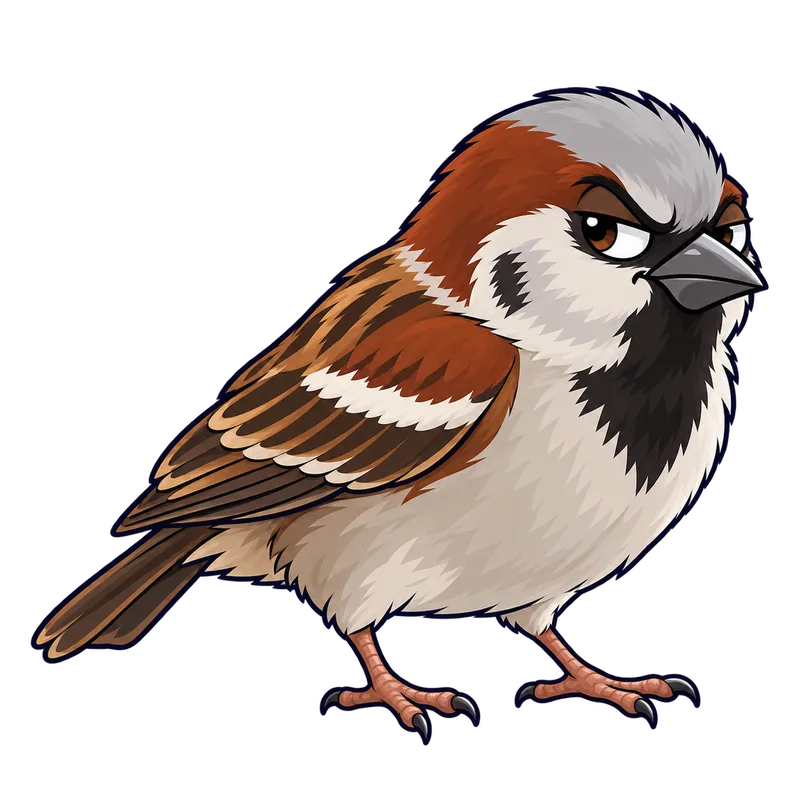
The invasive house sparrow is a robust, non-native bird that builds messy nests inside vents and building voids, while the native chipping sparrow is a protected songbird that builds neat cup nests in trees and shrubs. Your management options depend entirely on which bird you have, because federal and state wildlife laws protect native species.
What is actually going on
You walk out to the back deck on a crisp Saturday morning with your coffee, look up at the porch light, and notice dry grass and stray bits of tissue paper poking out from behind the fixture. Something has moved in rent-free, and you are trying to figure out which bird made itself at home. People often lump every small, streaked brown bird in the yard into one category, but telling the difference between a chipping sparrow and a house sparrow matters a great deal for your property and for the law.
The short answer is that the house sparrow is a robust, introduced pest bird from the Old World that loves to jam its messy nests into your vents and soffits, while the chipping sparrow is a native North American songbird that prefers to build a neat little cup nest out in the trees and shrubs. Because house sparrows are non-native, they do not enjoy the legal protections that native birds get under federal and state wildlife laws. That means your management options change completely depending on which bird is actually visiting your yard.
A common objection here is that a sparrow is just a sparrow, and no one is going to notice a few birds nesting under a gable vent. But treating a native, protected songbird the same way you might manage an invasive house sparrow can land you in legal trouble if you disturb an active nest. The distinction is not just academic ornithology. It dictates whether you can seal up a cavity or whether you have to wait out a family of native songbirds until the chicks fledge and leave on their own.
How to tell for sure
Figuring out which bird you are dealing with usually comes down to location, nesting habits, and physical details that you can spot with a decent pair of binoculars. Field signs like three-toed tracks in the mud or small tubular droppings with white uric acid caps only tell you that a bird has been around, not which species it is. To get past that guessing game, you need to look closer at what the bird looks like and where it is hanging out.
House sparrows act like uninvited tenants that want to live inside your home, stuffing bulky piles of straw, feathers, and string into building voids, light fixtures, and exhaust vents. Chipping sparrows usually build neat, open-cup nests out in the foliage of your landscaping trees or evergreen shrubs. If you can get a clear look at the bird itself, look for key plumage clues. A breeding chipping sparrow usually has a distinct rufous cap on top of its head, while a male house sparrow wears a grey crown and a prominent black bib under its beak.
Because many small brown birds look remarkably similar when darting past at high speed, field identification usually reaches its limit without optical magnification. If the lighting is poor or the bird is a juvenile in dull molting plumage, you cannot always trust a quick glance from ten paces away.
What usually comes next
Once you are certain you have invasive house sparrows instead of native songbirds that the law protects, your best move is closing off their entry points before they turn your roofline into an apartment complex. Good management relies on stopping them from getting in and cleaning up your yard, rather than rushing out to buy harsh chemicals or traps. Take a walk around the outside of your house and check for gaps in the soffits, holes in the siding, or exhaust vents that lack proper screening.
House sparrows want to live inside your home, so keeping them out comes down to blocking every little opening. Any gap wider than one-quarter of an inch gives a small bird all the room it needs to squeeze inside, meaning you have to seal those spots with tough materials like heavy-gauge wire mesh or metal flashing. You should also sweep up any loose seed lying beneath your bird feeders right away. Leaving a yard full of scattered feed is like putting out a welcoming sign that invites flocks of invasive sparrows right up to your exterior walls.
If you try using visual deterrents like plastic owls or shiny reflective tape to scare them away from a porch ledge, keep in mind that stationary items lose their effectiveness fast. Birds figure out the trick within a couple of days when the fake predator never moves, so you have to shift your decoys around and change your methods often to keep them away.
When to get help
Sometimes a do-it-yourself fix is not enough, and you need to hand the job over to a licensed professional or an agency. If you find an active nest belonging to a native sparrow or any other protected songbird inside a wall or vent, you have to stop all work immediately because federal and state laws forbid disturbing native nests, eggs, or chicks without a specific permit.
You should also bring in a licensed wildlife control operator if the birds are nesting inside high-voltage electrical sign boxes, deep chimney flues, or high soffits where climbing a ladder puts you in real danger of a fall. If you or someone in your home comes into contact with sick wildlife, or if you need to clear out a massive pile of old droppings from a crawlspace, leave the cleanup to trained crews equipped with the right gear to keep you safe from harmful dust and spores.