
Why are house sparrows considered harmful?
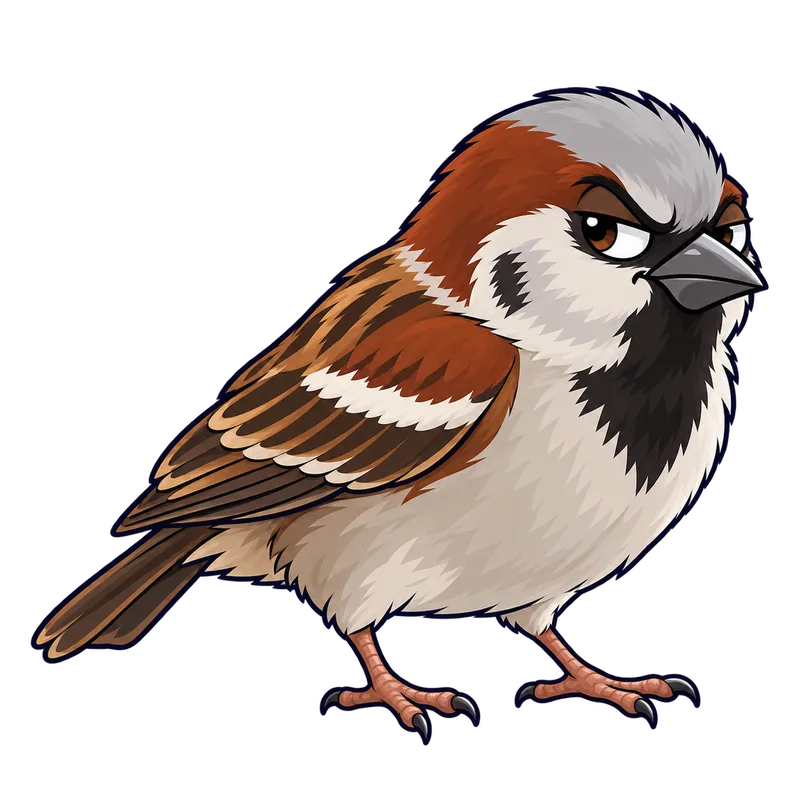
House sparrows are considered harmful because they stuff flammable nesting debris into tight building voids like dryer vents and soffits, creating severe fire hazards. They also cause property damage with acidic droppings that pit metal and strip paint, while their crowded nests harbor bird mites and lice that can migrate into your living space.
What is actually going on
Imagine stepping outside on a crisp Saturday morning to fire up the backyard grill, only to notice a steady stream of small, chubby birds darting in and out of a gap behind your roofline. They are carrying dry grass, bits of string, and feathers. It looks harmless enough, almost quaint, until you realize those birds are house sparrows turning your home into a high-rise apartment complex. People often wonder why these little birds get such a harsh reputation when they look so unremarkable hopping around the parking lot.
The trouble starts because house sparrows prefer to live right on top of us rather than out in the wild. They do not build neat, tidy cups in the middle of a peaceful forest. Instead, they stuff bulky masses of flammable organic debris into tight building voids like soffits, dryer vents, electrical fixtures, and rain gutters. Think of it like shoving a thick wool sweater directly into a hot dryer vent. It completely blocks airflow, traps moisture against wooden framing to rot, and creates a genuine fire hazard right where electrical wiring runs through your walls.
Beyond the fire risk, they leave behind droppings made partly of acidic uric acid. When a flock decides to roost on your porch, your car roof, or your window sills year after year, that acid systematically pits metal, strips paint, and stains masonry. To top it off, their crowded nests harbor bird mites, lice, and bacteria. When the birds finally abandon a nest inside a wall void, those hungry parasites often migrate right through your electrical outlets and drywall seams into your living room.
How to tell for sure
Before you point any fingers, you need to know what you are looking at, because not every little brown bird is a troublemaker. House sparrows are small and chunky. Adult males usually feature a very distinct black bib under the beak, a grey crown, and a chestnut patch behind the eye. Females and young birds are plainer, showing a dingy grey breast without streaks and a pale eyebrow stripe.
If you are trying to identify them from a distance in the yard, you usually need a pair of binoculars to separate female house sparrows from native sparrows like song sparrows, which have heavily streaked chests. If the birds are further away or you are looking through a dim window, confident visual identification usually stops being possible unless you catch a very clear look at the bill and head markings.
You can also tell they are around by looking down. Avian scat from sparrows falls into the white feces category because of a crusty white uric acid cap covering the dark core. You will usually find these small, paste-like droppings clustered heavily right beneath a preferred ledge, outdoor light fixture, or a suspected nest opening.
What usually comes next
Once you confirm you have house sparrows moving into your structural gaps, you have to make a choice about how to handle them. The single most important decision is realizing that putting up a plastic owl decoy on your roof is a waste of time. Birds are smarter than we give them credit for. A static plastic owl might scare them for a couple of days, but once they realize the owl never blinks or shifts position, they will happily perch right on top of its head.
Instead of chasing them away with toys, you have to cut off their access through physical exclusion. Permanent control requires sealing up any exterior gap, crack, or vent opening using galvanized hardware cloth, sheet metal flashing, or durable sealant. If you have an open porch rafter or a commercial canopy, heavy duty bird netting is usually the next logical step to block them from landing.
If you live in North America, you should also know a crucial legal distinction. Introduced house sparrows are not native wildlife, meaning property owners can usually remove nests, eggs, or the birds themselves without federal permits. However, native sparrows are strictly protected under federal law. Making sure you have the right bird before you touch a nest is an absolute requirement.
When to get help
Most minor deterrence work is straightforward, but certain situations call for professional backup. If the nesting site is located on a steep, multi story roofline or a commercial structure requiring tall ladders and safety harnesses, leave it to a professional wildlife control operator to avoid a dangerous fall.
You should also call in help if you are dealing with a severe, long standing infestation inside an enclosed attic or heating and cooling ductwork. Accumulated bird droppings that have dried out over years create a serious respiratory hazard when disturbed. Commercial remediators use proper containment and industrial vacuum systems to clear out biohazards safely.
Finally, if you cannot tell whether the birds nesting in your eaves are unprotected house sparrows or protected native species, stop and get an expert opinion. When in doubt, or if you manage a food handling facility where health regulations dictate strict pest management protocols, bringing in a licensed pest control professional keeps you on the right side of both safety and the law.