
Male vs female house sparrow: how can you tell?
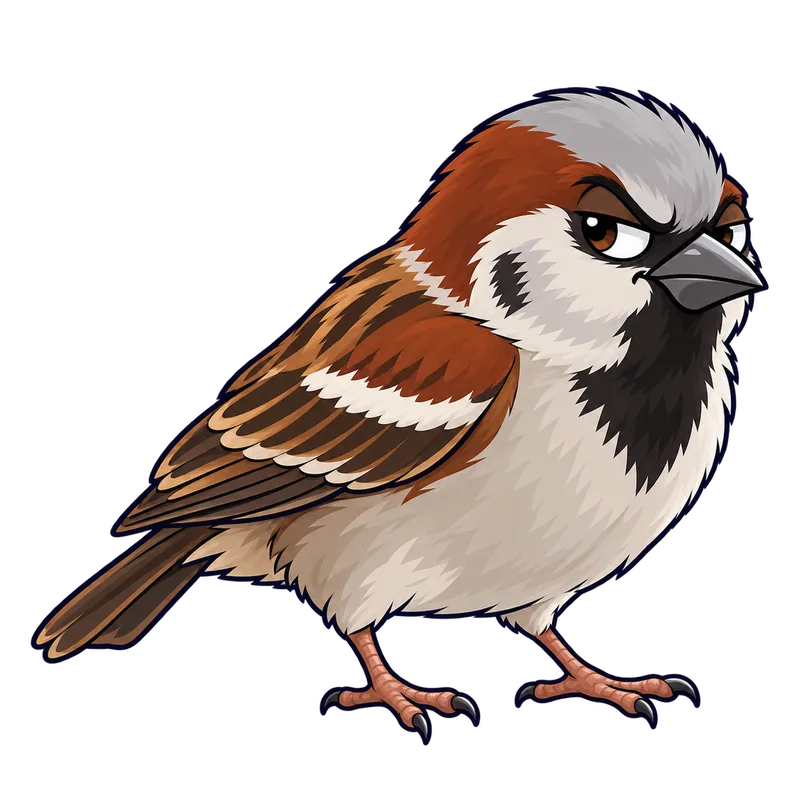
Adult male house sparrows wear a high contrast outfit featuring a solid black bib, a gray crown, a chestnut band behind the eye, and a dark breeding season bill. Females lack these flashy patterns, displaying plain gray-brown breasts, pale buff eyebrow stripes, and dull yellowish-brown bills. Visual sexing depends on the season because young birds and molting males look like females in autumn.
What is actually going on
You are standing on your back patio with a morning cup of coffee, watching a pair of small, chunky brown birds bickering over a stray crumb near the patio table. One of them catches your eye because it looks distinctly sharper, sporting a dark patch under its beak and a neat gray cap, while the other looks like a wash of muted, plain gray-brown tones. Naturally, you wonder if you are looking at a husband-and-wife duo or two entirely different kinds of birds sharing the same yard.
Telling the sexes apart in common urban birds sounds like it should be simple, but backyard observations often turn into a guessing game. Trying to sort out male and female house sparrows without a clear look is a bit like trying to read a license plate across a rain-slicked parking lot. You can easily tell it is a car, but making out the fine print takes a closer look.
Before you start planning any home maintenance or bird deterrents around your roofline, figuring out exactly what is visiting your property matters quite a bit. Wildlife management principles dictate that accurate species identification must always come first. Misidentifying a target animal can lead to ineffective property fixes, wasted money, or unexpected legal trouble if you accidentally disturb a protected native songbird that happens to share a passing resemblance to an urban pest.
How to tell for sure
When you get a reliable look through a pair of binoculars, usually from eight to ten times magnification, the visual differences between the sexes become much easier to parse. Adult males wear a high-contrast outfit. They usually feature a solid black bib under the beak, a gray crown on top of the head, a rich chestnut band running behind the eye, and a bill that turns dark during the breeding season.
Females usually lack all of those flashy patterns. They usually display a plain, unstreaked gray-brown breast and a pale buff eyebrow stripe above the eye. Their bills tend to stay a dull, yellowish-brown color year-round.
You should keep in mind that plumage is not always a static checklist. Young birds and adult males going through their post-nuptial autumn molt usually display muted, ambiguous feather patterns that look remarkably like adult females. If you are watching birds in late summer or during the cooler fall months, sexing them visually can become tricky. Furthermore, homeowners frequently mistake native, legally protected sparrows for house sparrows. Checking local field guides or consulting an expert helps clear up any confusion before you take a single step toward managing them.
What usually comes next
Once you figure out what is nesting in your soffits or hanging around your gutters, you have to decide how to handle the situation without making a bigger mess. Property owners often jump straight to quick fixes like commercial sprays or frantic trapping, but those tricks rarely solve the root issue. If you leave out accessible food or leave building gaps wide open, new birds simply move in to take the place of the old ones.
The most practical approach relies on long-term exclusion and sanitation rather than short-term suppression. Sealing up structural openings is a lot like closing a fine-mesh screen door on a summer night. If you leave even a pencil-sized gap in the frame, unwelcome visitors find a way inside.
You should permanently seal all structural cracks, vents, and crevices measuring zero point two five inch or larger using sturdy materials like hardware cloth, metal flashing, or silicone sealant. At the same time, cut off their food supply. Clean up fallen bird seed, secure your trash cans with tight-fitting lids, and remove standing water so your yard stops acting like an open buffet table.
When to get help
Sometimes a bird problem goes beyond a simple weekend project and requires outside assistance. If sparrows have managed to wedge themselves deep inside internal wall voids or high architectural rooflines, climbing up a ladder to reach them introduces severe physical fall risks. Property owners should avoid risky ladder work on complex structural elevations and call in a professional.
You also need to pay close attention to legal boundaries and health hazards. State and federal wildlife statutes protect the vast majority of wild birds, meaning that disturbing active nests containing eggs or dependent young can run afoul of local conservation laws. When you need to clear out accumulated bird droppings from an attic, vent, or ledge, treat the cleanup with caution. Dried bird droppings contain dust-borne pathogens that can cause respiratory illness when inhaled.
To stay safe, avoid creating dry dust, keep upwind of the mess, wear disposable gloves and a fit-tested particulate respirator like an N95 mask, and lightly mist the droppings with water before wiping them away. When the infestation is severe, or when protected native species are involved, hire a licensed wildlife control operator or contact your local agricultural extension office to handle the situation safely and legally.