
House sparrow vs house finch: how can you tell?
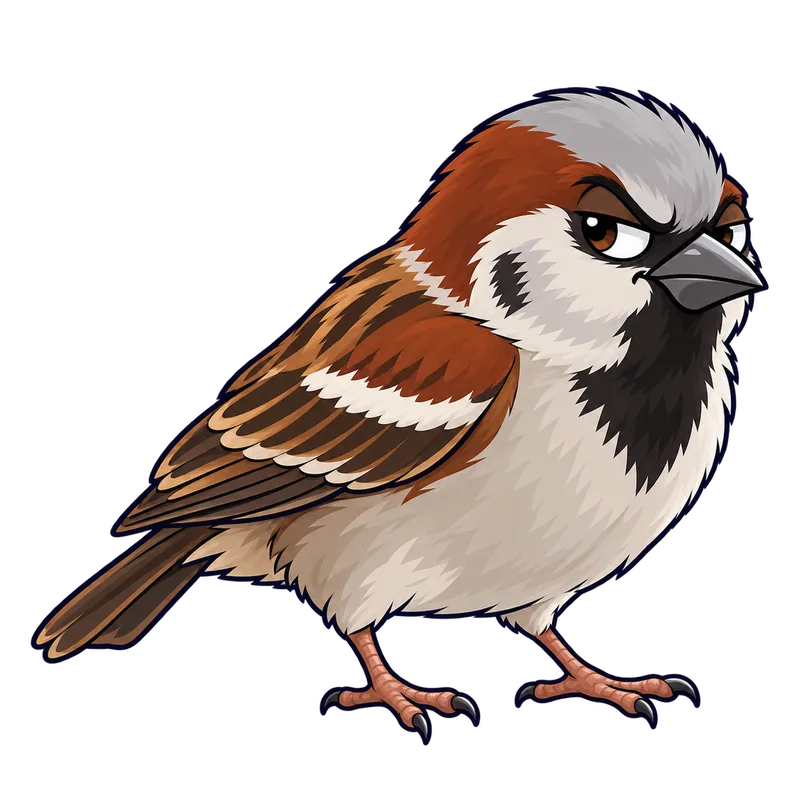
You can tell the difference between a house sparrow and a house finch by looking closely at their plumage patterns and head shapes using eight or ten magnification binoculars. The male house sparrow has a black bib and a gray cap, while the male house finch has a bright red wash on its head. Females are harder to tell apart, but the female house sparrow has a pale stripe above its eye.
What is actually going on
Picture standing by your kitchen window with your morning coffee, watching a flurry of small, brownish birds squabbling over the spilled seeds beneath your backyard feeder. They look remarkably similar at a glance, and you might assume they are all just garden-variety sparrows. Yet, assuming every little brown bird sharing your roofline is an unprotected pest can land you in legal trouble. While both the house sparrow and the house finch are small, seed-eating urban birds that happily move into your building soffits and rain gutters, they belong to entirely different avian families.
The most important distinction is that native songbirds like the house finch enjoy federal and state wildlife protections, whereas non-native house sparrows are generally unregulated under federal migratory bird statutes. You cannot simply pick up a trap or seal up a nest cavity without knowing which bird you are dealing with. Treating a protected native finch as a nuisance pest violates wildlife conservation laws, while ignoring an invading flock of house sparrows lets them take over your vents and wall voids.
Positive species identification always has to come first in wildlife management. Guessing based on a fleeting glimpse or nest debris usually leads to wasted money, ineffective control, and broken laws. Sorting these two out takes a bit of patience, a good pair of binoculars, and an understanding of what makes them tick.
How to tell for sure
Distinguishing these two species usually requires looking past their general size and focusing on specific plumage patterns and head shapes, which is nearly impossible to do accurately with the naked eye from twenty feet away. A casual look while the birds flutter around a feeder is rarely enough, so you often need 8x or 10x magnification binoculars to spot the details.
For males, the difference is stark once you get a clear look. The male house sparrow usually sports a distinctive black bib or throat patch, a gray cap, and chestnut-brown markings around the sides of its head. The male house finch lacks that black bib entirely, showing instead a bright red or rosy-pink wash across its head, breast, and rump, often accompanied by heavy brown streaking on its flanks.
Females and juveniles pose a much greater challenge because they are both mostly drab brown. The female house finch has a heavily streaked breast and a fairly plain face without any striking markings. The female house sparrow usually features a plain, unstreaked grayish-brown breast and a pale, yellowish-buff stripe just above its eye.
Footprints and droppings will not give you the species name, though they confirm bird activity. Both species leave standard passerine tracks in dust or light snow, showing three toes pointing forward and one backward. Droppings typically accumulate beneath roosting ledges as dark fecal cores capped with white uric acid. If a bird flashes by too fast or sits in deep shadow, stop right there. A blurred photograph or a guess through a dirty window is never enough to justify taking control action.
What usually comes next
Once you have identified the birds and checked that local laws let you manage them, your next move should focus on stopping them before they settle. Trying just one trick, like putting out a plastic owl or trapping a couple of birds, rarely solves the problem for long. A fake owl is basically a lawn gnome to a bird, and local flocks realize within days that the plastic statue never moves or makes a sound.
Keeping them away for good means removing their food sources and blocking their entry points. Clean up spilled seed under your feeders every day, or just take the feeders down for a while if the birds are swarming your walls. Put your birdseed and pet food in heavy metal containers with tight lids so you stop inviting them into your yard.
As for your house, sealing every gap is the main game. Think of it like keeping leftovers fresh, because if you leave even a tiny crack open in your roof overhangs or vents, these small birds will squeeze right through. Fasten sturdy wire mesh over every outside opening, and put up bird netting over porch ledges. Before you block any hole for good, tape a piece of newspaper over it and watch for three clear days to make sure no birds or chicks are trapped inside.
When to get help
Climbing a tall ladder to put heavy wire mesh on a steep roof is a fast way to end up in the emergency room, and that is a clear sign to call in a professional. If the birds are nesting high up in hard-to-reach places, or if you find yourself dealing with protected native species that need special permits, a licensed wildlife control operator has the right gear and legal clearance to sort it out.
You also have to think about your health when cleaning out old nesting material. Old droppings and dust piled up inside wall spaces or attics can carry disease-causing spores and bacteria. Sweeping out heavy messes without the right breathing mask is a gamble you do not want to take.
If you happen to get bitten by any mammal, worry about rabies exposure, or suffer a bad allergic reaction from a wildlife encounter, talk to a doctor, visit an urgent care clinic, or call public health authorities right away.