
How do you get rid of springtails in a house?
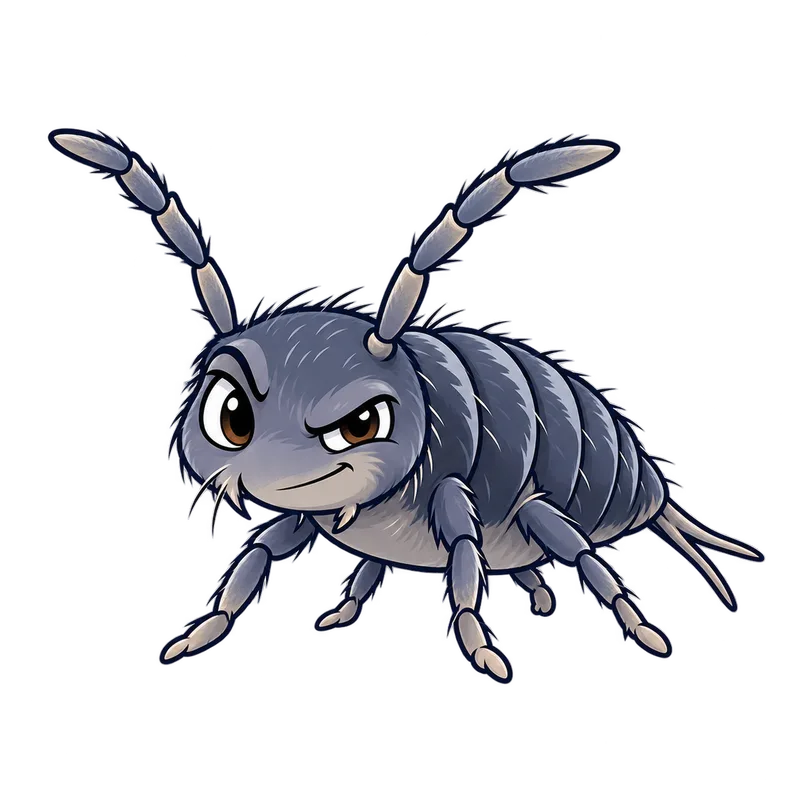
Eradicating springtails in a house requires physically vacuuming up the current visitors while permanently cutting off the outdoor moisture, organic debris, and foundation gaps that drove them inside. You do not need chemical sprays because indoor air dries out their soft bodies, causing them to die rapidly on their own within a few days.
What is actually going on
You walk into the downstairs half-bath on a humid Tuesday morning, turn on the vanity light, and notice a dusting of tiny gray specks scattered across the white porcelain sink. When you reach for a paper towel, half of them instantly vanish in a series of erratic, jerky leaps, looking for all the world like miniature grains of pepper popping like popcorn kernels. It is an unsettling discovery, but before you start reaching for heavy-duty household sprays, you need to know how to get rid of springtails in a house. The short answer is that you do not need chemical weapons at all. Eradicating indoor springtails requires physically vacuuming up the current visitors while permanently cutting off the outdoor moisture, organic debris, and foundation gaps that drove them inside, because springtails cannot reproduce indoors and die rapidly once desiccation sets in.
Springtails are primitive, wingless arthropods that usually live outdoors by the tens of thousands in damp soil, leaf litter, and rotting wood, where they feed quietly on mold, fungi, and decaying plant matter. They only become your problem when the weather turns hostile. Heavy summer rainstorms, spring thaws, or even severe drought can saturate or dry out their natural outdoor habitat, displacing the population and forcing them to scramble for shelter. Just like people fleeing a flooded apartment building, they crawl upward and outward, scaling your exterior foundation walls and slipping through tiny gaps around windows, doors, and utility lines to find relief.
Once they cross your threshold, however, they have walked into an environment that is entirely hostile to their biology. The average home or air-conditioned basement is far too dry for them. Because springtails have delicate skins and require high relative humidity to survive, indoor air acts like an environmental sponge, drying them out quickly. They cannot breed or establish a long-term colony inside normal living spaces, meaning most of the invaders you see will perish on their own within a few days.
That natural mortality is why indoor chemical foggers or total-release bug bombs are a waste of time and money. Aerosols will not penetrate the deep cracks and wall voids where these insects originate, and spraying baseboards treats a symptom rather than the cause. Instead, long-term control relies on an integrated strategy of physical removal, structural sealing, and modifying the moisture and landscaping right outside your foundation walls.
Springtails follow moisture gradients when outdoor conditions turn extreme. In natural settings, soil pores hold tens of thousands of these tiny creatures per cubic foot. When torrential rains or melting snow saturate the ground, water displaces the oxygen in the soil pores. The springtails must move upward to survive, climbing foundation walls and seeking any available opening into a structure. During droughts, the reverse happens as they search for dampness indoors. They are fundamentally outdoor decomposers driven inside by a temporary displacement rather than an intentional invasion of your living space.
How to tell for sure
Spotting tiny bugs indoors usually sends people down an internet rabbit hole of worry, but identifying springtails comes down to a few distinct physical and behavioral traits. To the naked eye, adult springtails usually look like tiny, soft-bodied specks ranging in color from grayish-white to dark brown or black, measuring a little more than an eighth of an inch long. If you are trying to tell them apart from other minor household crawling pests like booklice or mites, you simply need to watch how they react to your presence. Booklice tend to scurry away across a bookshelf or baseboard, but springtails possess a specialized, folded tail appendage that acts like a catapult, allowing them to snap downward and spring violently into the air when disturbed.
If you grab a pocket magnifier or jeweler loupe with 10x magnification, you will usually see a wingless, six-legged body with a distinct head and no visible scales. However, if you are hoping for a precise species-level identification from a photograph or a casual glance, you are out of luck. Entomologists require microscopic examination of body bristles and internal structures to tell individual species apart, which is completely unnecessary for solving a household invasion anyway.
You should also keep in mind what these creatures are not. A common misconception is that springtails are biting pests that leave itchy red welts on your skin. They do not possess biting or piercing mouthparts, they do not feed on blood, and they cannot parasitize humans or household pets. If you are experiencing unexplained skin irritation, a clinician or dermatologist is the right person to consult, as springtails are entirely innocent bystanders in that scenario. Their presence indoors is simply a physical indicator light, telling you that moisture gradients or humidity levels need your attention.
What usually comes next
When you spot springtails marching across your bathroom tiles or basement floor, you face one simple decision: do you clean up the physical invaders right away, or do you start tearing apart your drywall looking for leaks? The sensible choice is to start with immediate physical removal while addressing the obvious environmental entry points, rather than assuming you have a massive structural infestation.
Grab your vacuum cleaner and fit it with a narrow nozzle attachment. Gently vacuum up the active clusters from baseboards, window sills, and floors. Once you finish, immediately remove the vacuum bag or empty the dust canister into a sealable plastic bag, tie it up tightly, and walk it straight out to your exterior trash bin to keep those collected insects from wandering back out into your living areas.
After you finish vacuuming, step outside and look at the ground directly against your house. Piling heavy bark mulch or wood chips right up against your exterior siding is basically laying down a carpeted welcome mat for moisture-loving pests, keeping the soil damp and harboring thousands of springtails right outside your threshold. Pull that organic mulch back by at least 2 to 4 feet, replacing it in that immediate band with inorganic gravel, river rock, or crushed stone. This creates a dry, inhospitable barrier zone that most springtails will refuse to cross. Back inside, make sure your indoor humidity stays around 40% to 50% using air conditioning or a dehumidifier, and seal up any obvious gaps around exterior door sweeps and window frames with a quality silicone caulk.
When to get help
Most springtail invasions resolve quickly once you clear away exterior mulch, seal up foundation gaps, and dry out damp areas, but certain persistent situations require outside intervention. If you have vacuumed up the invaders, sealed your exterior gaps, and pulled back your landscaping, yet large numbers of springtails keep showing up week after week, you usually have a hidden moisture defect somewhere in the structure. An ongoing, long-term indoor presence typically points to a chronic plumbing leak behind drywall, a slow water seepage issue through a foundation wall, or hidden mold thriving on damp subflooring. When the insects persist because of a hidden structural or plumbing fault, you need to call a licensed plumber or a building contractor to locate and repair the moisture source before the insects will disappear.
You should also consider bringing in a licensed pest management professional if outdoor springtail migrations are completely overwhelming your physical barriers, or if you need an exterior perimeter treatment applied properly. Chemical barrier treatments around foundations involve specialized equipment and residual formulations, and decisions regarding chemical selection and application belong strictly to a licensed applicator operating in accordance with product label directions.
Finally, if any household occupants are dealing with unexplained skin lesions, bites, or severe allergic symptoms, set aside pest control entirely and speak immediately to a qualified medical clinician, an urgent care center, or your local poison control authority. While springtails do not bite or transmit diseases, large accumulations of dead insect bodies and shed skins in wall voids can break down into fine particulate dust that occasionally triggers allergic rhinitis or aggravates asthma in sensitive individuals, making medical guidance essential for anyone suffering from respiratory distress.