
How do you report a spotted lanternfly in New York?
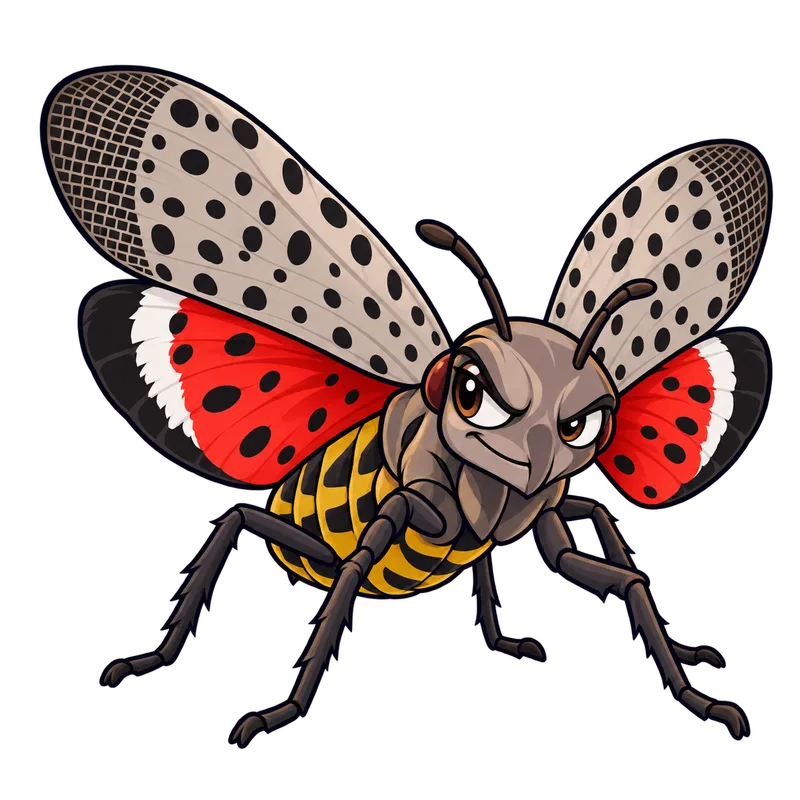
To report a spotted lanternfly in New York, you must photograph the insect or its egg mass, note the exact location, and submit the details through the New York State Department of Agriculture and Markets or the interactive mapping portal. You should document your finding before disturbing the pest, though action depends on whether you spotted an adult or an egg mass.
What is actually going on
You are loading the groceries into the trunk on a warm Saturday afternoon, and you notice something strange clinging to the side of your car. It looks a bit like a moth with greyish-tan wings and black polka dots, but when it moves, it scurries more like a hopper. If you live in New York, there is a fair chance you are looking at a spotted lanternfly. These invasive insects have been steadily making themselves at home across the state, and state agricultural departments want to know about every new sighting.
To report a spotted lanternfly sighting in New York, you need to photograph the insect or its egg mass, note the exact location, and submit those details through the New York State Integrated Pest Management interactive mapping portal or the New York State Department of Agriculture and Markets. You do not need to call an emergency line right away, but you do need to document what you found before you disturb it.
Why are state agencies so particular about a single bug? The spotted lanternfly is a sap-feeding planthopper native to Asia that can cause serious harm to agriculture, forestry, and local landscapes. They feed by piercing plant tissues to extract sugary sap, and they excrete a sticky waste product called honeydew. If you have ever parked a car under an infested maple tree and returned to find the windshield coated in a sweet syrup that quickly turns into black sooty mold, you have seen the indirect handiwork of these pests. Reporting helps officials track how far the insects have spread, especially if they turn up in uninfested agricultural regions where vineyards or orchards are at stake.
How to tell for sure
Before you report anything, make sure you are actually looking at a spotted lanternfly and not some harmless native insect. Adults usually measure 20 mm to 26 mm in length. When they are resting on a tree trunk or a fence post, their forewings look greyish-tan with black spots near the base and a net-like black brick pattern at the tips. They look rather like a drab moth at first glance.
When those wings open, however, they reveal striking bright red hindwings featuring black spots, a central white bar, and black tips. Their abdomen is bright yellow with black horizontal bands. Nymphs, which are the immature stages, usually start out black with white spots and later develop bright red patches across their bodies before they mature into adults.
Egg masses are another story entirely. Females lay them on smooth outdoor surfaces between September and May, including tree bark, stone walls, rusty metal, and vinyl siding. A fresh egg mass usually looks like a smear of wet grey clay or plaster slapped onto a surface, containing 30 to 50 eggs arranged in neat rows. Over the winter, that smooth coating dulls, darkens, and develops deep surface cracks, looking very much like a patch of dried, weathered spackle. People often mistake them for spongy moth egg masses, but spongy moth clusters are tan and fuzzy rather than smooth and mud-like.
What usually comes next
Once you have grabbed a quick photo of the insect or its egg mass and jotted down the address or nearest cross-streets, you still have to decide what to do with the physical pest. If you find a live nymph or adult crawling around, you can drop it into a sealed container filled with 70 percent isopropyl alcohol or standard hand sanitizer to finish it off safely.
Finding an egg mass during the colder months calls for a slightly different touch, and the standard move is scraping it right off the surface using a rigid flat edge like an old credit card or a stiff putty knife. Be sure to direct those scraped eggs straight into a container filled with rubbing alcohol or concentrated soapy water because simply dropping them onto the bare dirt leaves the eggs completely viable and ready to hatch when spring arrives.
You might wonder whether spotting a single bug means your entire yard is dealing with an infestation. In busy downstate neighborhoods or parts of the Hudson Valley where the insects are already established, reporting an adult sighting will not automatically bring state survey crews racing to your door. Even so, tracking them and destroying egg masses protects your trees from heavy, multi-year stress that leads to branch dieback and weeping bark wounds.
When to get help
There are times when handling things on your own is no longer enough and you need to bring in outside support. If you manage a commercial vineyard, a fruit orchard, or a large nursery, your best bet is coordinating directly with local agricultural extension specialists to follow formal scouting and management rules.
When infestations grow so dense that large shade trees suffer from severe sap loss and heavy black mold buildup, a licensed arborist can check the trees to see if professional treatments or specialized trunk injections are needed. If you decide to use chemical controls yourself, keep in mind that every pesticide applied in New York must be currently registered with the state Department of Environmental Conservation, and commercial applications on property require a certified pesticide applicator.
Finally, remember that these insects are master hitchhikers that lay eggs on campers, trailers, and vehicle wheel wells, which explains how they travel long distances across county lines. If your outdoor property cleanup happens to disturb local wildlife, such as raccoons or squirrels nesting in unmaintained woodpiles near your trees, leave the animals alone. Under New York conservation law, trapped nuisance wildlife cannot be relocated off your property without a specific permit, meaning any vertebrate pest control must defer to licensed professionals or state guidelines.