
What do spotted lanternfly nymphs look like?
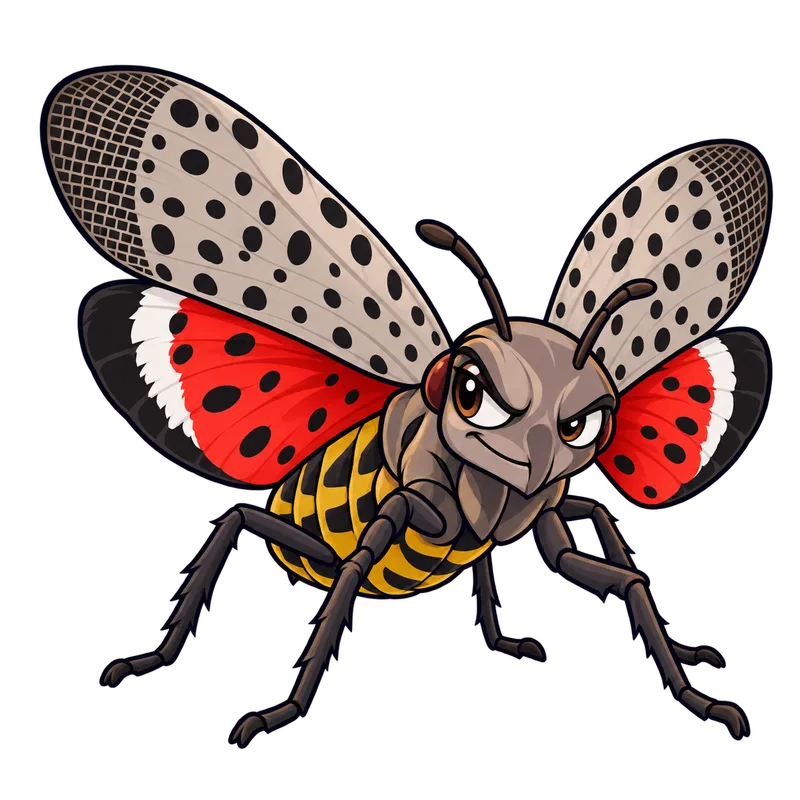
Spotted lanternfly nymphs look like tiny, shiny black bugs dusted with white powdered sugar during their early stages. By their final stage, they turn a brilliant bright red with black patches and white polka dots. They always lack chewing mouthparts and use powerful legs to leap away when disturbed.
What is actually going on
You are out on the back patio with a cup of coffee on a warm morning, pulling a stray weed out of the hostas, when you notice a cluster of tiny, shiny black bugs clinging to the underside of a leaf. They look a bit like little ticks that have been dusted with white powdered sugar, and the moment you move the stem, they do not crawl away slowly. They spring off with a surprising athletic pop, disappearing into the mulch before you can get a closer look.
What you are likely looking at is a spotted lanternfly nymph, the immature, wingless stage of an invasive sap-feeding insect native to Asia. They belong to a family of planthoppers, which means they are true bugs rather than beetles or moths, and they grow by going through a series of stages called instars rather than turning into worm-like grubs or caterpillars. As they feed on the plant juices of over 70 different species, they shed their outer shells multiple times, changing their colors dramatically as they grow larger and closer to adulthood.
These nymphs do not have chewing mouthparts like beetles do. Instead, they carry specialized needle-like mouthparts that they use to pierce tender stems and leaf veins, sucking up plant liquids in large quantities. Because plant sap is heavy on sugars and light on protein, they excrete a sticky liquid waste known as honeydew, which coats the leaves below them and quickly draws black sooty mold. Finding these nymphs on your property is usually your first real warning that a heavy infestation might be taking hold, especially if you happen to have their favorite host tree nearby.
Spotted lanternfly nymphs usually go through two very distinct visual phases before they sprout wings and turn into adults. In their early stages, covering the first through third instars, they are tiny, compact, and completely black with a scattering of bright white spots. You can usually spot them easily with the naked eye if you flip over the leaves of preferred plants or check tender, succulent green shoots from about 1 foot to 2 feet away. A quick zoom with a smartphone camera will usually bring out those crisp white dots clearly against their dark bodies.
By the time they reach their final or fourth instar stage, usually arriving by mid-summer, they undergo a striking visual makeover. At this point, their bodies turn a brilliant, unmistakable bright red, heavily marked with black patches, striping, and white polka dots. They also begin to show small, short wing pads on their shoulders, though they still cannot fly and rely entirely on those powerful jumping legs to escape danger.
People frequently mistake them for native beetles or true bugs, but their lack of chewing mouthparts and their habit of leaping away instantly give them away. You also want to keep in mind that right after they shed their skin to move into a new stage, they can temporarily look pale, pinkish, or almost white before their new armor hardens and darkens into its proper colors.
How to tell for sure
When you spot these nymphs clustering on your ornamentals, grapevines, or unwanted trees like the invasive tree of heaven, the most practical decision you face is whether to physically remove them right then or prep your property to stop them from hitchhiking elsewhere. Because nymphs are gregarious and love to gather in thick swarms on favorite plants, simply crushing them while wearing gloves or knocking them into a jar of soapy water can make a noticeable dent in local numbers if caught early.
If you are traveling out of an area known to have infestations, take a few minutes to walk around your vehicle, trailer, patio furniture, and firewood stacks. Nymphs do not just feed on plants, they frequently climb onto hard surfaces to rest or hitch a ride to new regions, much like their grey, putty-like egg masses do during the winter months. Stopping an accidental roadside trip is usually far more effective than trying to chase down every single bug in a mature garden once they have settled in for the season.
What usually comes next
If you happen to find spotted lanternfly nymphs in a county, state, or province where the pest has never been documented before, you need to contact your local agricultural extension office, state department of agriculture, or the Canadian Food Inspection Agency instead of just dealing with it quietly in the backyard. Regulatory agencies track these first-time finds closely to monitor the spread of quarantine pests, and they usually ask for a clear photograph and the exact location of the sighting so officials can confirm the identification and mount a proper local response.
For large-scale commercial property owners, vineyards, or heavy orchard infestations, managing thousands of feeding insects goes beyond what a homeowner can do with simple physical removal. In those situations, consult a licensed pest control professional or an agricultural extension agent who can design an integrated management plan tailored to local regulations and crop protection guidelines.