
What garden damage can spotted lanternflies cause?
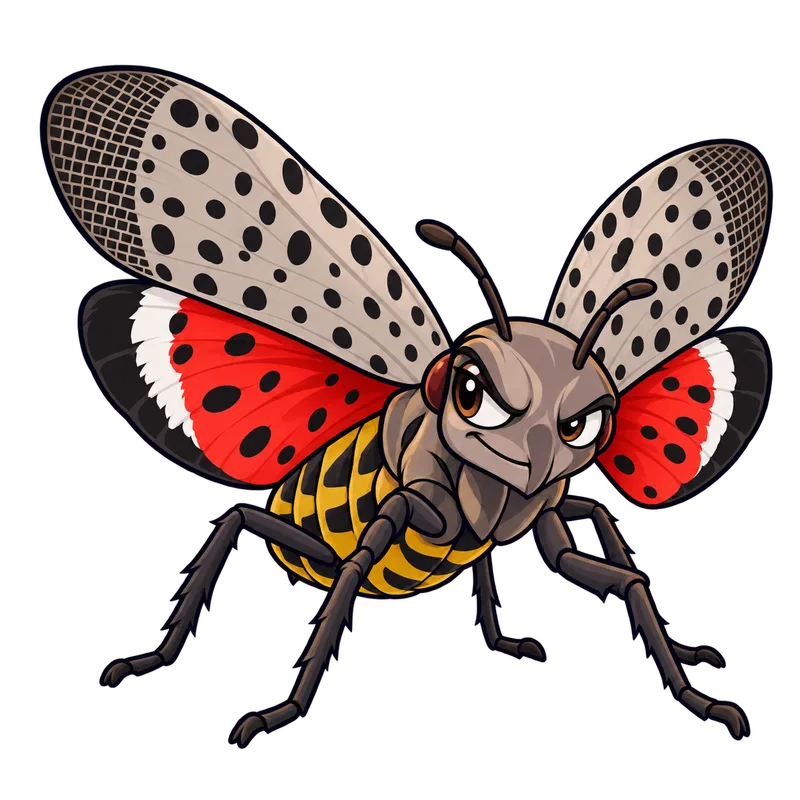
Spotted lanternflies cause garden damage by using beak-like mouthparts to drain vital phloem sap, leading to leaf curling, stunted growth, and branch dieback. Their feeding also produces sticky honeydew that coats plants and attracts wasps while fostering black sooty mold. In severe cases, especially on cultivated grapes, the relentless draining can kill the plant outright.
What is actually going on
You are standing in the yard on a warm August afternoon, admiring your prize grapevines, when you notice something strange. The leaves look a bit dull, and as you walk underneath the branches, a fine, sticky mist starts falling on your arms. You look up, thinking a sudden summer shower has rolled in, but the sky is clear blue. What you are actually feeling is a heavy shower of digested sap raining down from hundreds of sap-sucking insects crowded high in the canopy above.
Spotted lanternflies cause garden damage by using specialized, beak-like mouthparts to pierce plant stems, vines, and trunks to drain the internal phloem sap. Unlike caterpillars or beetles, these planthoppers do not chew holes in leaves or skeletonize foliage. Instead, they act like a thousand tiny straws stuck directly into the plant main juice line. Siphoning away this vital fluid starves the host plant of essential carbohydrates and water, leading to leaf curling, stunted shoot growth, branch dieback, and reduced winter hardiness. In severe cases, especially on vulnerable crops like cultivated grapes, the relentless draining can kill the plant outright.
Beyond direct starvation, the feeding process creates a messy chain reaction of secondary damage. Deep feeding punctures on woody trunks often cause weeping wounds that ooze a fermented, sour-smelling liquid. Furthermore, because lanternflies must process massive volumes of sap to extract enough nutrients, they excrete large quantities of a clear, sugary liquid called honeydew. This sticky substance coats everything underneath the canopy, including garden beds, patio furniture, and lower foliage, turning your outdoor space into a magnet for stinging wasps and hornets looking for a free meal.
The honeydew also serves as a cozy bed for a saprophytic fungus known as black sooty mold. This mold does not directly infect the plant tissue, but it forms a thick, dark crust that blankets the leaves and physically blocks sunlight. When the leaves can no longer catch the sun, photosynthesis drops, leading to premature leaf drop and a thoroughly grim appearance for your ornamentals. It is a cascading problem where a single insect invasion compromises the health, cleanliness, and beauty of your entire garden.
How to tell for sure
Spotting the culprit early usually depends on knowing what to look for across the changing seasons, as these insects transform dramatically from eggs to adults. Between September and May, you will usually find egg masses stuck to hard surfaces like tree bark, fence posts, patio chairs, or the sides of vehicles. Fresh egg masses look like a smear of grey mud or putty, containing roughly thirty to fifty eggs arranged in neat straight lines, though they usually crack and dull in appearance as winter wears on.
When warm weather arrives in late spring, the tiny first-stage nymphs emerge. These wingless youngsters measure just a few millimeters long and usually look like jet-black bugs marked with stark white spots. As they grow through the summer, they molt into larger fourth-stage nymphs that are hard to miss, sporting a brilliant red and black body covered in white spots.
By mid-summer, the adults take over the garden. An adult lanternfly usually measures about an inch long and has a striking appearance when at rest, displaying greyish-tan forewings peppered with black spots and dark, brick-patterned tips. When they jump or open their wings to fly short distances, they reveal a flash of bright red hindwings with black spots and a white band, paired with a bright yellow abdomen featuring black horizontal stripes.
What usually comes next
Once you confirm you are dealing with spotted lanternflies, your most effective immediate decision is to hunt down and destroy every egg mass you can reach before spring hatching begins. Waiting until summer to deal with swarming adults puts your garden at a massive disadvantage, so winter and early spring offer the best window to knock down the population at the source. Grab a sturdy scraper, such as a plastic putty knife or an old kitchen spatula, along with a jar filled with soapy water, rubbing alcohol, or household bleach.
Walk your property and carefully inspect tree trunks, particularly preferred hosts like the invasive Tree of Heaven, as well as outdoor furniture, stone walls, and firewood piles. When you locate a grey, mud-like egg mass, slip your scraper underneath and firmly scrape the entire cluster directly into your liquid-filled container to ensure the eggs are completely killed. Do not simply scrape them onto the ground or crush them against the bark, because undisturbed eggs left in the dirt will still hatch when the weather warms up. Always wear safety glasses and work gloves if you are stretching to reach masses overhead, and toss the destroyed mixture straight into the household trash when you finish.
When to get help
There are moments when a backyard DIY approach is no longer enough and you need to bring in outside help. If you live in an area where spotted lanternflies are not yet established, spotting even a single live insect, nymph, or egg mass requires an immediate call to your local agricultural extension office or national plant protection agency, as official authorities track these sightings closely to stop the spread.
For established infestations, home gardeners usually need to draw the line when dealing with massive lanternfly swarms high in the canopy of mature, valuable shade trees. Trying to treat tall trees with consumer sprayers is rarely effective and can expose you to unnecessary risks, so engaging a certified, licensed commercial arborist makes sense when high-canopy systemic treatments or specialized trunk interventions are required. Finally, if anyone in your household experiences a severe allergic reaction from stings by the wasps and hornets drawn in by the honeydew, seek medical attention from a clinician immediately.