
Why are spotted lanternflies common in New York City?
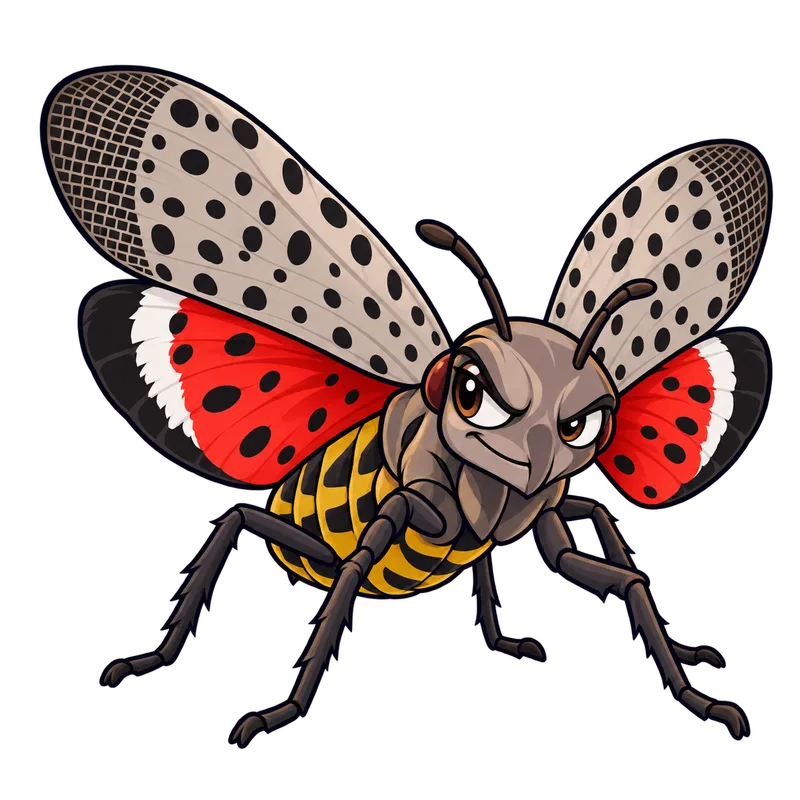
Spotted lanternflies are common in New York City because the area offers an abundance of their favorite food, the tree-of-heaven. The city also features a massive transit network of freight trains and delivery trucks that easily transport these bugs and their hidden egg masses.
What is actually going on
Picture walking out of your apartment building on a humid July morning in Brooklyn, only to notice that the sidewalk beneath the street trees feels strangely sticky, as though someone spent the night spilling soda everywhere. Look up at the bark, and you will see a dense, writhing cluster of colorful bugs with bright red bodies and black-and-white polka dots. That is the reality of the spotted lanternfly in New York City, and it feels like an urban invasion for a very simple reason.
The short answer is that the city is essentially an all-you-can-eat buffet paired with a massive transit system. The spotted lanternfly is an invasive planthopper native to Asia that first showed up in Pennsylvania in 2014. Since then, it has made itself right at home across seventeen states, with New York City serving as a prime hotspot.
Why do they love the five boroughs so much? It comes down to real estate and travel. The city is full of the tree-of-heaven, an invasive Asian tree that happens to be the absolute favorite meal of the lanternfly. These unwanted trees pop up easily in abandoned lots, along railway tracks, and beside highways, creating a continuous green highway through the concrete. While they prefer the tree-of-heaven, these bugs are not picky eaters. They will happily tap into more than seventy other plant species, including the maples and oaks lining residential streets.
Then you have the transit factor. New York City is a bustling hub for freight trains, delivery trucks, and daily commuters. Female lanternflies are not picky about where they lay their eggs either. Instead of just targeting trees, they glue their egg masses onto flat, hard surfaces like shipping containers, car bumpers, brickwork, and patio furniture. A delivery truck parked near a railway yard can pick up dozens of hidden eggs and carry them across state lines or down the interstate in a single afternoon.
How to tell for sure
If you want to know what you are looking at, you usually have to match the insect to its current life stage, because they change dramatically throughout the year. From September through May, you will usually find the egg masses. They look less like insect nests and more like someone smeared a patch of wet grey mortar or spackle onto a tree trunk, a rusty metal railing, or the side of a brick building. Over the winter, that smooth grey coating usually dries out, dulls, and cracks open like dry mud.
When those eggs hatch in late spring, usually around May, the early nymphs emerge. These tiny, wingless crawlers are black with bright white spots, and you will usually see them scrambling up and down plant stems. By mid-summer, those nymphs grow into their fourth instar stage, turning a striking, vibrant red with black patches and white spots.
By July, the adults arrive and usually stick around until a hard frost kills them off in December. Adults are quite large, measuring about an inch long. When they are resting on a tree trunk, you will usually notice their greyish-tan forewings covered in black spots at the base and dark net-like markings at the tips. If they flutter or fly, you catch a flash of their bright red hindwings, which feature bold black spots and a central white stripe.
What usually comes next
When you spot these bugs on your property or neighborhood trees, you usually have to make a practical choice about how to handle them. Stomping on a single adult you find on the sidewalk might feel satisfying, but it will not make a dent in the local population. The real leverage point is interrupting their reproductive cycle before the next generation takes over.
From autumn through early spring, grab a flat scraping tool, such as an old putty knife or a plastic loyalty card, and physically scrape those grey, mud-like egg masses off your fence rails, outdoor furniture, and tree bark. Always scrape them directly into a sealable container filled with 70 percent isopropyl alcohol or warm, soapy water to kill the embryos. Whenever you do this overhead work, make sure to wear protective eye goggles and heavy work gloves so falling debris and scraping residue do not irritate your skin or eyes.
When spring and summer roll around, you can wrap susceptible tree trunks with specialized sticky bands to catch the crawling nymphs as they move up and down the bark. If you own property and want to cut off the source entirely, consider removing any invasive tree-of-heaven trees on your land. Before you pack up your trailer or move outdoor gear out of the city, always do a visual check for hidden hitchhikers so you do not transport them elsewhere.
When to get help
There are moments when a do-it-yourself approach is not enough, and you need to bring in outside help. If you notice heavy signs of an infestation, such as deep, weeping sap wounds on a mature shade tree, a sour fermenting smell around the trunk, or a thick black layer of sooty mold coating the leaves and patio furniture below, it is time to call in professionals.
Chemical treatments on large shade trees, commercial properties, or public spaces must be performed by certified pesticide applicators who hold the proper state licensing. The product label is a legally binding document, meaning neither homeowners nor professionals are ever allowed to invent custom home remedies or apply products off-label. For high-canopy pruning, structural tree injections, or complex removal of a large tree-of-heaven, a certified arborist equipped with proper climbing gear and safety equipment is the right call.
If you find suspected spotted lanternflies outside of known quarantine zones or across international borders, take a clear photo, capture a specimen if possible, and report the sighting to your state agricultural extension office or national biosecurity authorities. Keep in mind that older shade trees frequently double as homes for protected wildlife, nesting birds, or bats. Under state and federal laws, you cannot harm, trap, or disturb protected animals without official permits. If your property work brings you into contact with injured or potentially rabid wildlife, contact local public health authorities or animal control immediately instead of handling the situation yourself.