
How should a Pennsylvania resident report a suspected spotted lanternfly?
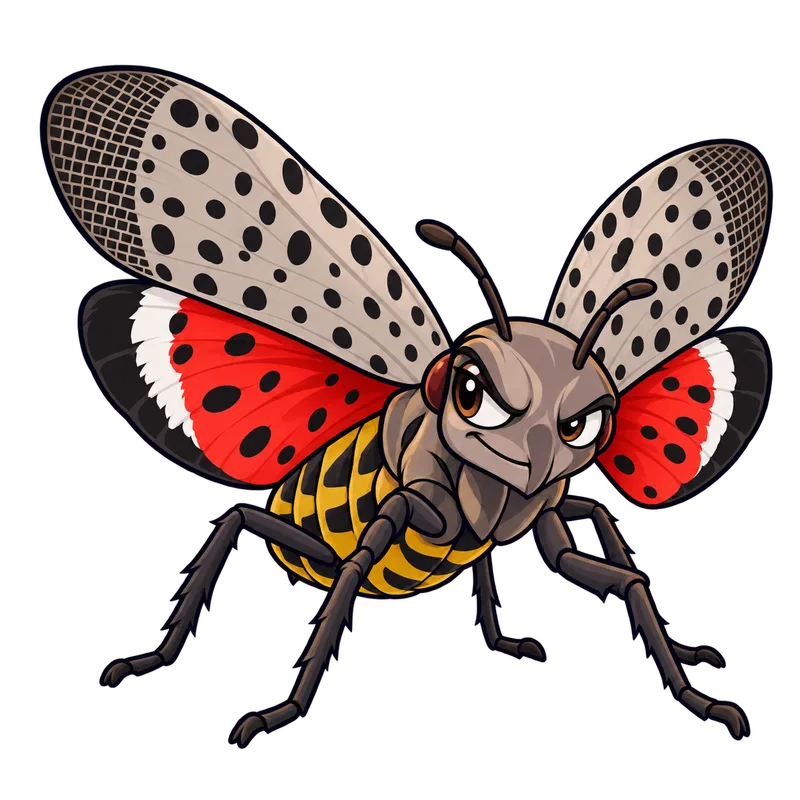
To report a suspected spotted lanternfly in Pennsylvania, you should capture clear photographs of the insect or its egg mass, note the exact geographic location, and submit your sighting through designated tracking databases such as EDDMapS or official state plant health portals. Whether your report triggers a survey depends on your zip code, as agricultural authorities in uninfested counties rely on these sightings to slow down the spread.
What is actually going on
You are out on the back patio on a crisp October afternoon, stacking up the patio chairs for the winter, when you notice a strange grey smear on the plastic armrest. It looks like a splash of dried mud or a dollop of wet putty, but it has distinct vertical rows hidden beneath a dull, cracked crust. Or perhaps back in July, you spotted a jumpy little red bug splashed with black patches crawling all over the trunk of your favorite maple tree. You wonder if this is the notorious pest everyone on the local news keeps talking about, and more importantly, what you are supposed to do with your discovery now that it is sitting right there in your yard.
To report a suspected spotted lanternfly in Pennsylvania, you need to capture clear photographs of the insect or its egg mass, note the exact geographic location, and submit your sighting through designated tracking databases such as EDDMapS or official state plant health portals. This invasive planthopper, first detected in Berks County back in 2014, feeds on the sap of over 70 different plant species. While it has a special fondness for the invasive tree-of-heaven, it does not mind branching out to your grapevines, fruit orchards, and hardwood trees, leaving behind sticky secretions that grow unsightly black fungal mats known as sooty mould.
You might assume that reporting every single bug you see is a civic duty, but reality depends a bit on your zip code. In counties where these pests are already firmly established and widespread, local agricultural authorities usually shift their focus away from individual adult sightings and concentrate instead on destroying overwintering eggs and managing transport permits. However, if you live in an uninfested county or a newly invaded zone, your single report triggers crucial delimitation surveys that help slow down the spread.
How to tell for sure
Before you go reporting anything, you need to make sure you are not looking at a completely harmless native insect or an old patch of construction putty. Identifying the spotted lanternfly usually depends on which season you happen to be looking at your yard, as these creatures transform dramatically across the calendar year.
Eggs overwinter from September through May. They usually appear as clusters of 30 to 50 eggs laid in vertical, parallel lines, typically measuring around 30 to 60 mm long. They are covered in a shiny grey or brownish secretion that starts off looking like wet mud and slowly dulls and cracks over the winter months, much like a dried-up splatter of mortar on a brick wall. People frequently mistake spongy moth egg masses for these, but spongy moth masses look and feel like tan, buff-colored velvet fuzz rather than smooth, cracked putty.
Once warm weather hits, the life cycle shifts. Early nymphs emerge between May and July. They are tiny, wingless, black insects covered in bright white spots that skitter around like nervous spiders. By July, they grow into late nymphs, which are chunky, vibrant red bodies patterned with bold black patches and white spots, standing out vividly against green leaves. Adults appear from July until the first hard frost, measuring roughly 20 mm to 26 mm long. At rest, their pinkish-tan forewings folded tent-like over their backs feature dark spots and reticulated tips, but if they hop and open their wings, they flash a brilliant crimson red underneath that looks nothing like a typical moth.
What usually comes next
When you have pinned down the identification and decided to report the find, you need to collect decent proof before you file anything. Grab your phone, snap a few clear pictures of the insect or the egg mass, and maybe drop a quarter right next to it so anyone looking at the image gets a true sense of its size. Write down the exact address or GPS coordinates, along with the specific tree or structure where the creature was sitting.
You can upload that evidence straight to the EDDMapS tracking system or through your local university extension website. If you spot those crusty grey egg masses plastered to your patio table, the side of your camper, or your wooden fence, nobody expects you to leave them there while you wait for a phone call from an inspector. You can take a stiff plastic card or an old putty knife and scrape those eggs right off the surface, making sure they drop into a jar filled with rubbing alcohol or soapy water to finish them off before you toss the container in the garbage.
Folks often fret that letting the state know about a yard pest means inspectors will show up demanding pricey treatments or ordering commercial crews onto the property. That rarely happens. For most homeowners, simply scraping away eggs and filing an online report is all that is asked of you. If you are packing up the car for a camping trip or hauling outdoor gear out of a restricted county, spending a few minutes checking your vehicle for hidden hitchhikers does far more good than worrying over one lonely adult bug on the porch.
When to get help
There are times when a suspected backyard invasion stops being a simple weekend community science project and calls for actual professionals. If you are looking at a heavy, out-of-control population blanketing high-value ornamental trees or taking over a commercial orchard, leave the heavy-duty spraying to a licensed pesticide applicator who understands how to handle chemical treatments safely without wiping out local pollinators or contaminating nearby water.
You should also use common sense when physical access makes a simple chore dangerous. Trying to scrape egg masses off second-story siding or high canopy branches invites a bad fall, so you are much better off hiring a certified arborist or a tree service equipped with ladders and proper safety gear.
Keep a sharp eye out for unexpected wildlife while you are poking around your woodpiles or outbuildings. If you accidentally disturb a wild animal like a raccoon or a bat tucked away behind your gear, back away slowly and call your local animal control or public health office instead of trying to chase it off. On the other hand, if you notice these pests or their egg masses turning up on commercial cargo or international shipments, federal agricultural inspectors need to be notified directly according to standard quarantine guidelines.