
Why is tree-of-heaven linked to spotted lanternflies?
The tree-of-heaven is linked to spotted lanternflies because this invasive plant serves as the ultimate preferred host where the insect feeds, aggregates, and achieves peak reproductive success. The chemical balance of the plant supports the rapid development of the sap-feeding pest.
What is actually going on
Imagine walking out to your driveway on a crisp autumn morning and noticing a patch of grey, hardened mud smeared across the side of your camping trailer. It looks like someone missed a spot while scraping off old spackle, but when you look closer, you realize it is a cluster of tiny, neatly arranged rows under a protective coating. That strange smear is an egg mass, and if you live in an area battling the spotted lanternfly, you are likely looking at the aftermath of a biological partnership that has agricultural inspectors losing sleep.
So why is tree-of-heaven linked so tightly to the spotted lanternfly? The short answer is that this invasive tree acts as the ultimate preferred host plant for the insect. Native to Asia, the spotted lanternfly feeds on a wide variety of plants numbering over 70 species. Yet, despite its varied palate, the insect relies heavily on tree-of-heaven as its biological anchor where feeding, aggregation, and reproductive success reach their peak.
This relationship matters because the insect is not just a mild garden nuisance. As a sap-feeding pest, it weakens trees directly by piercing vascular tissues to extract plant juices, while indirectly causing secondary damage through the excretion of a sticky fluid called honeydew. That honeydew blankets foliage, outdoor furniture, and fruit, fostering heavy growths of black sooty mold that block photosynthesis and ruin commercial harvests of grapes, hops, and apples. Since its first confirmed establishment, the pest has spread across numerous regions, prompting strict quarantine measures.
You might wonder why the insect does not just stick exclusively to its favorite tree if it loves it so much. The reality is that while tree-of-heaven draws dense congregations of nymphs and adults, the lanternfly is opportunistic enough to survive and feed on maples, walnuts, and fruit trees when the primary host is scarce. Removing the tree helps reduce local population numbers and limits the insect preferred breeding grounds, but it rarely starves out a resilient population entirely.
Spotted lanternflies find their favorite food source in the tree-of-heaven because the specific chemical balance of the plant supports their rapid development. When thousands of these insects crowd onto a single tree, they extract so much sap that the plant begins to show signs of stress, such as weeping wounds and branch dieback. This intense feeding dynamic creates a heavy concentration of insects in one spot, which makes the tree an obvious focal point for anyone looking to monitor or manage the pest population.
Beyond simple feeding preferences, the tree acts as an assembly point where the insects mate and lay their overwintering eggs. Female lanternflies often deposit their eggs directly on the smooth bark of the tree-of-heaven, though they are equally happy to use nearby man-made structures. This dual reliance on the plant for both nutrition and reproduction cements the link between the two species, turning a weed tree into a central player in an expanding agricultural puzzle.
How to tell for sure
Spotting the evidence of these pests usually requires knowing what to look for across different seasons, since the insect transforms dramatically over the course of a year. From late autumn through early spring, you are usually looking for egg masses rather than the bugs themselves. A typical egg mass usually contains 30 to 50 individual eggs laid in neat, straight rows, though they are usually hidden beneath a protective, putty-like grey secretion.
When freshly laid, that coating usually looks smooth and shiny, much like a dab of wet clay or fresh caulk. As winter wears on and the temperatures drop, that secretion usually dulls in color and develops visible surface cracks, resembling dried mud that has weathered a few freezes. You will usually find these egg masses on the smooth bark of a tree-of-heaven, but they are notorious for hitchhiking on non-plant surfaces, too. It is usually common to find them plastered onto outdoor furniture, rusty trailers, firewood piles, fence lines, and the sides of houses.
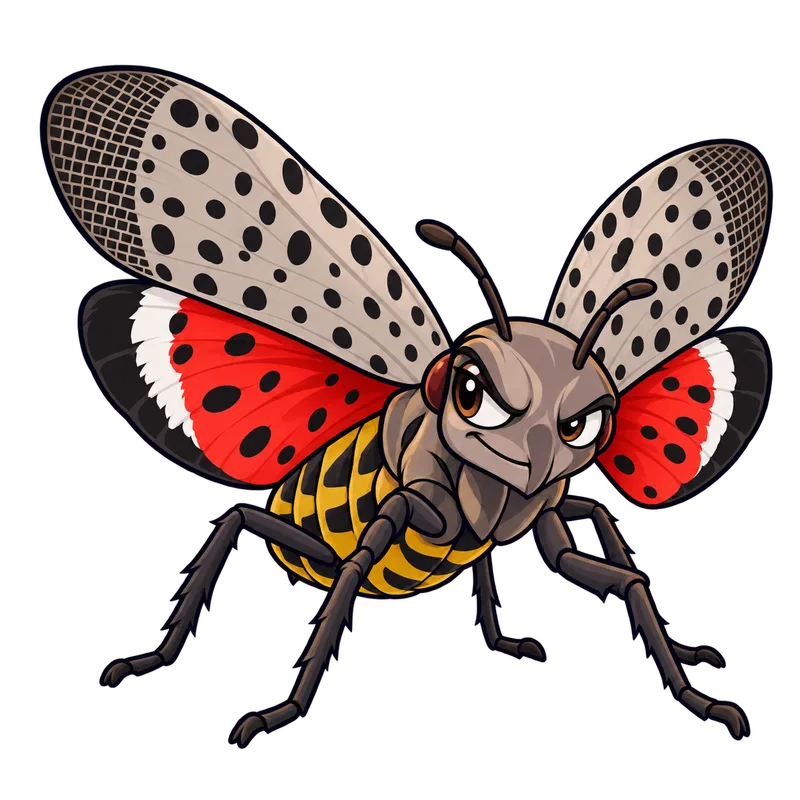
As spring arrives, those eggs usually hatch into flightless nymphs that look like small, dark beetles adorned with white spots before turning a striking red-and-black pattern. By late summer, they usually mature into winged adults with grayish forewings dotted with black spots and vibrant red hindwings. When they feed on plant stems, you will usually notice an unusual amount of wetness, staining, or a faint fermented odor near the base of the tree, accompanied by swarms of insects clustering on the trunk.
If you are trying to confirm an identification, remember that tree-of-heaven itself usually has distinct traits that set it apart from native hardwoods. It usually features very long compound leaves with numerous leaflets, smooth bark that resembles cantaloupe rind as it matures, and crushed leaves that emit an unappealing, pungent odor. Finding the insect or its egg masses on or near this specific tree is usually the strongest indicator that you are dealing with a regulated pest rather than a harmless native insect.
What usually comes next
When you find a suspect egg mass on your property, the most practical decision you can make is to destroy it immediately rather than waiting for an official to show up, provided it is within safe reach. Because these masses act as the primary vector for long-distance transport when people move firewood or outdoor gear, removing them stops the next generation before it starts.
To handle this safely, you will want to gather a few basic household items, including a rigid flat tool like a plastic putty knife or an old credit card, and a sealable container filled with soapy water or 70% isopropyl alcohol. Put on protective gloves and safety goggles, especially if you are scraping masses located above eye level, to keep debris out of your eyes. Firmly press the edge of your scraper against the surface just beneath the egg mass and push upward in one smooth motion, letting the eggs fall directly into the liquid solution.
Leave the scraped material soaking in the soapy water or alcohol for a few days to ensure complete destruction before tossing the sealed container into your regular household garbage. Avoid the temptation to simply crush the eggs against the bark or drop them onto the ground, because surviving eggs can still hatch when spring arrives.
Once the physical removal is complete, take a clear, high-resolution photograph of the area and report the finding to your local agricultural extension office or national plant health agency, especially if you live in a region where the pest is not yet heavily established. Documenting new locations helps authorities track the spread and allocate resources where they are needed most.
When to get help
There are moments when do-it-yourself pest management crosses the line into risky territory, and knowing when to hand the job over to someone else is crucial for your safety and local biosecurity. If you spot suspected egg masses or large swarms high up in the canopy of a large tree, do not attempt to balance on a tall ladder with a scraper. High-reach canopy work poses a severe fall hazard, and large-scale infestations at heights should be left to professional arborists who possess proper aerial lift equipment and safety gear.
Commercial orchardists, vineyard operators, or tree nursery owners noticing heavy sap-bleeding, dieback, or massive insect aggregations should contact a licensed agricultural extension specialist or pest control advisor right away. Commercial crops face significant economic loss from sap depletion and sooty mold damage, and managing large agricultural tracts requires targeted strategies that go beyond scraping individual egg masses off a backyard fence.
You also need to involve official agencies when you discover a suspected population in a geographic area where the pest has not previously been documented. If you find spotted lanternflies or their egg masses outside of currently quarantined zones, avoid moving any outdoor equipment, vehicles, or firewood from the site until you have contacted your state department of agriculture or national plant health authority for guidance. Reporting an out-of-bounds detection triggers official containment protocols that help protect regional agriculture and hardwood forests from rapid, unmonitored expansion.