
What is the connection between spotted lanternflies and tree of heaven?
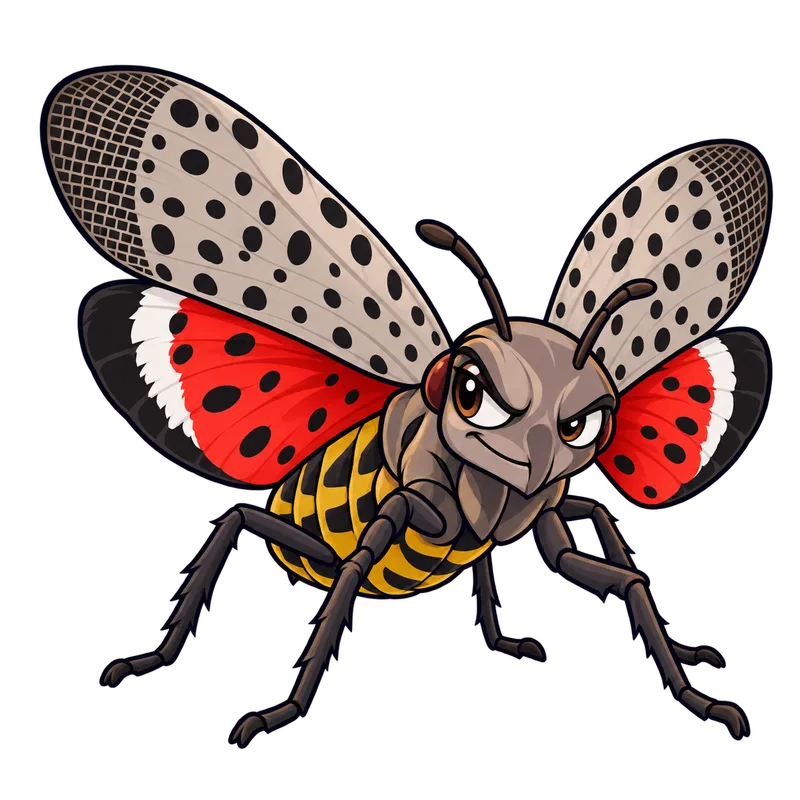
Tree of heaven serves as the primary and strongly preferred host plant for the spotted lanternfly throughout most of its life cycle. While these planthoppers can feed on more than seventy different plant species, they treat this invasive weed tree like a permanent open-air diner.
What is actually going on
You are walking through the backyard on a warm August afternoon, and something feels off. There is a fine, sticky mist falling from above, even though the sky is clear, and your car windshield looks like it has been sprayed with sugar water. When you look up at the tall, ragged-looking weed tree by the fence line, the bark is practically moving. Hundreds of greyish-tan bugs with bright red hindwings are clustered in a dense, pulsing mass, draining the life out of the plant. That tree is a tree of heaven, and those bugs are spotted lanternflies.
The connection between the two is a classic case of an invasive pest finding its absolute favorite food. Tree of heaven, an aggressive weed tree imported from Asia, serves as the primary and strongly preferred host plant for the spotted lanternfly throughout most of its life cycle. While these planthoppers can feed on more than seventy different plant species, they treat the tree of heaven like a permanent open-air diner. As the insects mature through the summer months, they abandon temporary plants and swarm these trees by the thousands to feed on nutrient-rich phloem sap.
This heavy, concentrated feeding takes a brutal toll on the host. The sheer volume of sap being consumed creates weeping wounds on the trunk, and the insects process the excess sugars into a sweet, sticky liquid waste known as honeydew. That sticky rain coats everything underneath the canopy, quickly turning into a thick layer of black sooty mold that blocks sunlight and ruins nearby vegetation. Because tree of heaven grows aggressively along railway lines, shipping yards, and highway corridors, it acts as an ecological launching pad. Adult lanternflies feed on the trees, and then female insects readily deposit their cryptic egg masses onto nearby trucks, freight cars, and outdoor gear, helping the invasion spread across miles.
How to tell for sure
Spotting an adult spotted lanternfly usually does not require a microscope. When fully grown between July and December, they measure about twenty to twenty-six millimeters in length. Their forewings are a dull greyish-tan with dark spots, but when they open up or flash in the light, you will see striking bright red hindwings with bold black patches and a white band separating them from a black tip. Earlier in the year, from May to July, you will find nymphs instead of adults. These smaller versions start out pitch black with bright white spots, and later turn a vivid red and black with white markings.
Identifying a tree of heaven is just as important, since the two usually go hand in hand. The tree features long, compound leaves made up of many smaller leaflets, smooth grey bark that often resembles cantaloupe skin, and small glands near the base of each leaflet that emit a distinctly unpleasant odor when crushed.
Regarding the next generation, female lanternflies lay their eggs between September and May in groups of thirty to fifty. A freshly laid egg mass looks remarkably like a splash of wet grey mud or dried cement smeared onto a flat surface. Over the winter, that smooth, putty-like secretion dulls, hardens, and cracks, making it blend into rough bark, stone walls, or the undersides of patio furniture and trailer hitches. Distinguishing newly laid masses or tiny early nymphs usually requires a hand lens with ten times magnification, and a confident identification in a new region generally calls for a clear photograph or a captured specimen in a sealed container rather than relying on foliage damage alone.
What usually comes next
When you confirm you have spotted lanternflies and their favorite host on your property, you have to decide whether to scrape away the winter egg masses before they hatch. Waiting until spring to fight a swarm of hungry adults is an uphill battle, so targeting those dormant eggs between September and May stops the next wave before it starts.
This is a mechanical job you can handle yourself with basic items you likely already own. Put on safety goggles and gloves to protect your eyes and skin from accidental scrapes and sticky residue. Take a flat scraping tool, like a sturdy butter knife or an old plastic membership card, and gently wedge the edge underneath the grey, mud-like egg mass. Scrape the mass directly downward so the flakes fall straight into a sealable container filled with seventy percent isopropyl alcohol or soapy water. Let those scrapings sit in the liquid for a while to ensure the eggs are thoroughly destroyed before you toss the sealed container into your regular household trash.
One common trap people fall into is simply cutting down the tree of heaven and walking away. Felling one of these trees without proper herbicide treatment triggers an aggressive survival response, which forces the root system to shoot up dozens of tender new root shoots. Those fresh shoots are even more attractive to wandering lanternflies than the original mature tree, making your infestation worse instead of better.
When to get help
If you live somewhere spotted lanternflies are not yet established, finding even a single specimen or an egg mass is a big deal. In areas outside current quarantine zones, such as parts of Canada or uninfested US counties, you should never ignore a sighting. Take a clear photo, note the exact location, and report it right away to the appropriate regulatory portal or invasive species tracking website. State departments of agriculture, the USDA, and the Canadian Food Inspection Agency rely heavily on public reports to run delimitation surveys and catch expanding populations early.
There are also physical and chemical situations that demand a trained hand. If you are dealing with large, mature stands of tree of heaven that need to be cleared or treated to suppress a massive local population, bringing in a licensed pesticide applicator is usually necessary. Treating large trees often involves applying systemic insecticides that require professional equipment, specific safety gear, and strict adherence to product labels.
Finally, keep in mind what these insects can and cannot do to you personally. Spotted lanternflies are strictly plant sap-feeders equipped with piercing mouthparts, meaning they do not have stingers and they do not bite humans or pets. While the sudden appearance of hundreds of large bugs causes understandable panic or distress, you do not need to visit a clinician for insect bites related to them. However, if you suspect you have been exposed to concentrated commercial pesticides during large-scale property treatments, contact poison control or your local health authority immediately for guidance.