
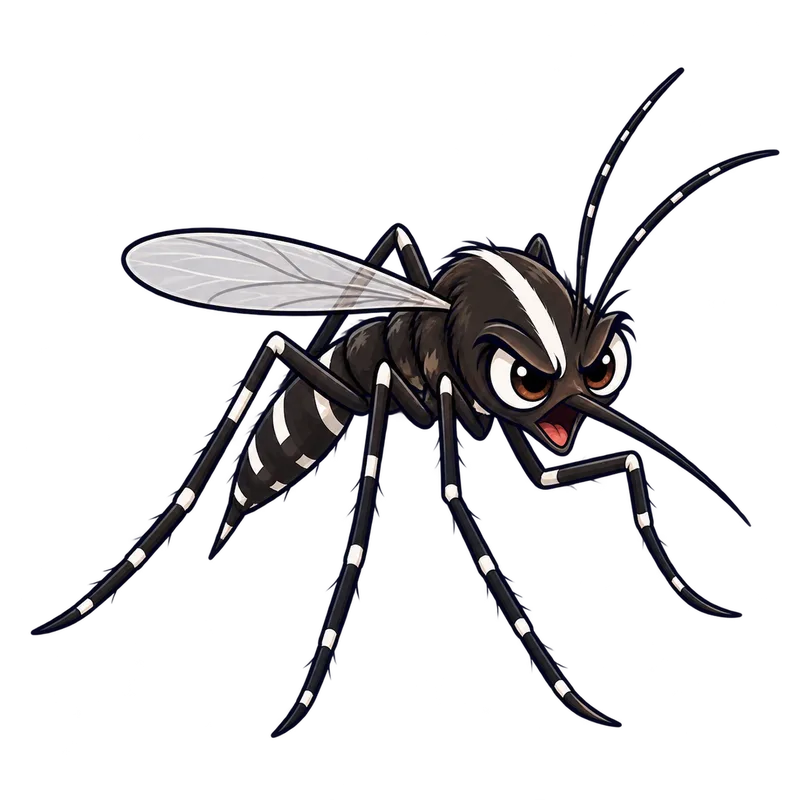
Asian tiger mosquito
Aedes albopictus
- Size
- 5 mm body length
- Color
- Black with white stripes
- Habitat
- Urban and suburban artificial containers
- Diet
- Blood for females, nectar for males
- Life cycle
- Egg, larva, pupa, adult
The Asian tiger mosquito is a slender black insect measuring 5 mm in body length, with 8 mm legs and an 8 mm wingspan, instantly recognized by the single, highly distinctive silvery-white stripe running straight down the center of its dark upper thorax. That sharp white line on its back is the main field mark separating it from the yellow fever mosquito, which features a curved, lyre-shaped pattern instead. Under a hand lens, you will also notice its black legs are heavily banded with crisp white stripes, and its abdomen carries matching white side spots on each segment. Common house mosquitoes and malaria mosquitoes lack these bold black-and-white bands and thoracic stripes entirely. If you spot a massive, spindly insect hovering around your house with extremely long legs, you are looking at a harmless crane fly rather than a biting mosquito.
Habitat & behaviour
Unlike most mosquitoes that wait until dusk to ruin your evening on the patio, the Asian tiger mosquito is a daytime biter that peaks in the early morning and late afternoon. It does not breed in open ponds, lakes, or streams, preferring instead the artificial containers you might accidentally leave around the yard. A forgotten bucket, an old tire, a clogged rain gutter, a flowerpot saucer, or even the water-filled plastic packaging around imported Lucky Bamboo will draw egg-laying females right in. Adult females rarely fly more than 200 meters from where they hatched, meaning a heavy daytime biting problem usually points to a stagnant water source hiding somewhere in your immediate vicinity or your neighbor's yard.
Visual variations
This mosquito moves through a complete physical transformation, shifting from an egg to an aquatic larva, then a pupa, and finally a winged adult. The female possesses a long, piercing mouthpart meant for drawing blood and short palps on either side, alongside antennae carrying modest hair whorls. Males are strictly vegetarian, feeding exclusively on floral nectar and plant juices, and they sport conspicuous, bushy, feathery antennae built specifically to detect the wingbeats of nearby females. The aquatic larva, often called a wrigger, has a distinct head capsule, a swollen thorax, and a breathing siphon at its tail end, hanging head downward at an angle from the water surface to breathe. The subsequent pupa is a comma-shaped, non-feeding tumbler that spends two to three days bobbing near the surface before the adult emerges with a single pair of clear, scaled flight wings and modified gyroscopic balancing organs known as halteres.
Why it matters
Spotting this insect in your yard means dealing with much more than just itchy red bumps from its aggressive daytime bites, since the species is a competent carrier capable of spreading serious illnesses including dengue, chikungunya, zika, and West Nile virus, alongside canine heartworm that threatens dogs and cats. While localized itching and swelling are normal immune reactions to its saliva, anyone experiencing whole-body symptoms like a high fever, severe joint pain, or neurological distress must seek immediate medical evaluation. If you suspect an exotic introduction or need a definitive confirmation of the species for local vector control programs, save an intact adult specimen for professional examination under magnification, and always leave broad-scale chemical treatments or area-wide larvicide applications to licensed pest control operators and public health officials working within strict product label guidelines.
Similar species
 Yellow fever mosquitoAedes aegypti
 Northern house mosquitoCulex pipiens
 Southern house mosquitoCulex quinquefasciatus
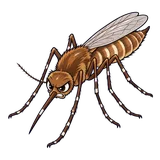 Western encephalitis mosquitoCulex tarsalis
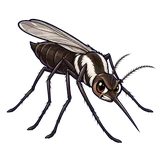 Eastern treehole mosquitoAedes triseriatus
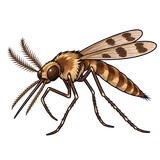 Common malaria mosquitoAnopheles quadrimaculatus