
Mosquitoes
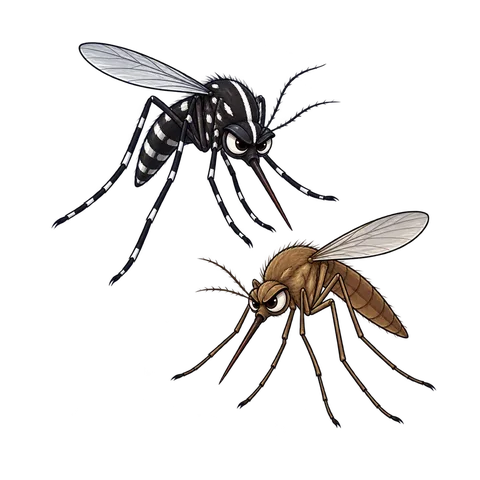
You know those delicate, long-legged flies that seem to find you the moment you step out into the garden shade, announcing themselves with that familiar, high-pitched whine near your ear? That is the unmistakable mark of mosquitoes, a massive family of two-winged insects united by their slender build, scaly wing veins, and needle-like mouthparts. While both males and females happily sip plant nectar, only the females bite, requiring a blood meal to develop their eggs.
People often mix them up with harmless lookalikes, but you can tell true mosquitoes apart by looking closely at their features and resting posture. Those giant insects bouncing off your porch lights are usually crane flies, which are vastly larger and lack a biting mouthpart entirely, while fuzzy insects near drains are moth flies. If you spot a mosquito resting on your wall, its posture gives away the group: common house mosquitoes rest parallel to the surface, whereas other species tilt their entire bodies up at a sharp angle. Stopping them around your property ultimately comes down to a simple weekly habit, which is tipping out every drop of standing water in birdbaths, plant saucers, and clogged gutters before the next generation can hatch.
Explore mosquitoes
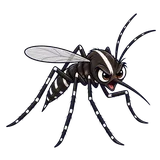 Asian tiger mosquitoAedes albopictus
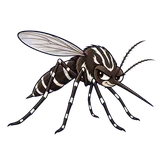 Yellow fever mosquitoAedes aegypti
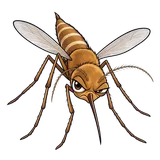 Northern house mosquitoCulex pipiens
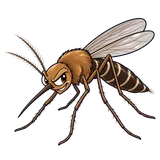 Southern house mosquitoCulex quinquefasciatus
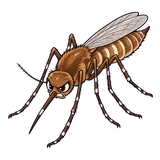 Western encephalitis mosquitoCulex tarsalis
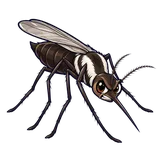 Eastern treehole mosquitoAedes triseriatus
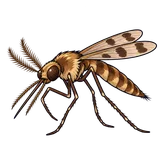 Common malaria mosquitoAnopheles quadrimaculatus
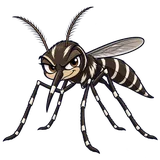 Saltmarsh mosquitoesAedes species
Questions about mosquitoes
Research sources
This page was researched with publications from these institutions, then written and reviewed by The Pest Guide Team:
- U.S. Centers for Disease Control and Prevention (CDC)
- South Dakota State University Extension
- Government of Western Australia Department of Health
- UC Riverside Department of Entomology
- Alabama Cooperative Extension System
- Colorado State University Extension
- Mississippi State University Extension
- University of Minnesota Extension
- University of Arizona Cooperative Extension
- University of Wisconsin-Madison Insect Diagnostic Lab
- Texas A&M AgriLife Extension
- Nebraska Extension