
When do mosquitoes go away for the season?
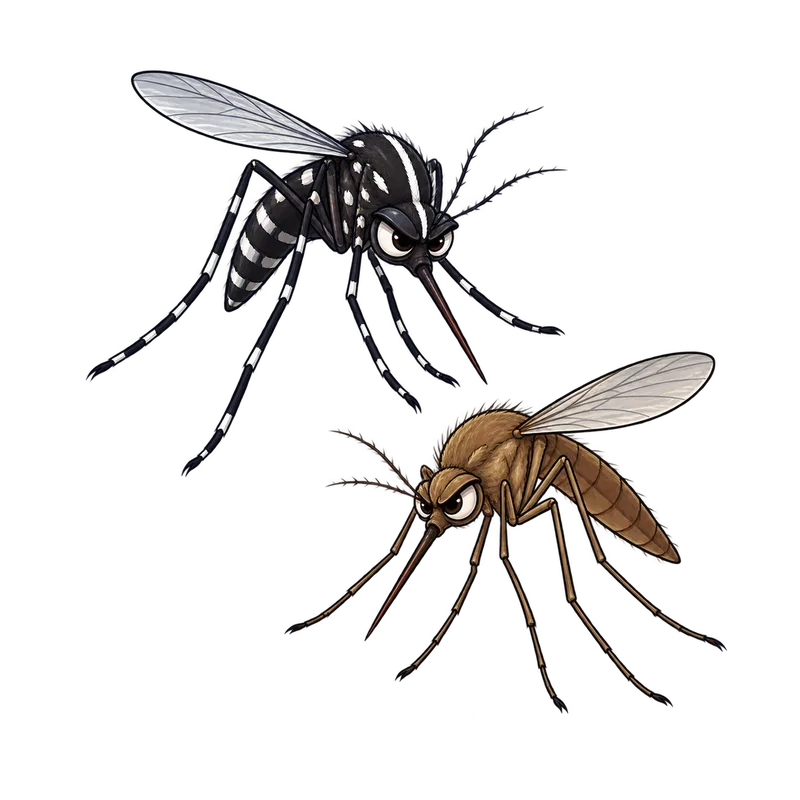
Mosquitoes stop being an outdoor problem in the United States once temperatures stay consistently below about 50 degrees Fahrenheit, or after the first hard frost. In northern and central states, this usually happens in September or October. In mild southern areas, the season stretches longer, and frost-free spots can see activity nearly year-round.
What is actually going on
Picture a chilly evening in late October. You step out to grab the trash cans, and for the first time in months, nothing whines in your ear. No slapping your own neck on the porch. The grill sits quiet. You start to wonder whether the mosquitoes finally packed up and left.
Short answer: yes, mostly. In most of the United States, mosquitoes stop being an outdoor problem once temperatures stay consistently below about 50 degrees Fahrenheit, or after the first hard frost. In northern and central states, that usually lands somewhere in September or October. In the South, where winters are mild, the season can stretch to eight or ten months, and in genuinely frost-free spots you can get low-level mosquito activity nearly year-round. The calendar matters less than the thermometer.
Here is the part most people get wrong, though. The mosquitoes do not actually leave, and they are not all dead. They go quiet, in two very different ways. Think of it as sleepers versus seeds. Some species, the common house mosquito types, survive winter as adult females. Late in summer, as the days shorten, they stop biting, load up on nectar to build fat reserves, and tuck themselves into dark, sheltered spots: unheated basements, crawl spaces, storm drains, hollow trees, gaps in your siding. There they sit in a dormant state, basically hibernating, until spring warmth wakes them. Other species, including aggressive daytime biters like the Asian tiger mosquito, do not survive the cold as adults at all. Instead, the females lay special winter eggs, tiny time capsules glued to the inside walls of containers or resting in dry soil, that shrug off freezing weather and wait. When warm spring rain floods them, they hatch.
And here is the sneaky part: the trigger is not only temperature. It is daylight. Once the days shrink below roughly 13 and a half hours of light, the mosquito's internal clock flips from breeding mode to survival mode, even if the weather is still pleasant. That is why a warm spell in early October does not restart the season. The program has already changed. If you want a household analogy, it works like a thermostat with a schedule: the temperature matters, but the timer runs the show.
How to tell for sure
So how do you know the season is genuinely over in your yard, and not just taking a long weekend? Look at the pattern, not one cold night. A single chilly evening slows mosquitoes down, because they are cold-blooded and simply cannot fly well when it is cool. But one warm afternoon will bring them right back. The season is usually winding down for real when daytime highs stop climbing much past the low 50s and nights regularly dip below 50 degrees. The first killing frost is the traditional finish line in northern states, and it is a decent rule of thumb.
One wrinkle worth knowing: frost kills the active adults of the daytime-biting species, but it does not touch their eggs. Those winter eggs can survive serious cold, down to around 14 degrees Fahrenheit for a stretch, sitting dry in a flowerpot saucer or a clogged gutter. So "we had a freeze, problem solved" is only half true. The adults are gone. Next year's first batch is already in place, waiting.
You may also run into impostors that make you think mosquitoes are still around when they are not. Two classics. First, the big, gangly insect bouncing off your porch light that looks like a mosquito that ate too much: that is a crane fly, sometimes called a daddy longlegs. It has no biting mouthparts, wants nothing from you, and is about as dangerous as a falling leaf. Second, the sluggish flies that show up at your windows on a sunny January afternoon. People assume mosquitoes are breeding in the walls. They are not. Mosquitoes do not breed in dry wall voids or attics. Those window buzzers are almost always cluster flies or blow flies that slipped into the house in autumn to sleep through winter and got confused when the furnace or the sun warmed the room. Annoying, yes. A mosquito problem, no.
One more honest caveat, because it works in the other direction too. A January week that hits 55 degrees can stir hibernating females out of the basement or garage, and you might spot one drifting around indoors. That is a stray waking up early, not a new season starting. Do not panic, and do not declare victory either. The weather gets the final word.
What usually comes next
The real question is not "when do they leave." It is "what do I do with the quiet months." The off-season is when you hold all the cards, and most people fold them the second the biting stops.
Start with water. Mosquito larvae, those little wrigglers, need standing water to grow up, and the eggs riding out the winter are sitting in or around containers in your yard right now. Once a week, walk the property and dump anything holding water: birdbaths, plant saucers, kiddie pools, buckets, the tarp over the firewood, clogged gutters, that forgotten tire behind the shed. Do this in autumn and you are literally throwing next spring's first generation in the trash. For water you cannot drain, like a rain barrel or an ornamental pond, there are larvicide briquets and granules built around a bacterium called Bti. It goes after mosquito larvae specifically and is safe for fish, birds, pets and other wildlife. Follow the product label exactly. The label is the law, and it was written for a reason.
Then think about the sleepers. Before the cold settles in for good, seal the gaps that let overwintering females into your house: cracks around window frames, soffits, the spots where utility lines come in, worn weatherstripping. Check that your screens are intact. This is the same chore that keeps out cluster flies and stink bugs, so one tube of caulk buys you peace from several pests at once.
Skip the gadgets while you are at it. Ultrasonic repellers have no real evidence behind them, and bug zappers mostly electrocute harmless insects while the mosquitoes fly past the light show and bite you anyway. If a device promises to end mosquitoes with sound or a blue glow, the only thing getting drained is your wallet.
When to get help
Most of the time, closing out mosquito season takes nothing fancier than a rake, a tipped bucket and some caulk. A few situations, though, call for backup.
If you or someone in your family gets more than an itchy welt after bites, things like high fever, severe headache, neck stiffness, confusion, or a bite site that looks infected and keeps spreading, see a doctor or urgent care promptly. Mosquitoes in the United States can carry illnesses like West Nile virus, and those symptoms belong in front of a clinician, not a search engine. Same idea for your dog: heartworm is mosquito-borne, and prevention comes from your veterinarian after a blood test, not from the pet store shelf.
Call a licensed pest control professional when the problem outgrows the backyard, like biting that continues inside the house through winter, a large stagnant water source you cannot manage on your own, or a property big enough to need barrier treatments. Those jobs involve product choices and application decisions that belong to a licensed applicator. And if you are sealing up eaves or attic gaps and find bats or nesting birds up there, stop and check with your state wildlife agency first. They are protected, and sealing them in is not an option.
Otherwise, enjoy the quiet evenings. They are the season's way of telling you to get the yard ready for next year.