
What does a yellow fever mosquito bite look like?
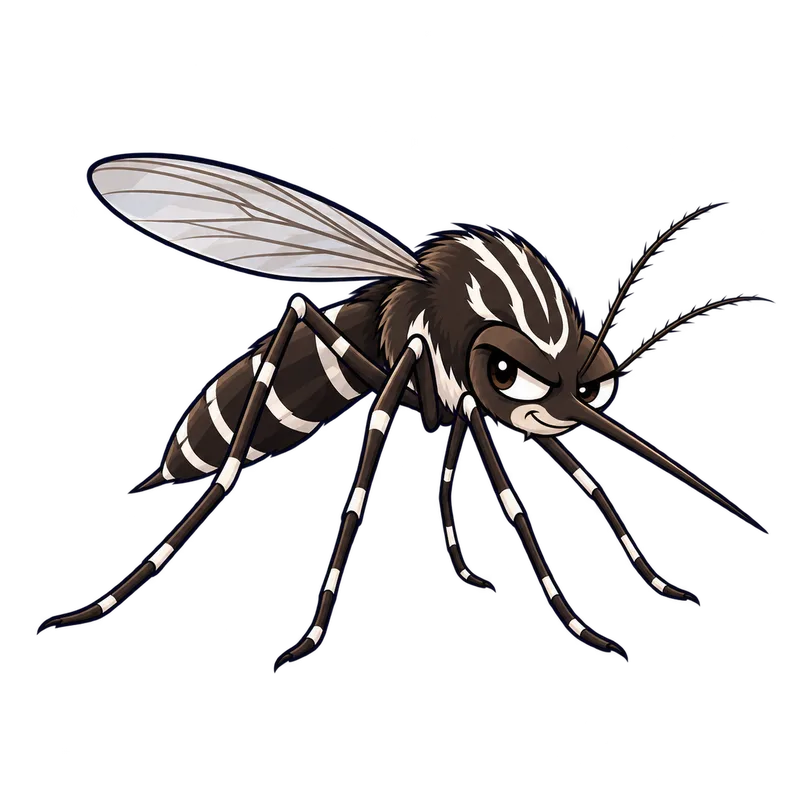
A yellow fever mosquito bite looks like almost every other mosquito bite, appearing as a red, raised, and itchy bump within minutes. There is no special marking or distinctive pattern on the skin to show which species bit you.
What is actually going on
Picture a Saturday morning on the back patio. Coffee in hand, garden looking decent for once, and then you feel that faint tickle on your ankle. You look down and there is a small dark mosquito, white markings on its legs, calmly helping itself to your blood in broad daylight. By the time you slap at it, the damage is done, and ten minutes later you have a raised, itchy bump and a question: was that one of those yellow fever mosquitoes you have been hearing about?
Here is the honest answer, and it is not the one most people expect. A bite from a yellow fever mosquito, Aedes aegypti, looks like pretty much every other mosquito bite: a red, raised, itchy bump or welt, sometimes with a small pale center, that shows up within minutes and can itch for a few days. There is no special marking, no distinctive pattern, nothing about the bump itself that says a yellow fever mosquito was here.
This is the part worth sitting with. No photograph of a skin bump, no matter how clear, can tell you which species bit you. Not Aedes, not Culex, and in many cases not even mosquito versus flea or biting midge. Anyone who claims they can name the culprit from your welt is guessing, and guessing with confidence is still guessing.
So why the bump at all? It is not the puncture that does it. When a female mosquito bites, and it is always a female, since males sip flower nectar and lack the mouthparts for blood, she injects saliva containing proteins that keep your blood from clotting while she feeds. Your immune system treats those foreign proteins like an intruder and releases histamine at the site. The redness, swelling and itch are your own alarm system going off, not damage from the bite itself. Think of the saliva as the mosquito's way of keeping the tap running, and the welt as your body complaining about it.
How to tell for sure
Since the bump will not tell you anything, the mosquito itself has to. The good news is that behavior gives you a strong first clue, and you do not need any equipment for it. Aedes mosquitoes, including the yellow fever mosquito and its close relative the Asian tiger mosquito, are daytime biters. They are most active in the early morning and late afternoon, they bite outdoors around patios and gardens, and they tend to go for ankles and lower legs. If you are being bitten at ten in the morning while watering the plants, that points toward Aedes. If the attack happens after dark, especially that classic one o'clock in the morning whine next to your ear, you are usually dealing with a Culex, the common house mosquito. Timing is not proof, but it narrows the field considerably.
If you manage to catch the insect, and a clear cup and a piece of card work fine for this, the next step is a closer look. To the naked eye you will see a slender dark mosquito with long legs. With a 10x hand lens, the differences become visible: the Asian tiger mosquito has a single crisp white stripe running down the center of its dark back and white bands on its legs, while the yellow fever mosquito carries a lyre-shaped pattern of white scales on its back. That word lyre just means the markings curve like a small harp. Damaged specimens, lookalike species and anything involving larvae go beyond home inspection and belong with a specialist, usually through a university extension service or your local mosquito control district.
One more reality check on geography. In the United States, Aedes aegypti is established mainly in southern states and tropical territories. If you are in Kansas or Nebraska and a daytime mosquito bites you, it is far more likely to be the Asian tiger mosquito, which has spread widely, or another local species. And keep in mind that fleas, chiggers and biting midges, the little no-see-ums, can leave bumps that look remarkably similar. The bite tells you something bit you. The insect, its timing and your location tell you what.
What usually comes next
Treating the bite itself is simple, almost disappointingly so. Wash the spot with soap and water, then hold a cold compress or an ice pack wrapped in a cloth against it to take the swelling down. A dab of hydrocortisone cream or calamine lotion helps with the itch, and an over-the-counter oral antihistamine, taken exactly as its package says, can settle a stronger reaction.
Now the instruction nobody wants to follow: do not scratch. Scratching feels wonderful for about four seconds, then it breaks the skin and lets bacteria in, and that is how a forgettable bite becomes a weeping, infected sore that genuinely needs a doctor. If the itch is making you climb the walls, the cold compress and the cream are the way out.
The more useful work starts after the first aid, because a mosquito biting you in daylight near your house was probably born nearby. Aedes mosquitoes raise their young in small pockets of standing water around homes, and they are not picky about it. A forgotten saucer under a flowerpot, a birdbath nobody has refreshed, a bucket behind the shed, a clogged gutter, even a sagging tarp holding a cup of rainwater can turn out a whole generation in a week or so. A weekly walk around the yard, emptying, covering or flipping anything that holds water, will do more for your comfort than any candle or gadget on the shelf.
For water you cannot drain, like an ornamental pond, larvicide products such as mosquito dunks containing Bti go after the larvae while leaving birds, fish and mammals alone, as long as you use them exactly as the label says. Add intact window screens and an EPA-registered repellent on exposed skin during peak biting hours, and the practical bases are covered. None of this is glamorous. It just works, which is more than most of the gadgets can claim.
When to get help
Most mosquito bites are an annoyance and nothing more. A few situations change the math, though, and they are worth knowing in advance rather than toughing out in the moment.
Get emergency help immediately if a bite or sting is followed within minutes by trouble breathing or swallowing, swelling of the face, lips or throat, chest tightness, severe dizziness or faintness. That is a severe allergic reaction, and it is not a wait-and-see situation.
See a clinician if the bite area starts showing signs of infection over the following days: redness that keeps spreading, warmth, increasing pain, pus or red streaks moving away from the site. That usually means scratching let bacteria in, and it may need treatment.
The third situation ties back to the mosquito in your question. The yellow fever mosquito can carry dengue, Zika, chikungunya and, yes, yellow fever, and other common species carry West Nile virus. If a fever, severe headache, joint or muscle pain, stiff neck, confusion or a widespread rash shows up days to a couple of weeks after bites, especially after travel to a region where these diseases circulate, tell a clinician about the mosquito exposure. The bump itself diagnoses nothing, but the timing matters, and sorting that out is the clinician's job, not yours.
One last thing. If you keep catching day-biting mosquitoes with white markings and suspect an invasive species, your local extension office or mosquito control district will usually identify a specimen and tell you what is active in your area. Large-scale yard treatments belong with licensed applicators, and any accidental pesticide exposure is a call to Poison Control at 1-800-222-1222. The bump on your ankle is ordinary. What bit you, and what you do next, is where a little attention pays off.