
Where can you check the Asian tiger mosquito's range?
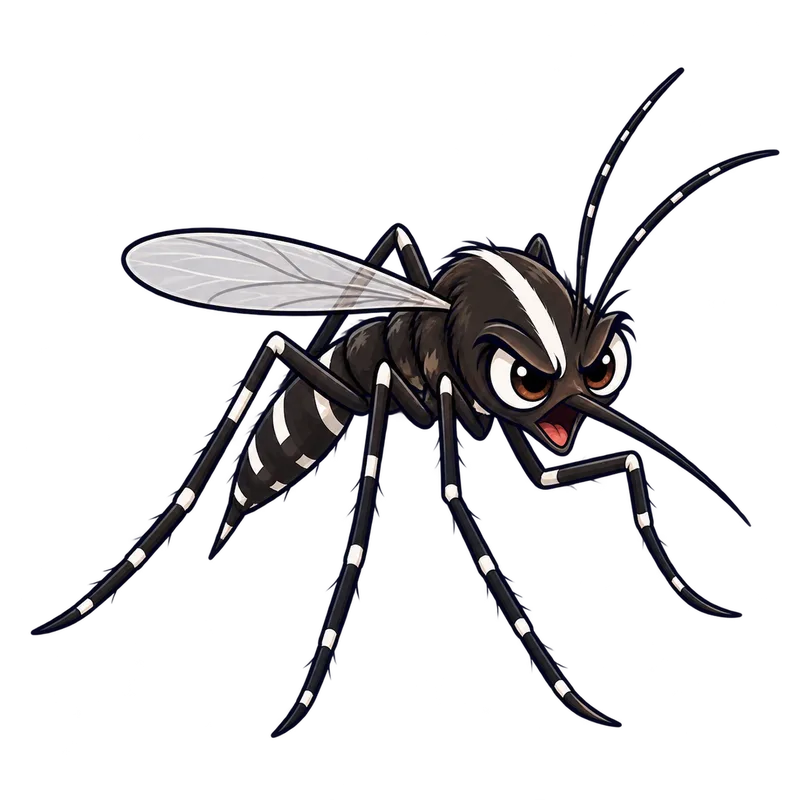
You can check the current range of the Asian tiger mosquito by consulting official vector surveillance tracking systems operated by public health agencies and university extension networks. In the United States, distribution data is compiled by local health departments and fed into the national ArboNET database, while different regional portals handle tracking outside the country.
What is actually going on
You are standing on your back patio with your morning coffee, swatting away a small, aggressively persistent mosquito that refuses to wait for dusk. You notice its stark black-and-white stripes and wonder if this is the notorious Asian tiger mosquito everyone talks about on the news, which immediately raises a bigger question about just how far these insects have spread into your region. If you want to check the current range of the Asian tiger mosquito, you have to look beyond static printed maps and consult official vector surveillance tracking systems operated by public health agencies and university extension networks.
In the United States, distribution data is compiled by state and local health departments and fed directly into the national ArboNET surveillance database. This system tracks where the mosquitoes are established, monitors trapped populations for viral activity, and notes any associated disease cases. If you live outside the United States, different portals handle the job. In the United Kingdom, where these mosquitoes are monitored as a high-risk potential invader, records are managed through the Biological Records Centre national database, the NBN Gateway, and the volunteer-backed Mosquito Recording Scheme. Meanwhile, countries in continental Europe use dedicated interactive platforms like Belgium's Sciensano MosquitoSurveillance program, which provides public maps and citizen science reporting tools.
Relying on these official platforms matters because mosquito ranges shift constantly due to climate changes and accidental human transport. Adult Asian tiger mosquitoes cannot fly very far on their own, usually covering no more than a couple of hundred feet from their hatching site. Instead, they conquer new territories by hitching rides as drought-resistant eggs or larvae hidden inside shipments of used vehicle tires or imported decorative plants like Lucky Bamboo. Because they travel this way across trade routes, isolated populations can pop up far outside their usual established zones, making live online tracking databases much more reliable than old field guides.
How to tell for sure
Spotting an Asian tiger mosquito usually starts with a simple visual check, though confirming the species often requires stepping through an identification hierarchy. To the naked eye, this insect is a small, slender fly measuring about three to five millimeters long, featuring a jet-black background color marked by stark white or silver bands on its legs and abdomen. Unlike common house mosquitoes that prefer to bite in the quiet hours of dusk or night, the tiger mosquito is an aggressive daytime biter that actively hunts hosts during early morning and late afternoon hours.
If you manage to trap one under a glass or examine it with a pocket magnifier, look for a single, sharp, bright white or silver longitudinal line running straight down the middle of the dark thorax from the back of the head. This distinct median stripe is the primary visual marker separating the Asian tiger mosquito from other native banded lookalikes. You can usually tell the sexes apart at this close range as well, because non-biting males possess noticeably feathery antennae, while blood-feeding females have slender, simple hair whorls.
Definitive confirmation gets trickier if the specimen is worn or damaged, since casual handling easily rubs off the delicate scales that create those diagnostic markings. Positive confirmation of trap samples or suspected range expansions usually means submitting the insect to a state agricultural office, a university extension lab, or an official recording scheme. Specialists there rely on high-powered stereo microscopes to inspect specific traits like wing-tip spots or serrated egg-laying organs, or they turn to genetic testing when visual features are gone.
What usually comes next
Once you confirm that Asian tiger mosquitoes are active in your area or buzzing around your yard, your most practical step is to hunt down and eliminate every source of standing water on your property. Because these insects breed in artificial containers rather than open marshes, their eggs are laid just above the waterline in small spots like neglected flower pot saucers, clogged rain gutters, discarded tires, or sagging tarps.
Adult tiger mosquitoes have a very short flight range, which means a heavy biting problem in your yard usually points to a breeding source right on your property or immediately next door. Instead of paying for broad outdoor treatments that offer only temporary relief, focus your efforts on a weekly cleanup routine to dump, turn over, or scrub out any container holding water. Taking away these backyard nurseries stops the local cycle at the source, cutting off the next generation of biters before they ever take flight.
When to get help
There are moments when backyard sanitation and personal bug spray are simply not enough, and you need to bring in outside expertise. If you find overwhelming daytime biting or suspect a brand-new colony of invasive tiger mosquitoes has established itself in your neighborhood, contact your local mosquito abatement district or municipal environmental health department. Public health officials can run community-scale trap monitoring, test the local vector population for pathogens, and launch coordinated control measures.
You should also involve a professional or an agency when dealing with complex chemical treatments, large-scale barrier spraying of dense vegetation, or extensive bodies of standing water that cannot be drained. These situations call for a licensed commercial pesticide applicator who understands environmental safety and product label constraints. Remember that chemical barrier sprays must never be applied to flowering plants to protect bees and other non-target pollinators.
On the health side, consult a primary care physician, an urgent care clinic, or emergency services immediately if mosquito bite sites develop secondary bacterial infections, extreme swelling, hives, or if you experience systemic symptoms like a high fever and joint pain after receiving bites. Asian tiger mosquitoes are competent vectors for several serious pathogens, and any unusual physical reaction deserves prompt medical evaluation rather than guesswork.