
Why do mosquitoes need blood?
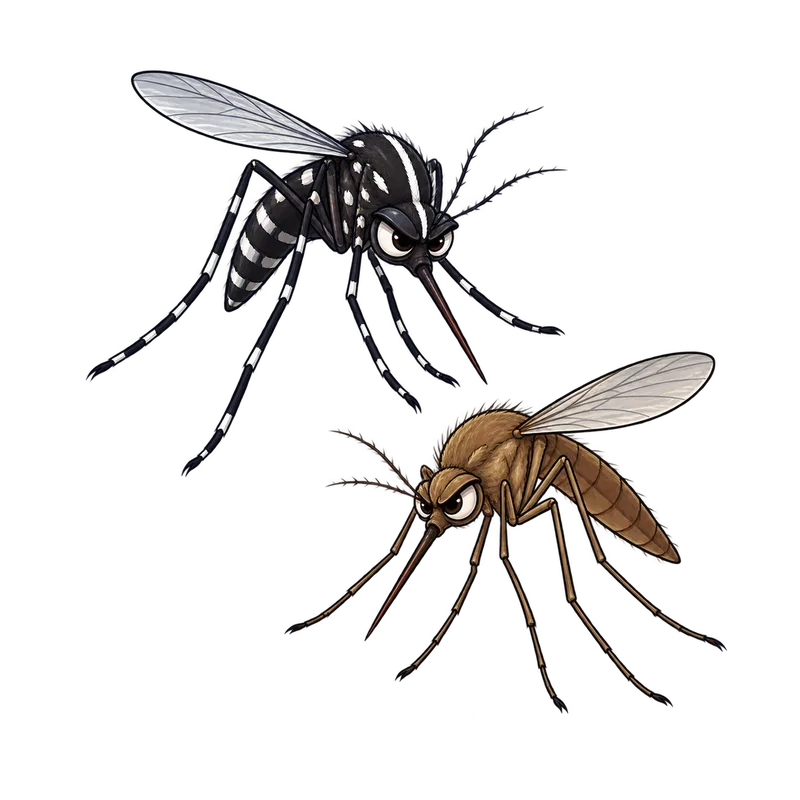
Female mosquitoes need blood because they cannot make eggs without the concentrated nutrition of protein, iron and amino acids found in it. Only female mosquitoes bite, using that blood to develop each batch of eggs while males feed strictly on nectar and plant sap.
What is actually going on
You are out on the porch at dusk, drink in hand, enjoying the first properly warm evening of the year, and within five minutes something is whining past your ear. By morning you have three itchy welts on your forearm and a grudge. The question practically asks itself: why does this tiny animal need your blood at all?
Here is the short answer: mosquitoes do not need blood to stay alive, and most mosquitoes never drink it. Only the females bite, and they do it for one specific reason. They cannot make eggs without it. Blood is dense with protein, iron and amino acids, and the female uses that concentrated nutrition to build yolk and develop each batch of eggs inside her. Think of it less as dinner and more as a pregnancy supplement. For everyday energy, the fuel that keeps a mosquito airborne, both males and females sip nectar, plant sap and other sugary liquids. Nectar is the quick cup of coffee. Blood is the reproductive investment.
And the males? A male mosquito could not bite you if his life depended on it. His mouthparts lack the piercing equipment entirely, so he spends his short, blameless life drinking flower juice and listening for females. Every mosquito that has ever bitten you was female, and every one of them was working on eggs.
The female, meanwhile, is carrying a six-piece surgical kit wrapped in a soft sheath. Two of the needles are tiny serrated saws that work through your skin, two more hold the tissue apart, one forms the drinking tube that pulls blood up, and the last pumps saliva down into you. That saliva is doing two jobs. It carries anticoagulants that keep your blood flowing freely through her narrow straw, and it is the reason the bite itches. Your immune system treats those salivary proteins as invaders, releases histamine, and you get the classic red, swollen, maddening welt. The mosquito is long gone by the time the itch arrives. She is resting somewhere quiet for the next few days, digesting that blood and converting it into a batch of eggs, sometimes a hundred or more from a single meal. Then she finds water, lays them, and goes looking for her next donor. She can live a few weeks and repeat the cycle several times, which makes one female a small egg factory running on borrowed blood. Yours, ideally, from her point of view.
How to tell for sure
People get surprisingly worked up about identifying mosquitoes, partly because half the things that look like mosquitoes are not. The giant, wobbling, long-legged creature that bumps into your porch light in spring, the one that looks like a mosquito scaled up to nightmare size, is a crane fly. It has no piercing mouthparts, it does not bite, and despite the persistent rumor it does not eat mosquitoes either. It is about as dangerous as a falling leaf. The little clouds of flies that hover near ponds and porch lights are usually non-biting midges, which also cannot bite. A true mosquito is small and slender, usually just a few millimeters long, with a visible needle-like proboscis pointing forward and long delicate legs.
If you want to know which sex just landed on you, well, if it landed on you and stayed, it is a female. Males have noticeably bushy, feathery antennae, which they use to track the sound of female wingbeats, and they have no interest in your arm. You would need a hand lens at about 10x magnification to see the antennae properly, but the biting behavior itself is usually all the identification you need.
Telling mosquito types apart is where habit matters, so the word usually is doing real work here. The plain brownish mosquitoes that bite from dusk through the night are usually Culex, and they mostly prefer birds, with humans as a backup option. The small black mosquito with crisp white bands on its legs that nails your ankles in broad daylight while you are weeding is usually an Aedes, often the Asian tiger mosquito, a container breeder that thrives in the water under your flower pots. Anopheles, the malaria group, usually bite at night and rest on walls with the rear end tilted up at a distinctive angle while other mosquitoes lie flat. These are tendencies, not guarantees, and pinning down an exact species takes magnification and sometimes lab work. The reassuring part is that you rarely need that level of precision to make a good decision about your yard.
What usually comes next
Once you know that blood equals eggs, the whole thing clicks into place. Every female that bites you is about to go lay eggs in standing water somewhere close by, because mosquitoes cannot finish their life cycle without it. The eggs hatch into larvae, those little wrigglers you have probably seen jerking around in a neglected birdbath, the larvae become pupae, and out come the adults. In warm summer weather the whole trip can take barely more than a week.
So the single most useful thing you can do is unglamorous but powerful: once a week, walk your property and dump, drain, scrub or cover anything holding water. Flower pot saucers, clogged gutters, buckets, the tarp over the firewood, the kids' wading pool, the birdbath. That forgotten saucer under a potted plant is a nursery, and it is probably sitting closer to your back door than the swamp you have been blaming all along.
For water you cannot dump, like a rain barrel or an ornamental pond, the standard low-risk option is a larvicide based on Bti, a naturally occurring bacterium sold as mosquito dunks or granules. It goes after mosquito larvae specifically and is considered safe around people, pets, birds and fish when used as the label directs, and the label is the authority here, not anything you read online. Barriers pull their weight too: intact window screens, long sleeves at dusk, and an EPA-registered repellent used the way its directions say.
One temptation worth resisting is the electric bug zapper. It feels wonderfully decisive, all that crackling, but it mostly kills harmless and beneficial insects and does essentially nothing to the female mosquitoes hunting you. She finds you by your breath, your body heat and the chemistry of your skin, not by light. The glowing blue device is dinner theater, not pest control.
When to get help
Most mosquito bites are an itchy nuisance and nothing more. Soap, water, a cold compress and an over-the-counter anti-itch cream handle the typical reaction. But some situations deserve more than a drugstore fix, and it helps to know them before you need them.
Get emergency medical care immediately if a bite is followed by signs of a severe allergic reaction: trouble breathing, swelling of the face, lips or throat, tightness in the chest, dizziness or faintness. That is not a wait-and-see situation. If you develop a fever, headache, body aches or unusual fatigue in the days after heavy mosquito exposure, especially during local outbreaks of mosquito-borne illness or after travel, call a clinician and mention the bites. Disease risk depends heavily on the species, the region and the season, and in most of the United States the odds from any single bite are low. Low is not zero, though, and a doctor is the right judge of your symptoms, not a blog post.
On the yard side, bring in a licensed pest control professional or your local mosquito control district if the biting stays heavy despite your cleanup, if you suspect a breeding source you cannot reach, like a neglected neighboring pool or a drainage problem, or if local health officials announce mosquito-borne disease activity in your area. Large-scale spraying decisions belong to licensed applicators and public health agencies. And if anyone in the household swallows a pesticide or gets a significant exposure, call poison control at 1-800-222-1222 right away.
The itch fades in a few days. What is worth keeping is the knowledge that she was never after a meal at all. She was after a nursery, and the surest revenge is making sure she never finds one.