
What blood type do mosquitoes prefer?
There is no solid evidence that mosquitoes prefer any blood type. Female mosquitoes hunt using signals like carbon dioxide in your breath, body heat, and chemicals in sweat. They have no equipment to detect your blood type and no biological reason to care about it.
What is actually going on
Picture a backyard barbecue in July. The burgers are fine, the lemonade is sweating on the table, and by the time the sun drops one person is slapping their ankles every thirty seconds while the person beside them sits there oddly untouched. Somebody always says it: mosquitoes love me, I must have sweet blood. Then comes the confident upgrade: it is because I am Type O.
Here is the blunt answer: there is no solid evidence that mosquitoes prefer any blood type. Not Type O, not Type A, not any of them. The idea has been repeated so often it sounds like settled fact, but when you look for real support in university extension guidance and public health advice, it is not there. No good trials, no field pattern, no consensus. It is a rumor with excellent marketing.
What is real is that some people genuinely get bitten more. Your friend at the barbecue is not imagining it, and they are not crazy for taking it personally. The difference just has nothing to do with what is flowing through their veins and almost everything to do with what is coming off their body. Female mosquitoes do the biting, since males have no piercing mouthparts and live on plant nectar. A female finds you through a chain of signals. First comes carbon dioxide, the stuff you exhale with every breath. She can pick up that plume from a surprising distance and follow it upwind like a hound on a scent. As she closes in, body heat and the moisture rising off your skin take over. At the final stage, chemicals in sweat, including lactic acid and other skin compounds, help seal the deal.
So the person getting eaten alive is usually the one who just finished mowing the lawn, who has been chasing kids around the yard, or who simply runs warm and sweats more. Bigger bodies and active bodies tend to exhale more carbon dioxide, which helps explain why adults often get bitten more than small children and why the person who carried the cooler in from the car becomes the evening's main course. Think of your breath as a lighthouse beam sweeping the dark. The harder you breathe, the brighter the beam. Your blood type, meanwhile, is something a mosquito has no equipment to detect and no biological reason to care about. She is not after a specific vintage. She needs protein and iron to develop her eggs, and any warm donor giving off a strong signal will do.
How to tell for sure
If blood type is off the table, how do you figure out why you are the one getting bitten? The useful clues are in timing, place and behavior, and you can usually read them without buying anything.
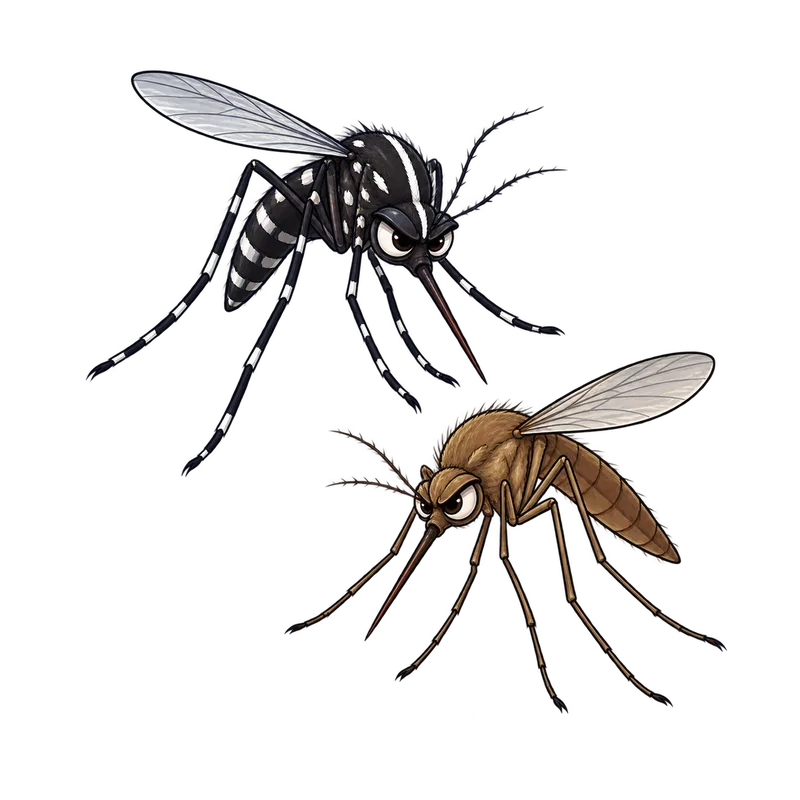
Start with when the biting happens. If it is mostly dusk into night, you are usually dealing with the common house mosquito type, the plain brownish kind that rests flat against a wall. If you are getting bitten in broad daylight, especially morning or late afternoon, the culprit is more often one of the black and white striped species such as the Asian tiger mosquito, which is aggressive, fond of people and happy to breed in whatever container of water your yard happens to offer. None of this is a courtroom identification. It is a pattern, and patterns are usually enough to guide your next move.
Then look at what you were doing in the hour before the bites. Were you exercising, gardening, hauling trash cans, or sitting still in heavy humid air after a hot day? Physical effort raises breathing rate and skin temperature, and both make you easier to find. Dark clothing can also matter, because some mosquitoes use visual contrast as they close in, and a navy shirt against a pale patio stands out like a billboard. None of this is destiny. It usually just stacks the odds.
One thing you cannot do, despite what the internet suggests, is identify the insect from the bite itself. A mosquito bite is not a fingerprint. The welt is your immune system reacting to proteins in the insect's saliva, and two people bitten by the same mosquito can end up with completely different bumps, one a tiny dot and one an angry swollen patch. Judging species by a bite mark is like judging the make of a car from the dent it left. The dent tells you about the collision, not the car. If you truly need to know what species is around, that takes a captured specimen, magnification and sometimes laboratory analysis, which is work for an extension service or a vector control agency, not a photo of your ankle.
What usually comes next
Once you accept that mosquitoes are tracking breath, heat and sweat rather than blood type, the practical decision gets a lot simpler. You cannot change your blood, but you can turn down the signals.
The most useful household move is boring, which is probably why people keep shopping around for a more exciting answer. Remove standing water. The daytime biters that plague many yards breed in containers and often travel only a short distance from where they hatched, so a fair number of the mosquitoes biting you may have been born within a few hundred feet of your patio. Once a week, walk the property and dump or drain whatever is holding water: plant saucers, buckets, clogged gutters, birdbaths, old tires, the forgotten toy truck in the flower bed. Nobody will ever compliment you on it, but it attacks the problem at the source instead of negotiating with every adult mosquito one at a time.
For personal protection, stick with repellents registered with the EPA and recommended by the CDC, such as DEET, picaridin, oil of lemon eucalyptus and IR3535. With DEET, products in the 10% to 30% range generally give several hours of protection, and here is a belief worth pushing back on: stronger is not meaningfully better. Concentrations well above 30% add little beyond somewhat longer duration, so paying extra for the maximum strength bottle mostly buys you a smellier evening. Whatever you choose, follow the label, reapply after swimming or heavy sweating, and keep it away from eyes, mouths and broken skin. Permethrin is the other useful tool, but it goes on clothing and gear only, never on skin, and the label is the authority there.
Clothing does quiet work too. Loose long sleeves and full length pants in light colors make you harder to reach and less visually obvious. Put the pieces together and you have a layered setup: dumping water removes the nursery, clothing is the locked door, and repellent scrambles the chemical sensors mosquitoes depend on. None of these alone is perfect. Together, they usually make a noticeable difference, and not one of them requires knowing whether you are Type O.
When to get help
Most mosquito bites are itchy, rude and gone in a few days. But there are moments when the right move is to stop self managing and bring in someone qualified.
On the health side, watch for reactions that go beyond a normal itchy bump. If a bite is followed by trouble breathing, tightness in the throat, swelling of the face or lips, dizziness, vomiting or confusion, treat it as an emergency and get urgent care immediately, because those can be signs of a severe allergic reaction. If a bite site starts showing spreading redness, red streaks, pus or real warmth, or if fever and chills show up days after a stretch of heavy biting, see a clinician, since mosquitoes in many regions can transmit viruses and a scratched open bite can turn into a skin infection. If anyone accidentally swallows a pesticide or repellent or has a bad exposure, call Poison Control right away at 1-800-222-1222 in the United States. And be skeptical of anyone, online or otherwise, who claims they can diagnose what bit you from a photograph of a mark. They cannot.
On the property side, most yards respond to the weekly water dump and sensible repellent use. If you are doing that and still getting swarmed, or mosquitoes are showing up inside the house, in a basement, or in numbers that suggest a breeding site you cannot find or reach, call a licensed pest control professional or your local mosquito control district. Some populations breed in storm drains, catch basins and other places no homeowner can treat responsibly, and community scale control is exactly what those agencies exist for.
So, back to your friend at the barbecue. Mosquitoes do not care about their blood type. They care about breath, heat and sweat, which is good news, because those are things you can actually do something about.