
What smells do mosquitoes hate?
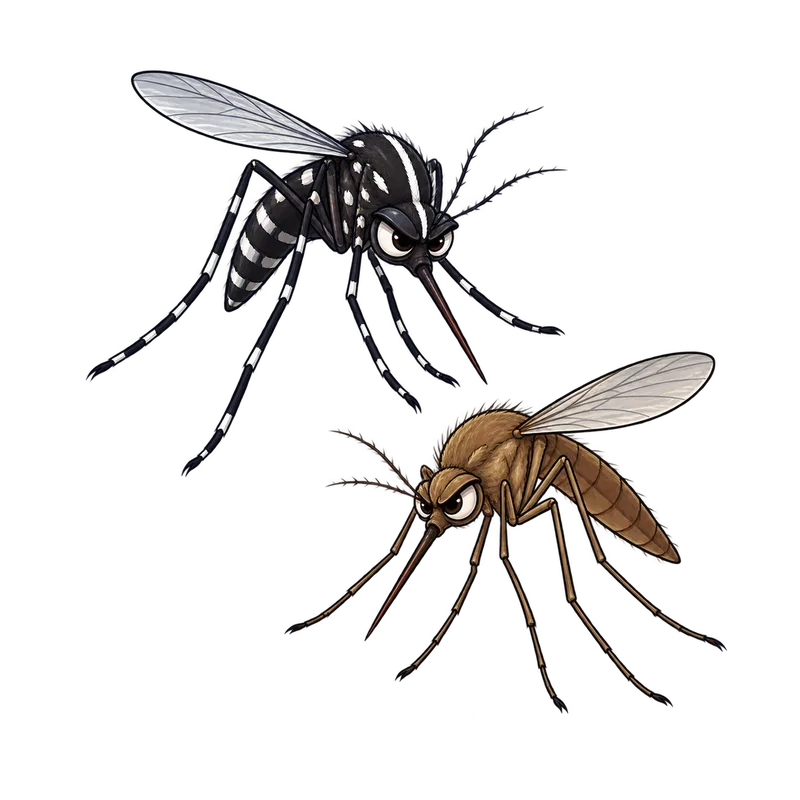
Mosquitoes do not hate smells, but certain scents and chemical compounds jam the internal guidance systems that female mosquitoes rely on to find a host. Effective repellents create a vapor barrier over your skin using active ingredients like DEET, picaridin, oil of lemon eucalyptus, or IR3535.
What is actually going on
You are sitting on the back patio on a warm July evening, watching a bug zapper flash and crackle every few seconds, wondering why your ankles are still getting bitten. Someone mentions planting citronella around the deck to keep the pests away, and suddenly everyone has a favorite kitchen remedy or backyard trick. Mosquitoes do not actually experience emotional hatred toward any smell. Instead, certain scents and chemical compounds simply jam the internal guidance systems that female mosquitoes rely on to find a host.
Female mosquitoes need a blood meal to mature their eggs, and they locate people by tracking exhaled carbon dioxide plumes, body heat, and specific skin secretions like lactic acid. When you apply an effective repellent, you are not scaring the insect away in a psychological sense. You are interacting with the olfactory receptors on its antennae and palps, essentially masking the chemical signals that lead it to your skin.
This is where common garden assumptions tend to fall apart. Planting citronella grass, lemon thyme, or a so-called mosquito plant around your seating area will not keep the bugs away on its own. Living, intact plants keep their aromatic oils locked tightly inside their cell structures. Unless you physically crush the leaves to release those volatile monoterpenes into the air, the plant remains completely useless as a deterrent. Planting citronella grass around a deck expecting to drive away mosquitoes is like placing an unlit scented candle on a table and expecting the whole room to smell like lavender.
Government health agencies and scientific researchers generally recognize four primary active ingredients that actually disrupt mosquito host-seeking behavior when formulated correctly. These include DEET, picaridin, oil of lemon eucalyptus or PMD, and IR3535. Each of these options works by creating a vapor barrier over the treated surface, preventing the insect from recognizing that a warm-blooded meal is sitting right in front of it.
How to tell for sure
Before worrying about what scents repel them, you usually want to make sure you are actually dealing with mosquitoes and not another backyard nuisance. True mosquitoes belong to the family Culicidae and usually measure between 3 to 6 mm long. They have slender bodies, long legs, and a distinctive needle-like feeding tube extending from the head. If you use a 10x hand lens, you can usually spot tiny scales along their wing veins, a feature that sets them apart from similar-looking insects.
Rest posture can usually tell you a bit more about the specific kind of mosquito hovering around your yard. Anopheles species usually rest with their abdomens tilted upward at a 45-degree angle. Culex and Aedes species usually hold their bodies parallel to the resting surface. Aedes mosquitoes are typically aggressive daytime biters with dark bodies and distinct stripes, while Culex species usually prefer feeding from dusk until dawn.
Remember that only adult females bite. The males feed exclusively on flower nectar and plant juice, meaning they have no interest in your skin volatiles or your carbon dioxide emissions. It helps to keep in mind that you might also mistake them for fungus gnats or biting midges, which are often called no-see-ums. Fungus gnats are smaller, delicate, and usually hover weakly around the soil of indoor potted plants without biting humans. Biting midges are tiny, stocky insects with arched thoraxes that inflict a remarkably painful bite near water sources, but they lack the elongated proboscis of a true mosquito.
What usually comes next
When you head to the store to pick up a repellent, your most practical choice comes down to matching the active ingredient to your specific outdoor activity and gear. If you are heading out for a standard evening walk or yard work, a formula containing between 10 percent and 30 percent DEET or a similar level of picaridin is usually your best bet. Concentrations of DEET past 30 percent rarely offer any extra repellency, serving only to extend the wear time slightly while increasing the risk of skin irritation or damage to plastics and synthetic fabrics.
Packing for a weekend hike and spraying a heavy dose of DEET directly onto your high-end synthetic rain jacket or plastic watch strap can cause the surface to soften or cloud up, an easy mistake that you can avoid by switching to picaridin for synthetic gear. For families preferring plant-derived options, oil of lemon eucalyptus or PMD offers solid protection, but you should never apply it or IR3535 to children under 3 years of age.
Avoid falling for marketing myths like Avon Skin-So-Soft bath oil, which laboratory tests show is at least 10 times less effective than basic DEET formulas. Similarly, skip ultrasonic plug-in devices and bug zappers, which fail to alter female mosquito behavior and mostly just destroy beneficial non-target insects like moths and beetles. Plugging in an ultrasonic repeller to drive off mosquitoes is like blowing a silent dog whistle to scare away a bear, because mosquitoes simply lack the behavioral instinct to care about the sound.
If you want an extra layer of defense for your clothing, you can pre-treat your shirts and pants with permethrin sprays. Permethrin is strictly for fabric and gear application and must never be sprayed directly onto human skin. Once dry, it kills and repels mosquitoes and ticks on contact through multiple wash cycles.
When to get help
There are times when backyard repellents and source reduction simply are not enough, and you need to know when to involve outside help. If you live in an area with severe, persistent neighborhood infestations originating from large off-site standing water sources like drainage ditches or neglected ponds, you should contact municipal vector control or a licensed pest management professional. These situations require specialized interventions like larviciding or professional perimeter barrier treatments that go far beyond what a homeowner can safely handle.
You also need to watch closely for health warnings related to mosquito bites. Mosquitoes vector serious pathogens including West Nile virus, Eastern Equine Encephalitis, dengue, and malaria depending on your geographic region. If you or a family member develops severe bite reactions, widespread hives, extreme swelling, or secondary skin infections from scratching, you should prompt a visit to a primary care clinician or urgent care clinic. Seek immediate medical attention if systemic symptoms like a sudden high fever, severe headache, confusion, or muscle weakness appear following mosquito exposure, and contact your local poison control center if there are any concerns regarding repellent exposure or accidental ingestion.