
Do only female mosquitoes bite?
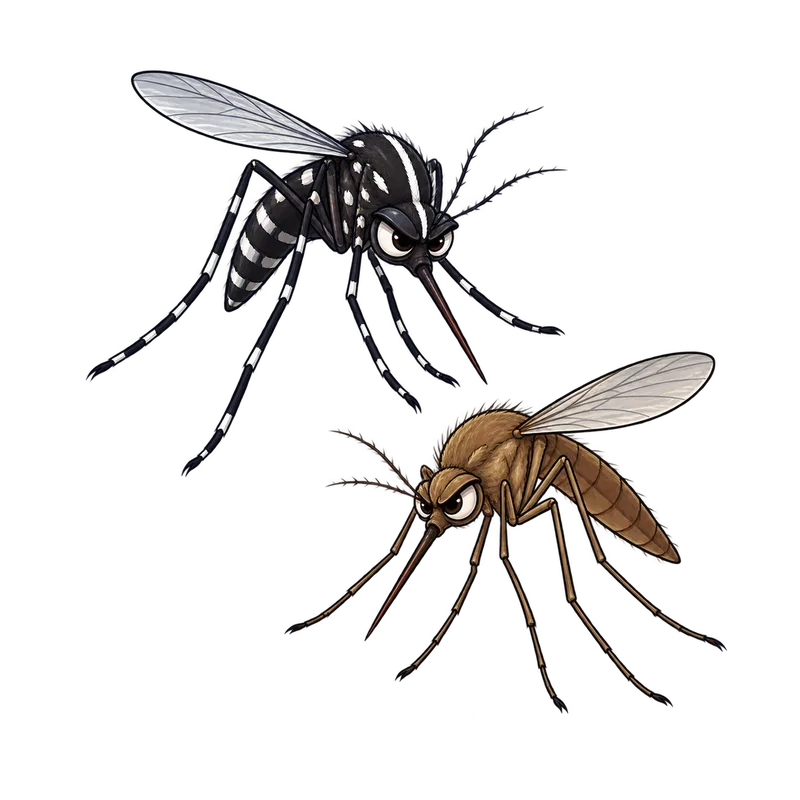
Yes, only female mosquitoes bite because males lack the physical mouthparts required to pierce skin. Female mosquitoes need a concentrated protein boost from animal blood to mature their eggs, while males feed exclusively on plant nectar and fruit juices for flight energy.
What is actually going on
You are sitting on the back patio at dusk, swatting lazily at your ankles while a high-pitched whine circles your ear. Naturally, you assume the tiny insect hovering around you is out for blood. The short answer is yes, only female mosquitoes bite. If you have ever wondered what the males are up to while their partners are busy ruining a summer evening, they are usually hanging out in the garden visiting a local juice bar of sorts. Both male and female mosquitoes need sugar for daily flight energy, so they both feed on plant nectar, sap, and fruit juices.
The real division of labor starts when it is time to reproduce. A male mosquito lacks the physical mouthparts required to pierce skin. His anatomy simply does not include the bundle of microscopic, blade-like stylets that a female uses to tap into a blood vessel. He is entirely harmless, spending his short adult life sipping nectar and tracking the flight tone frequencies of females.
The female, on the other hand, needs a heavy-duty protein boost to mature her eggs. While plant sugars keep her flying, she cannot produce viable eggs without the concentrated amino acids found in animal blood. When she lands on your skin, she slips her fine, needle-like proboscis into a capillary. The initial puncture is virtually painless. The familiar red welt and maddening itch arrive hours later as an allergic reaction to the anti-clotting proteins and saliva she injects to keep your blood flowing smoothly while she drinks.
People often assume that every mosquito-like insect in the yard is hunting for skin to pierce, but nature is a bit more varied than that. Take the giant crane fly, often called a mosquito hawk. It looks like an oversized mosquito with impossibly long, dangling legs, but it is completely harmless. It does not bite humans, it does not eat mosquitoes, and its mouthparts are useless for predation. On the flip side, you might run into stable flies sitting on a sunny patio table. They look nearly identical to standard house flies, but both males and females carry a rigid, bayonet-like snout that delivers a remarkably sharp pinch through your socks.
How to tell for sure
Figuring out whether the insect buzzing around your porch light is a harmless male or a blood-seeking female usually comes down to looking closely at its head. You do not need a laboratory microscope for this, though a simple magnifying glass or a macro camera lens set to a few magnifications will make it much easier.
Look at the antennae sprouting between their eyes. Male mosquitoes usually feature very bushy, feathery antennae that look like tiny miniature bottle brushes or fluffy plumes. They use these oversized sensory structures to pick up the faint hum of a female's wings. Female mosquitoes, by contrast, have simple, slender antennae that look like plain threads with only a few short, sparse hairs.
You can also check the small finger-like mouthpart appendages sitting right alongside the central drinking tube, which are known as maxillary palps. In most common females, these palps are quite short. If you happen to be dealing with an Anopheles mosquito, the female palps will be just as long as her drinking tube, giving her a distinctive appearance when she rests at a sharp angle against a wall with her rear end pointed straight up in the air.
If you are trying to identify a pest from a mark on your skin, stop right there. A skin reaction, welt, or red bump cannot be used to identify an insect species. The appearance of a bite depends almost entirely on your own immune system sensitivity, meaning two different people will react completely differently to the exact same bug.
What usually comes next
Since only females bite and every single female starts out as an aquatic larva, your most effective practical move is to break the breeding cycle right in your own yard. Adult mosquitoes do not materialize out of thin air, and they rarely travel very far from the stagnant water where they hatched.
Take a walk around your property once a week and eliminate standing water wherever you find it. Empty out plant saucers, tip over upside-down garbage can lids, scrub out birdbaths, clear wet leaves clogging your rain gutters, and toss any old tires sitting behind the shed. If you have an ornamental garden pond or a water feature that cannot be easily drained, apply biological larvicides containing natural soil bacteria to stop the wigglers from turning into biters.
Doing this source reduction every seven days ensures that the mosquitoes hatching in your yard never live long enough to become a nuisance. It is a straightforward physical chore that requires no special equipment, just a bit of consistency before the peak warm weather settles in.
When to get help
Most mosquito bites heal up on their own within a few days, but there are clear boundaries where you should step back and hand the problem over to someone else. If a bite develops signs of a secondary bacterial infection, such as pus, increasing warmth, or red streaks spreading outward from the wound due to scratching, visit a primary care clinician or an urgent care center right away. Seek emergency medical attention immediately if anyone experiences severe allergic symptoms like trouble breathing, throat tightness, swelling of the face, or dizziness after being bitten.
For chemical treatments around the structure, remember that commercial pest control products must be handled with care. If you decide to use chemical pesticide applications or if you are dealing with a severe, widespread infestation that home methods cannot touch, leave the work to a licensed professional pesticide applicator or your local public vector control district. The product label is a strict legal document governing where and how treatments can be applied safely. Should anyone ever experience an accidental chemical splash, skin exposure, or suspected toxicity during pesticide use, call the national Poison Control center immediately for guidance.