
What do mosquitoes do for the environment?
Mosquitoes serve natural ecosystems by acting as cleanup crews that filter water and recycle nutrients during their larval stage, and by acting as casual pollinators that feed on nectar as adults. They also provide essential meals for just about everything else with a pulse at the bottom of the food chain.
What is actually going on
You are sitting on the back patio on a quiet summer evening, swatting at a persistent hum around your ankles, and wondering why on earth these wretched insects even exist. It is a fair question, especially when you are nursing three itchy welts on your shin. We usually think of mosquitoes as winged hypodermic needles whose sole purpose in the grand scheme is to ruin barbecues and carry miserable diseases. But if you strip away our entirely justified human annoyance, it turns out mosquitoes are deeply woven into the gears of natural ecosystems. They are not just freeloading villains. They are busy workers pulling shifts at the bottom of the food chain, both as cleanup crews and as meals for just about everything else with a pulse.
Before you picture a cloud of bloodthirsty pests, picture a stagnant birdbath or an uncleaned rain barrel at the back of the yard. Beneath that murky surface film, tiny mosquito larvae are hanging upside down, paddling away. These little wrigglers are actually aquatic vacuum cleaners. They use brush-like mouthparts to sweep up suspended organic particles, microscopic algae, and bacteria, filtering the water and recycling nutrients that would otherwise turn stagnant ponds into foul soups. In their early weeks of life, they do real ecological lifting by converting waste into insect biomass.
And then there is the half of the population you probably never notice unless you lean in close with a magnifying glass. Male mosquitoes never bite, and they cannot bite, because their mouthparts lack the piercing structures required to draw blood. Instead, they spend their brief adult lives as gentle plant visitors, flitting from flower to flower to feed on nectar and floral secretions. In doing so, they pick up pollen and act as casual pollinators for various wild plants, much like tiny, unappreciated bees with poor PR.
How to tell for sure
People often point at any long-legged bug hovering near the porch light and declare it a giant mosquito. But true mosquitoes belong to a specific family, and telling them apart from harmless lookalikes usually comes down to a couple of distinct physical details. Real mosquitoes are relatively small, and if you happen to get a close look under good light, you will usually notice tiny scales lining their wing veins and an elongated proboscis sticking out from the front of the head to sip liquids.
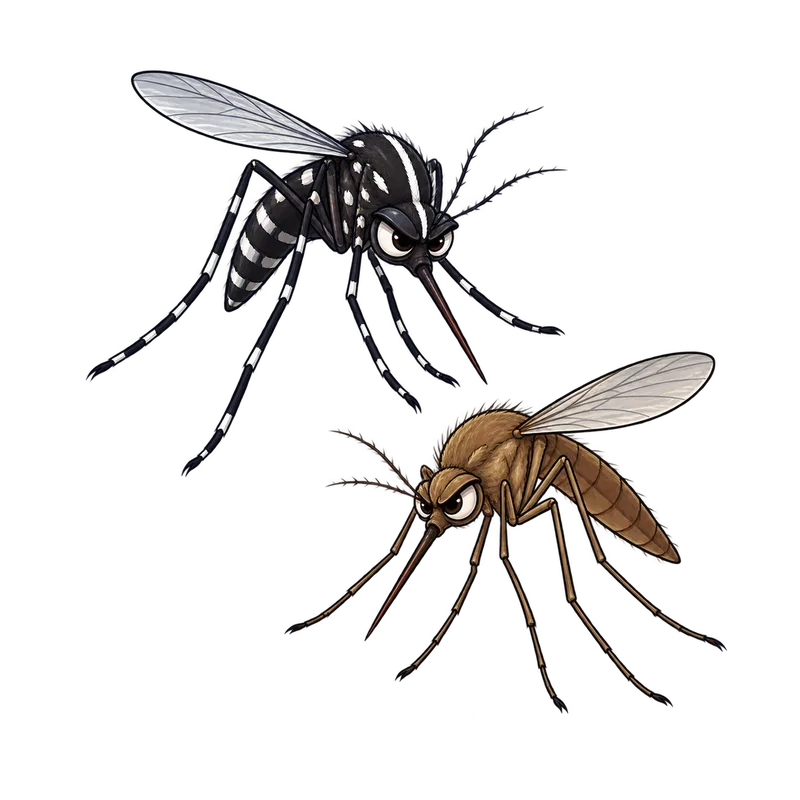
You will also usually want to know who you are dealing with when they are buzzing around your yard. If it is the middle of the day and a small, aggressively bold insect with white stripes on its legs is trying to bite your ankles, you are usually looking at an invasive container-breeding species like the Asian tiger mosquito. If you are sitting outside just as the sun goes down and a dull brown mosquito is circling your ears, it is usually a native marsh mosquito.
Do not confuse these pests with crane flies, which are those giant, clumsy, long-legged insects that look like mosquitoes on stilts. People frequently call them mosquito hawks and assume they hunt other bugs. In reality, adult crane flies are usually completely harmless, do not bite, and usually do not even feed. They are just overgrown neighbors with terrible flying skills that wandered in through an open door.
What usually comes next
When you stare at your yard and realize you are sharing space with thousands of developing larvae, your natural urge is to grab a heavy chemical spray and coat every bush in sight. Yet before you take that step, you need to make one practical choice that will actually solve the core of the problem without wasting your weekend or hurting local wildlife. You have to decide whether you are going to chase flying adults or stop the next generation from hatching in your own standing water.
Treating the shady spots in the shrubs where adults rest offers temporary relief, but it acts like bailing out a leaky boat with a spoon while the garden hose runs. The single most effective move you can make is source reduction. Pull on some work gloves and walk your property line once a week to dump every drop of stagnant water you spot. Tip over saucers under flowerpots, clear out clogged roof gutters, empty old buckets, and scrub birdbaths. If you have a permanent rain barrel or an ornamental garden pond that you cannot drain, drop in a biological larvicide containing bacterial crystals that target mosquito guts specifically, leaving your fish, frogs, and visiting birds completely unharmed.
When to get help
Most of the time, backyard mosquito management is a weekend DIY chore involving some elbow grease around the yard. Yet there are moments when the situation steps past casual maintenance and requires outside expertise. If you or someone in your household develops a severe local skin reaction, unexplained high fever, severe headache, or neurological symptoms after being bitten, you need to consult a physician or visit urgent care right away. Never try to diagnose a bite or treat severe systemic symptoms at home.
You also need to hand the reins over to the professionals when dealing with large-scale or high-risk properties. If you manage a commercial facility, a school, a public park, or extensive standing water bodies like agricultural drainage or unmanaged retention ponds, state regulations usually require a licensed pesticide applicator to handle the treatments. Additionally, if you are a pet owner living in an area where mosquitoes carry canine heartworm, talk to a veterinarian before giving your dog any preventive medications, since animals need proper medical testing to ensure they are clear of active infections before starting treatment.