
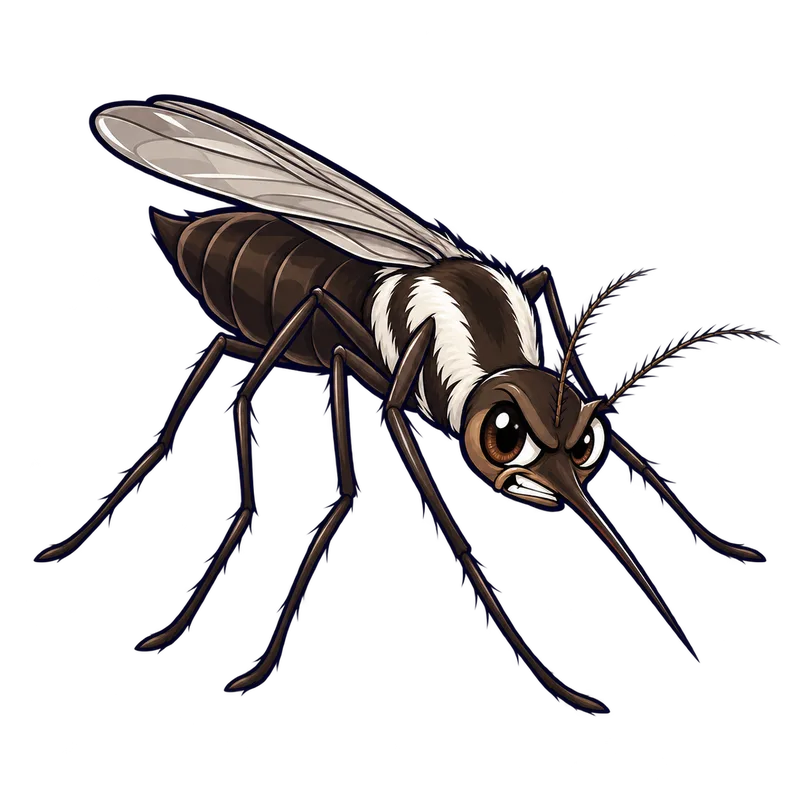
Eastern treehole mosquito
Aedes triseriatus
- Size
- 3 to 6 mm
- Color
- Dark body with silver-white scales
- Habitat
- Shaded woodlands and tree cavities
- Diet
- Females take blood; males feed on nectar
- Life cycle
- Complete metamorphosis from egg to adult
You are looking at a small, dark mosquito with striking silver-white markings along its body and sides, scientifically recognized under two interchangeable names depending on the reference shelf: Aedes triseriatus in medical literature and Ochlerotatus triseriatus in regional extension guides. If you want to check the diagnostic features yourself, you will need at least a 10x hand lens or a microscope to examine the small scales patterning the wing veins and the distinctive thoracic scaling.
Identity
Telling this woodland dweller apart from other flying insects requires looking past the common garden pests. The Asian tiger mosquito is another container breeder, but it wears a dead giveaway: a single, solid white stripe running right down the middle of its dark back alongside bold black-and-white banded legs. Standard Culex mosquitoes are brownish without those sharp, contrasting pale body markings, and they tend to feed after dark. Non-biting lookalikes like chironomid midges lack wing scales and a piercing proboscis entirely, while giant crane flies look like oversized, clumsy mosquitoes with spindly legs but are completely harmless and incapable of biting.
Habitat & behaviour
This species belongs firmly in the woods rather than the living room. Natural populations thrive in shaded hardwood forests and mature residential yards featuring old oak, beech, or maple trees with rot cavities, hollow stumps, and natural water-holding bowls. Rainwater collects in these wooden receptacles to form a dark, leaf-stewed nursery protected from fish and direct sunlight.
Unlike many common mosquitoes that wait for dusk, female Eastern treehole mosquitoes actively hunt for hosts during the day and early twilight. Gardeners, hikers, and children playing near shaded woodland borders often find themselves targeted during daylight hours. While the adults are strictly outdoor creatures, they will occasionally drift indoors through torn window screens or open doors when a house sits right against a wooded lot, though they never establish permanent indoor colonies.
Visual variations
As a true fly, this mosquito moves through four distinct life stages, with no social castes to complicate the family tree. The microscopic eggs are laid singly on damp wood just above the water line inside a tree cavity or an artificial container like a discarded tire or rain barrel.
When those eggs are flooded by summer rain, they hatch into aquatic larvae known as wrigglers. These legless, active swimmers feature a hardened head capsule and a slender breathing siphon extending from the tail end to pierce the water surface film. After molting through four growth stages, they transform into comma-shaped pupae or tumblers, which tumble through the water when disturbed but do not feed.
Adults emerge with slender bodies, long legs, and a single pair of functional flight wings. Sexing them is straightforward if you look closely at the head. Females carry a long, needle-like proboscis built for piercing skin and drawing blood, alongside short palps and sparse, short antenna hairs. Males feature conspicuously feathery antennae packed with sensory hairs for tracking females, and their mouthparts are built strictly for sipping floral nectar and plant sap rather than piercing skin.
Why it matters
The presence of these mosquitoes in a yard usually points to a nearby tree cavity, clogged roof gutter, or collection of discarded containers holding stagnant rainwater. Beyond the annoying daytime bites inflicted by females, this species serves as the primary vector of La Crosse Encephalitis virus in endemic forested regions.
Bite reactions alone can never identify a mosquito species, as individual immune responses to saliva vary wildly. Confirming the pest requires an intact specimen examined by a specialist. Where tree cavities cannot be drained or filled with sand, targeted biological larvicides applied according to the product label offer a practical way to manage the population without relying on broad chemical sprays.
Similar species
 Common malaria mosquitoAnopheles quadrimaculatus
 Saltmarsh mosquitoesAedes species
 Asian tiger mosquitoAedes albopictus
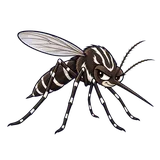 Yellow fever mosquitoAedes aegypti
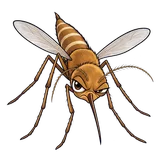 Northern house mosquitoCulex pipiens
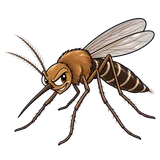 Southern house mosquitoCulex quinquefasciatus