
Bed bug bites vs mosquito bites: what is different?
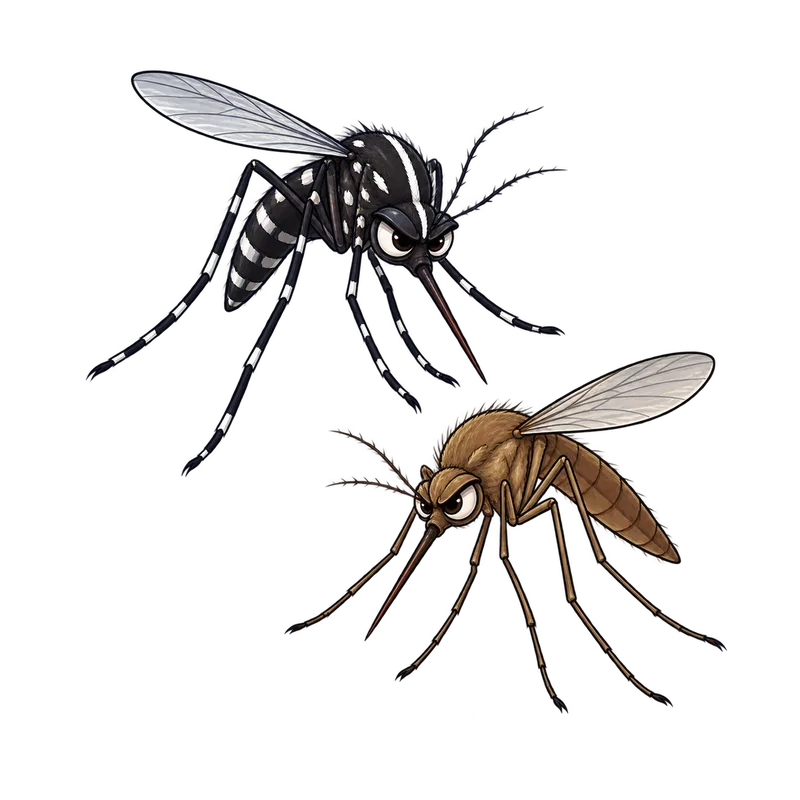
Bed bug bites usually appear in linear rows or tight clusters on exposed skin, while mosquito bites typically present as random, isolated wheals. Mosquitoes are free flying outdoor vectors that strike opportunistically, whereas bed bugs are wingless indoor parasites that feed exclusively while you sleep.
What is actually going on
You wake up on a Tuesday morning, scratch a fresh, furious red welt on your forearm, and immediately wonder what got you during the night. Was it the mosquito that slipped through the screen door yesterday, or are you dealing with something far less welcome tucked into the mattress seams? When you wake up itching, telling the difference between a bed bug bite and a mosquito bite feels like solving a crime scene without any fingerprints.
The short answer is that while both pests inject saliva containing anticoagulants to keep your blood flowing while they feed, their methods, timing, and habits are entirely different. Mosquitoes are free-flying outdoor vectors that strike opportunistically and transmit serious human pathogens. Bed bugs are wingless, crawling indoor parasites that feed exclusively while you sleep, lingering close to your bed and carrying no proven risk of spreading diseases.
Yet, looking at a red bump on your skin will rarely give you a straight answer. Both insects leave behind itchy, raised skin wheals that look remarkably similar to the naked eye. To make matters more confusing, your own immune system plays a huge role in how those bites actually show up. If you have never been bitten by a bed bug before, your body might take 8 to 10 days to react, meaning the bump you see today is a souvenir from a hotel stay a week ago.
On the other hand, if you share a bed with someone, you might be scratching a dozen angry welts while your partner looks completely normal. This happens because roughly 20% to 30% of people are anergic, meaning their immune systems simply do not react to bed bug saliva at all. An unmarked bed partner does not mean you are safe. It just means their body is ignoring the guests you are sharing the room with.
Differentiating bed bug bites from mosquito bites requires looking at how these creatures move and feed. Mosquitoes fly freely, tracking hosts by carbon dioxide and heat, and they probe quickly, often leaving you to swat them away mid-flight. Bed bugs do not fly or jump. They crawl slowly, covering short distances from their hidden harborages in furniture frames, baseboards, and mattress seams to reach a sleeping human.
Once a bed bug reaches you, it inserts a slender proboscis and injects saliva containing pain-numbing compounds and anticoagulants. You sleep right through the feeding process, which typically lasts about 3 to 10 minutes. When the bug finishes, it crawls back into the shadows before you even stir. This stealthy approach explains why you wake up to a surprise row of bumps rather than catching the culprit in the act.
How to tell for sure
Trying to diagnose an insect based solely on a skin lesion is a guessing game that dermatologists and entomologists lose every day. Skin reactions are entirely non-specific immune responses, meaning a mosquito, a bed bug, or even a stray flea can leave behind a papule that looks identical. If you want to know what is biting you, you have to stop looking at your skin and start looking at your furniture.
Bed bug bites usually show up in linear rows or tight clusters of 3 or more papules along exposed skin lines on your face, neck, arms, or back, often earning the grim nickname of breakfast, lunch, and dinner. Mosquito bites, by contrast, usually present as random, isolated wheals scattered wherever your skin was exposed to the air outdoors or near an open window.
To confirm bed bugs, you need to find physical evidence within an 8-foot radius of where you sleep. Unfed adult bed bugs are about the size of an apple seed, brown, and oval, while newly hatched nymphs resemble a single poppy seed. Because they are wingless and cannot jump, they crawl slowly into narrow cracks in mattress seams, wooden bed frames, baseboards, and headboards.
Look closely for dark fecal speckling on fabric surfaces. If you touch one of these dark dots with a damp white cloth or cotton swab, bed bug waste will dissolve and run reddish-brown because it consists of digested blood, whereas other household dust or droppings will not. You might also spot translucent tan shed skins left behind as the bugs grow, or tiny, pearly-white eggs cemented into hidden crevices.
What usually comes next
Once you find physical proof of bed bugs rather than just itchy skin, your immediate practical decision is whether to tackle the issue with targeted thermal management and mechanical cleanup or to call in a professional. If you caught the problem early, strip your bed and wash all infested sheets, blankets, and clothing in water heated to at least 60 degrees Celsius or 140 degrees Fahrenheit, then run them on a high heat cycle for at least 30 minutes. Non-washable items can be sealed in bags and placed in a deep freezer for at least 48 hours to kill every stage of the insect.
Do not waste time or money spraying chemical repellents like DEET at bedtime thinking it will keep bed bugs away. Unlike mosquitoes, bed bugs are completely unfazed by standard personal insect repellents and will simply adjust their feeding times to your sleep schedule. If you find evidence of an established infestation spanning multiple pieces of furniture or spreading across rooms, the safest and most effective path is to contact a licensed pest management professional. DIY chemical treatments frequently fail because modern populations often carry strong insecticide resistance, and improper pesticide use can create unnecessary health risks in your home.
When to get help
There are moments when a biting pest issue crosses the line from an annoying household nuisance into a situation that requires outside intervention. If you notice bite sites becoming increasingly tender, hot to the touch, swollen, or pus-filled, the skin barrier may have been compromised by aggressive scratching, leading to a secondary bacterial infection. In those cases, you should consult a clinician or an urgent care provider for proper medical evaluation and treatment.
Seek emergency medical care immediately if anyone in your home experiences severe allergic symptoms such as widespread hives, facial swelling, dizziness, or difficulty breathing after a bite. While bed bugs do not transmit disease pathogens, other biting pests like kissing bugs or certain ticks carry serious health risks that demand prompt medical attention. For identifying unusual specimens you find around the house, reach out to your local university extension agent, and for structural infestations, rely exclusively on licensed pest control operators who understand local regulations and proper application protocols.