
Are Asian tiger mosquito bites different?
No, an Asian tiger mosquito bite produces a standard inflammatory skin reaction that is completely indistinguishable from the bite of any other mosquito, flea, or biting midge. The size and intensity of the red bump, swelling, and itch depend entirely on your own immune sensitivity and past exposure.
What is actually going on
You are sitting on the back patio on a bright Saturday morning, holding a cup of coffee while you pull a few weeds out of the potted geraniums, when a sharp sting hits your ankle. You look down and swat away a small, neatly patterned insect with black and white stripes, assuming whatever just bit you must leave a distinct calling card. After all, a bug that looks like a miniature zebra ought to leave a unique mark.
It turns out that your skin does not care what kind of mosquito bit it. An Asian tiger mosquito bite produces a standard localized inflammatory skin reaction that is completely indistinguishable from the bite of any other mosquito, flea, or biting midge. The red bump, the swelling, and that maddening itch are not caused by some special venom injected by the insect. Instead, they are driven entirely by your own immune system reacting to the foreign proteins and anticoagulants tucked inside the saliva the female mosquito pumps into your skin while she feeds.
People often wonder if a particularly angry-looking welt means a more dangerous pest was at work. In reality, the size and intensity of the reaction depend on your own immune sensitivity and how often you have been exposed to these bites in the past. Someone who spends all summer gardening might barely notice a bite, while a visitor to the yard could develop a large, swollen welt from the exact same insect.
So if you are holding your breath waiting for a diagnostic stamp or a special shape to appear on your skin, you can relax. The bite itself will not tell you whether you were targeted by an invasive daytime biter or a native night crawler. To figure out the culprit, you have to look at the insect itself, not the mess it leaves behind on your arm.
How to tell for sure
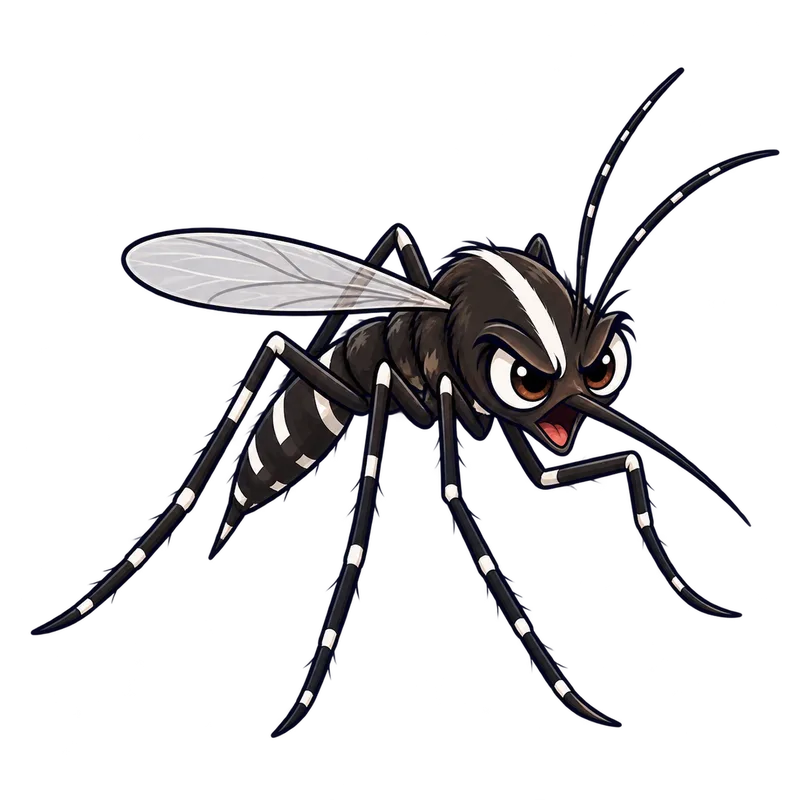
If the skin reaction will not give you answers, you have to catch the insect in the act or spot it resting nearby. The Asian tiger mosquito is usually easy to recognize if you manage to get a decent look at it before it flies off. Adult bodies measure about five millimeters long, and they are jet-black with stark white scale bands wrapping around their legs and abdomen.
The single best field mark is a bright, silvery-white longitudinal stripe running right down the middle of its black thorax, which is the upper part of the body just behind the head. That striking white racing stripe separates it instantly from common house mosquitoes, which tend to look dull, brownish, and rather plain.
Behavior is another massive clue. While native house mosquitoes usually prefer to hunt between dusk and dawn, Asian tiger mosquitoes are aggressive daytime biters. If something is biting your ankles and legs while you are hanging laundry or weeding the garden at two o'clock on a sunny Tuesday afternoon, you are usually dealing with this species or a close relative.
You also want to rule out common lookalikes that share your yard. Biting midges are tiny, humped flies that leave a burning lesion that lingers for days, but they are practically microscopic compared to a mosquito. Black flies are stout and leave a small trickle of blood, but they usually stick to areas near rushing streams rather than backyard patios. If it has banded legs and a stark white back stripe, and it is biting you in broad daylight, you usually have your answer.
What usually comes next
Now that you know what is landing on your ankles, the smartest move is cutting off their water supply instead of soaking your whole yard in chemicals. Asian tiger mosquitoes do not need a sprawling marsh or a deep pond to multiply. They are container breeders, which is a fancy way of saying the females hunt down small, artificial pools of standing water to lay their eggs.
Take a walk around your yard and flip over every little catch basin you can find. Empty the saucers under your potted plants, scrub out the dog bowl, tip over plastic sandbox toys, and check your rain gutters for clogs. A bottle cap full of stagnant water is more than enough space for a generation of these insects to grow from an egg into a biting adult.
For water holding containers that you cannot easily drain, such as a rain barrel or a decorative garden pond, you can use a targeted biological larvicide. Products containing a specific bacterial strain, often sold as mosquito dunks or granules, attack the larvae in the water while remaining completely safe for birds, fish, pets, and humans.
Personal protection matters when the bugs are already flying around. Applying an EPA registered insect repellent containing DEET, Picaridin, oil of lemon eucalyptus, or IR3535 to exposed skin and wearing loose, light-colored long sleeves and pants will usually keep you off the menu during peak morning and afternoon feeding hours.
When to get help
Most mosquito bites heal up on their own within a few days, but certain situations call for stepping away from home remedies and bringing in outside help. If you or someone in your household develops immediate emergency warning signs within minutes of a bite, such as difficulty breathing, throat tightness, swelling of the lips or face, dizziness, or a sudden drop in blood pressure, treat it as an emergency and seek medical care right away.
Secondary bacterial infections are another common hurdle. Excessive scratching can break open the skin barrier, letting bacteria settle in and turn a simple itchy bump into a spreading, painful infection or cellulitis. If a bite becomes increasingly hot, tender, or starts oozing pus, make an appointment with a clinician or drop by an urgent care center.
You should also keep an eye out for systemic illness if you live in or travel through an area where these mosquitoes transmit viruses like Dengue, Chikungunya, or Zika. If a high fever, severe joint pain, body aches, or a rash develops within two weeks of heavy mosquito exposure, contact a healthcare provider promptly.
Finally, if your yard has an overwhelming population that defies your best efforts at source reduction, or if you are considering large-scale chemical treatments or adulticide spraying across a large property, hand the job over to a licensed pest control applicator. They have the training and equipment to handle commercial products safely without harming non-target wildlife or local pollinators.