
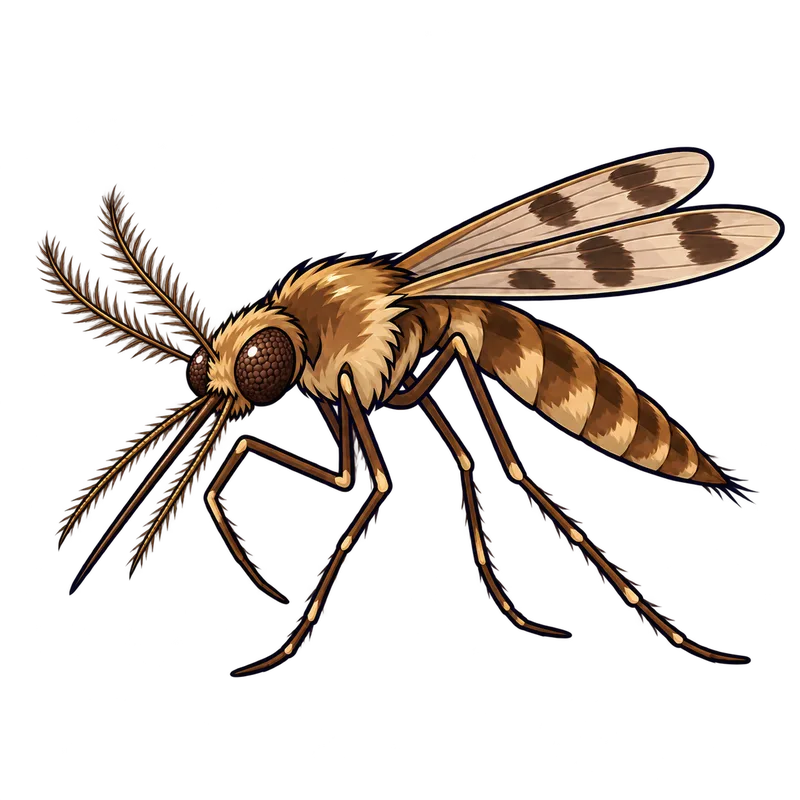
Common malaria mosquito
Anopheles quadrimaculatus
- Size
- 3 to 6 mm
- Color
- Dull dark brown to grayish-brown
- Habitat
- Permanent water margins and dark shelters
- Diet
- Female blood-feeding, male nectar-feeding
- Life cycle
- Holometabolous, 2 to 6 generations yearly
The common malaria mosquito, scientifically known within the Anopheles quadrimaculatus complex, is a slender, delicate insect with a very specific way of standing out from other mosquitoes. When you spot one resting on a wall or a porch screen, it does not crouch flat like the common house mosquito. Instead, it tilts its entire body at a rigid forty-five-degree angle, pointing its tail straight up into the air so it looks like a tiny, dark needle stuck to the surface.
Identity
If you happen to catch one under a magnifying glass, you will see a few more defining traits. The wings are transparent but dusted with distinct dark spots formed by clusters of scales along the veins. Females possess long maxillary palps, which are sensory mouthparts sitting right alongside the piercing proboscis, making them roughly equal in length. Male antennae, by contrast, look feathery and plumose, while females sport simpler, sparse hair whorls.
It is easy to confuse these insects with crane flies, which are huge, spindly creatures that people often panic over as giant mosquitoes. Crane flies are completely harmless and lack biting mouthparts. True anophelines are much smaller, matching the usual mosquito scale, and they require a close look at those wing scales or the resting posture to separate them from floodwater or house mosquitoes.
Habitat & behaviour
These mosquitoes are creatures of permanent or semi-permanent water. You will not find them breeding in a dirty plastic bucket or an old tire in the yard. They prefer the clean edges of ponds, lakes, calm river coves, permanent swamps, and vegetated drainage ditches where emergent weeds and floating organic debris give the aquatic stages shelter.
Adults are strictly nocturnal or crepuscular, meaning they start moving around as dusk settles, working through the night and resting before sunrise. During the day, they avoid the sun and wind by hiding in cool, dark, humid spots. Outside, you might find them in tree hollows and animal burrows. Near homes, they slip into damp crawl spaces, cellars, unheated outbuildings, barns, and storm drains.
When winter arrives, they do not die off or migrate. Mated, fertilized females seek out sheltered microclimates to enter a state of dormancy called diapause. They wait out the cold months in dark structures or hollow logs, emerging in spring to seek a blood meal and lay the first round of eggs.
Visual variations
The whole business runs on a complete metamorphosis that takes in four distinct stages. Everything starts with an egg, dropped singly onto the water surface rather than glued into a tidy raft. Each little egg comes equipped with a pair of lateral air floats that keep it bobbing safely on top.
Once the egg splits open, out comes a legless larva, the kind folks usually call a wriggler. Common house mosquito larvae like to hang head-downward from the surface film using a long breathing siphon, but these anophelines skip the siphon entirely. They rest flat and horizontal right against the water tension, spinning their heads one hundred and eighty degrees to sweep up microscopic algae and bacteria using their specialized mouth brushes.
The pupa, known as a tumbler, is a comma-shaped aquatic stage that gives up eating entirely. It catches its breath through a pair of short respiratory trumpets on its chest and scoots around using paddles at the tip of its abdomen. As soon as the adult is ready, it splits the old skin and takes off, with the females hunting down a vertebrate blood meal so their eggs can develop while the males stick strictly to plant nectars and sugars.
Why it matters
Finding these mosquitoes around the property is a sharp reminder of why proper water management and tight window screens matter so much. Females put in work as aggressive nighttime biters, and their saliva carries proteins that stir up a local immune response, leaving itchy, red bumps on human skin or the occasional unlucky pet.
In past eras, this group carried the protozoan parasites responsible for malaria, a threat that demanded massive public health campaigns to beat back across North America. Spotting one in the yard does not mean a disease is coming your way, but the local populations are still capable vectors if the parasite ever finds its way back into the area.
If you start running a sudden fever, shaking with chills, or suffering from severe headaches after taking a few bites, never try to guess what bit you by looking at the mark. Skin swelling is just your own allergic reaction, so a mark on your arm cannot tell you what bug made it. Instead, check in with a clinician or drop by an urgent care facility right away. Figuring out the exact sibling species in this group usually takes a microscope and some laboratory molecular work, which means any major control push is best handed over to licensed professionals and public health vector control districts.
Similar species
 Saltmarsh mosquitoesAedes species
 Asian tiger mosquitoAedes albopictus
 Yellow fever mosquitoAedes aegypti
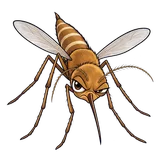 Northern house mosquitoCulex pipiens
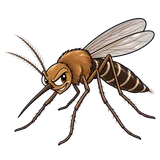 Southern house mosquitoCulex quinquefasciatus
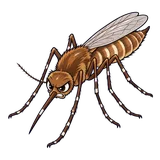 Western encephalitis mosquitoCulex tarsalis