
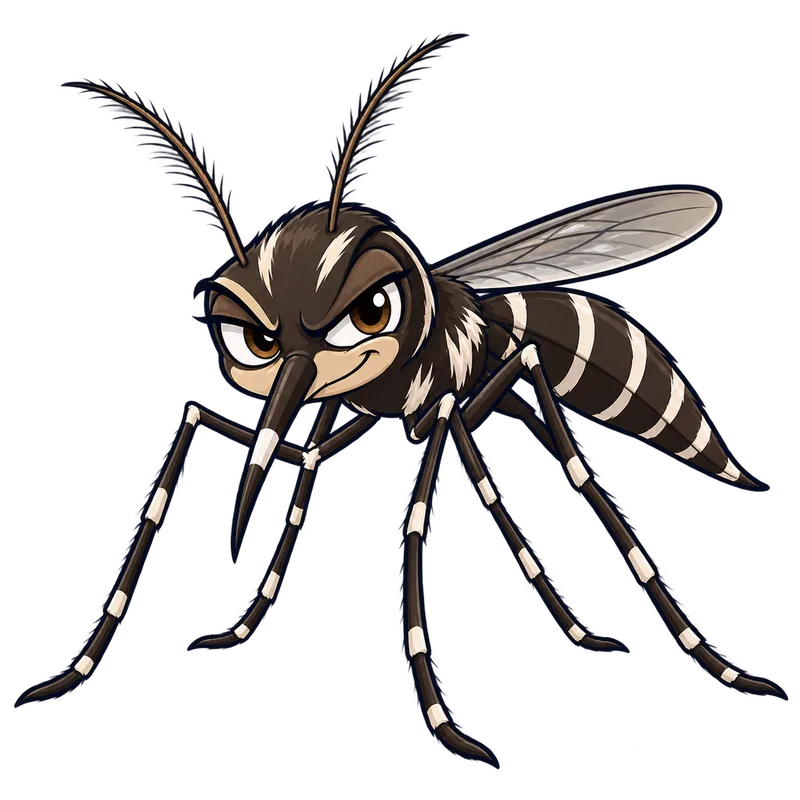
Saltmarsh mosquitoes
Aedes species
- Size
- 3 to 6 mm in body length
- Color
- Dark gray, brown, or black with pale bands
- Habitat
- Coastal marshes, salt ponds, and estuarine mudflats
- Diet
- Vertebrate blood for females, plant nectar for males
- Life cycle
- Egg, larva, pupa, and adult
Saltmarsh mosquitoes are not a single insect you can pin down with one scientific name, but rather a stubborn ecological clique of floodwater species that share a taste for brackish, tidal breeding grounds. If you are standing near a coastal marsh, a salt pond, or an estuarine mudflat, you are looking at their home turf.
Identity
When you peer at an adult specimen, the key feature that tells you it is a true mosquito rather than some random fly is the presence of tiny overlapping scales coating its wing veins. Those scales take a little magnification to see clearly, but they separate the culprits from harmless lookalikes.
You are dealing with small, slender flyers measuring 3 to 6 mm in body length, with leg spans and wingspans stretching up to 8 mm. Their base colors run from dark gray to brown or black, usually broken up by pale white or silver scale bands wrapped around their legs, thorax, and abdomen.
Habitat & behaviour
These insects are tied directly to the rhythm of the coast. Female mosquitoes drop their eggs one by one onto damp soil, mud, or low-lying vegetation in tidal depressions above the ordinary waterline.
Those eggs do not hatch right away. They can sit dormant and dry in the marsh dirt for 1 to 3 years, waiting out droughts and dry spells. The real action begins when a high spring tide, a coastal storm surge, or a heavy rain event completely submerge the soil. That sudden flooding acts as an absolute trigger, and within 7 to 10 days under warm summer conditions, a massive, synchronized wave of new adults emerges.
Adults spend their daylight hours resting quietly in cool, humid microhabitats like dense marsh grasses, tall weeds, and shaded shrubs. When the temperature drops toward morning or late afternoon, or when clouds roll in, they wake up hungry.
Unlike many backyard pests that stay close to home, saltmarsh mosquitoes are strong fliers. They routinely disperse several miles inland from their coastal nurseries, hunting for a blood host. While they breed exclusively in salty or brackish water, they have no trouble flying far enough inland to ruin an afternoon on a residential patio.
Visual variations
Life for these insects follows a complete transformation, meaning they look like entirely different creatures at each stage.
The eggs are shaped like tiny elongated ovals and lack any built-in air floats, resting quietly in dry mud until the next flood arrives. Once the water hits, they turn into aquatic larvae, which people usually call wrigglers. These legless, writhing creatures have a hardened head capsule and a slender segmented body. They hang at an angle from the surface film of the water, breathing through a prominent tail tube while they filter-feed on microscopic debris.
After four molts, the larva shifts into a pupa, known around water as a tumbler. The pupa is a comma-shaped, highly mobile stage featuring an enlarged front end and two short breathing trumpets poking up to the surface. It does not eat anything, but it tumbles actively through the water column whenever something disturbs it.
When the adult finally splits out of its pupal case, you can tell the sexes apart quite easily. Females carry simple, sparse antennae and short palps near their mouths, alongside piercing mouthparts built to draw blood. Males sport striking, feathery antennae packed with dense hair whorls and lack the biting gear entirely, living out their days on plant nectar and sap.
Why it matters
Having these mosquitoes around means outdoor spaces near the coast turn practically unusable during peak biting hours. Females need vertebrate blood meals to supply the protein required for maturing their eggs, which puts humans, dogs, cats, horses, and livestock right on the menu. Their bites cause immediate burning, painful red welts, and intense itching as your immune system reacts to their saliva. Beyond the immediate irritation, these insects serve as potential vectors for arboviruses and canine heartworm.
If you or someone in your household experiences severe swelling, signs of a secondary skin infection, or systemic symptoms from bites, consult a qualified clinician or seek medical advice promptly.
As for telling them apart from other coastal insects, a few common mix-ups happen all the time. Non-biting midges look slender and mosquito-like, but they completely lack wing scales and a biting proboscis. Giant crane flies are sometimes blamed for biting, but they are massive compared to actual mosquitoes, measuring 15 to 25 mm with fragile, dangling legs, and they are entirely harmless. Biting midges, often called no-see-ums, share the coastal marshes but are microscopic by comparison, measuring only 1.0 to 3.0 mm with a distinctly humped thorax and broad wings.
Similar species
 Asian tiger mosquitoAedes albopictus
 Yellow fever mosquitoAedes aegypti
 Northern house mosquitoCulex pipiens
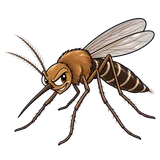 Southern house mosquitoCulex quinquefasciatus
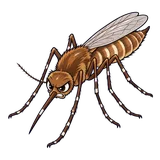 Western encephalitis mosquitoCulex tarsalis
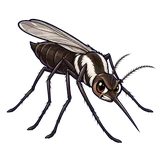 Eastern treehole mosquitoAedes triseriatus