
Do slugs have shells?
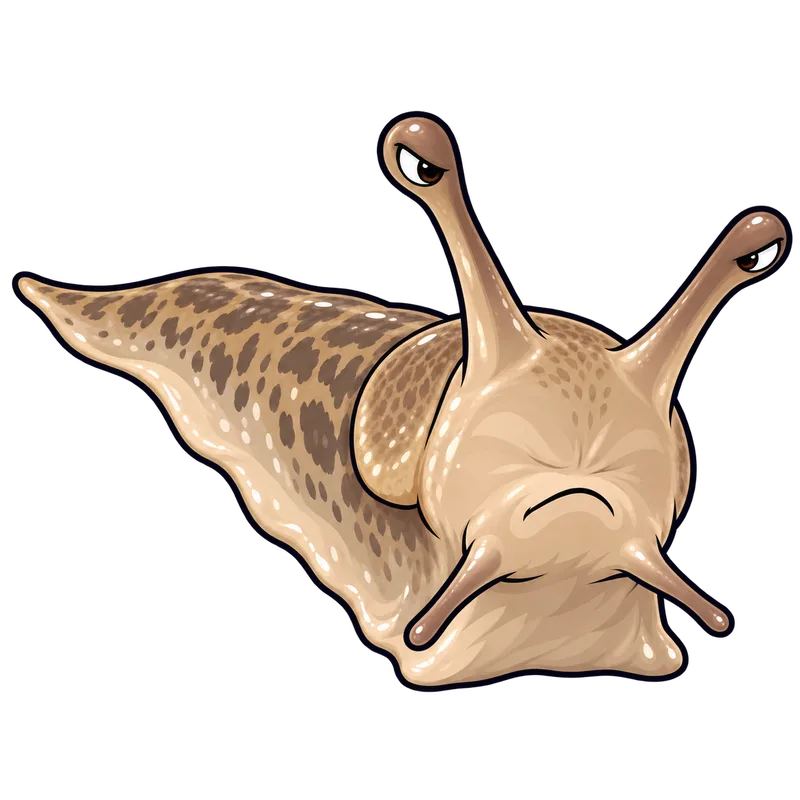
No, garden slugs do not have the hard outer shell that snails carry. Some slugs keep only tiny internal remnants or calcium granules, so there is no plate to retreat into. Without a shell to seal themselves inside, slugs dry out easily, which is why they feed at night or in cool, rainy weather.
What is actually going on
You walk out to the garden with your morning coffee, lift up an old wooden stepping stone to check the weeding situation, and find a soft, greyish blob squeezed tightly into the damp dirt underneath. It looks entirely defenseless, like a snail that forgot its house at home.
Do slugs have shells? The short answer is no, not in the way land snails do. While biologists classify both slugs and snails in the exact same soft-bodied animal group called gastropod molluscs, garden slugs lack the hard, external calcareous shell that snails carry around. Snails are like homeowners permanently attached to a solid brick dwelling, whereas slugs are more like campers who gave up the mortgage and spent their evolutionary history adapting to life without a roof.
Because they lack that visible, protective armor, slugs live a high-stakes lifestyle centered entirely around moisture. A snail can pull inside its shell and seal the door shut when the sun beats down, but a slug has no such luxury. If it gets caught out in the open air and dry heat, its body loses water at an alarming rate.
This is why you never see them strolling across the patio at noon on a sunny July afternoon. Their lack of a shell forces them to be nocturnal or wait for overcast, rainy weather. When daylight arrives, they have to scramble for cover under rocks, rotting logs, deep leaf litter, or upturned flower pots to keep from drying out completely before nightfall.
How to tell for sure
Spotting a slug usually involves looking in all the wrong places during the daytime, because these creatures are built for stealth and shadow. You will rarely see one moving around in bright light unless the sky is thick with grey clouds and a steady drizzle is falling.
When you do turn over a piece of decaying wood or an old piece of garden plastic and find one resting there, you are usually looking at a smooth, slimy, elongated body ranging anywhere from a half-inch to several inches long. They come in shades of grey, mottled brown, yellowish tan, or even jet black depending on the specific kind in your garden.
You might wonder if they have some hidden structure tucked away beneath that leathery skin. Some species carry tiny internal remnants or calcium granules, but you will not find any hard, external plate that resembles a shell.
If it has a hard, spiraled dome on its back, you are looking at a snail. If it is entirely soft from head to tail, you have a slug. You can also tell they have been active recently by the silvery, shimmering slime trails they leave behind on your hostas, strawberry patches, and patio stones as they slide along.
What usually comes next
Once you realize your flower beds are hosting an army of shell-less visitors, you have to decide whether to wage a chemical war or stick to old-fashioned physical removal. Many gardeners make the mistake of running out to buy bags of diatomaceous earth, thinking the sharp, fossilized dust will act as an impenetrable wall.
In real-world garden conditions, that rarely works out as planned. Diatomaceous earth is made from microscopic silica shells of ancient algae, and it works by scratching a pest's outer body to cause dehydration. The catch is that it only works when it is bone dry. The moment a heavy dew falls or an evening rain shower passes through, that powdery barrier turns to mud and loses its punch entirely.
If you want a reliable way to reduce their numbers without turning your yard into a chemical testing ground, your best practical move is to build a better trap. Slugs are creatures of habit that desperately need dark, damp hiding spots before sunrise.
You can use this against them by laying down inverted wooden boards, stray pieces of asphalt shingle, or hollowed-out grapefruit rinds on the soil around vulnerable plants before you go to bed. By morning, the slugs will have crowded underneath those objects to hide from the sun.
All you have to do is lift the boards and drop the gathered pests into a bucket of soapy water or rubbing alcohol. It takes a few minutes of your morning routine, but it saves your prized snapdragons and strawberries from getting chewed to pieces.
When to get help
Most garden slug issues can be managed with a bit of patience, evening scouting, and perhaps a pet-safe bait if the population gets out of hand. However, certain situations cross the line into territory where you should hand the problem over to someone else.
If you choose to use commercial bait pellets to control a heavy infestation, you need to read the product labels very carefully. Some formulas, such as those containing metaldehyde, pose a severe poisoning hazard to domestic dogs, cats, birds, and local wildlife.
If you suspect a pet or a child has ingested chemical slug bait, do not guess at home remedies. Immediately contact a veterinarian, an urgent care facility, or your regional poison control center for professional medical direction.
Commercial growers facing massive, crop-threatening infestations in greenhouses or high-value specialty fields should also bring in an agricultural advisor. When cultural traps and low-toxicity iron phosphate baits are no longer keeping the damage below economic thresholds, professional guidance ensures that any large-scale treatments comply with local agricultural regulations and food safety tolerances.