
What does a springtail look like on a bathroom sink?
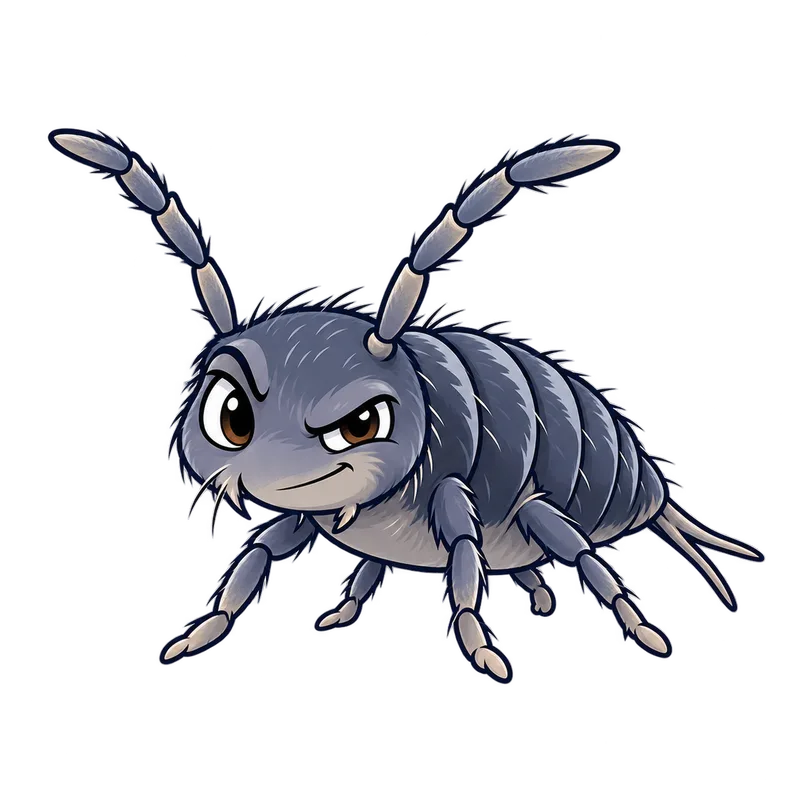
A springtail on a bathroom sink looks like a grain of coarse black pepper or a stray bit of dust, measuring roughly 1 to 3 mm long. These tiny, wingless creatures have a soft body colored in pale gray, dark brown, or charcoal, and they will suddenly leap into the air when disturbed.
What is actually going on
You walk into the bathroom first thing in the morning, reach for the faucet, and notice a couple of tiny, dark specks sitting right near the drain. When you lean in closer or turn on the water, the specks do not just crawl away. They suddenly vanish, launching themselves a few inches into the air as if they were thrown by an invisible spring. It is a startling trick, and it usually leaves you wondering how something so small managed to teleport across the porcelain.
What you are looking at is a springtail, a primitive wingless creature that belongs to an ancient group of arthropods. To the naked eye on a bright white sink, these bugs look like little more than grains of coarse black pepper or stray bits of dust. They measure roughly 1 to 3 mm long, which puts them well under an eighth of an inch. If you were to examine one under a magnifying glass, you would see a soft, oval body with six short legs and a pair of slender antennae, usually colored in shades of pale gray, dark brown, or charcoal.
Springtails end up in bathroom sinks because they are desperate for moisture and microscopic food. They do not eat porcelain, metal, or plumbing fixtures. Instead, they graze on the invisible films of algae, mold spores, bacteria, and organic detritus that accumulate around damp faucet bases and inside sink overflow holes. Sinks also act as accidental traps. These tiny wanderers often climb up through gaps around pipes or wall voids, and once they drop into the smooth, vertical basin of a modern sink, their tiny claws cannot gain enough traction to climb back out.
How to tell for sure
Telling a springtail apart from other tiny bathroom visitors usually comes down to watching how it moves. If the speck leaps into the air when disturbed, you are almost certainly looking at a springtail. They achieve this using a specialized fork-shaped appendage tucked under their belly called a furcula, which acts as a tension-loaded catapult for escaping danger.
If the creature just crawls or scurries without ever jumping, it is likely something else entirely. Booklice are tiny, pale, soft-bodied insects of a similar size, but they only walk or dart in short runs and never jump. Silverfish are much larger, usually measuring 7 to 12 mm or more, and they feature a carrot-shaped body covered in silvery scales with three long tail filaments at the rear. Silverfish run swiftly with a wiggling motion and cannot jump either. Mites are even smaller, usually crawling at a sluggish pace on eight legs rather than six, while house centipedes are large, fast-moving predators with many long legs that hunt other insects across the room.
Springtails are completely harmless to humans and homes. They do not bite, they do not sting, they do not transmit diseases, and they do not feed on wood, fabric, or stored food. Finding them in the bathroom is not a sign of poor hygiene. It is simply a physical indicator that your indoor air or local surfaces are holding enough moisture to support them.
What usually comes next
When you find springtails trapped in your sink, your main task is figuring out how to address the underlying moisture that brought them there in the first place. Reaching for an aerosol bug spray is usually a waste of time and effort. Chemical sprays wash straight down the drain, create unnecessary residues near your hygiene items, and fail to solve the problem because new springtails will keep wandering in from the walls as long as the area stays damp.
Start with simple mechanical cleanup. You can wipe the sink basin with a damp paper towel or rinse the insects down the drain with tap water. If you see them on the counter or baseboards, a quick pass with a vacuum cleaner nozzle will clear them right up, just remember to empty the vacuum bag or canister outside afterward.
The real fix is drying things out. Check the plumbing under the vanity for slow, quiet drips or sweating supply lines, and repair any leaks you find. Make a habit of running the bathroom exhaust fan during every shower and leaving it on for twenty to thirty minutes afterward to clear out the humidity. Wipe down the sink basin and counter after use, and clean out the sink overflow hole with a small brush and a biodegradable cleaner to strip away the organic slime they feed on. If indoor humidity runs high overall, keeping your home air conditioning or a dehumidifier running will usually drive the relative humidity down below the fifty percent threshold these moisture-loving creatures need to survive.
When to get help
While springtails themselves pose zero direct medical risk, their presence can sometimes point to a larger household issue that requires outside assistance. If you notice springtails gathering on your sink day after day for weeks on end, even after you have dried the basin and run exhaust fans religiously, you likely have a hidden water leak behind the tile or underneath the subfloor. A persistent moisture source inside wall framing leads to wood rot and mold growth, which means you should call a licensed plumber or contractor to track down the leak before structural damage spreads.
If you are experiencing unexplained skin irritation or rashes, do not assume it is caused by the insects you found in the sink. Springtails do not bite or parasitize humans, so you will want to consult a qualified clinician or dermatologist to look into the actual cause of any physical symptoms.
When springtails appear in overwhelming numbers across multiple rooms, or if you suspect they are pouring in from massive outdoor populations through structural gaps, a licensed pest management professional can help assess crawlspace ventilation and apply targeted exterior exclusion methods. Always keep any desiccant dusts or perimeter treatments safely away from pets and children, and follow all product label directions carefully if you decide to use professional exterior controls.