
Why are carpet beetle larvae on a wall?
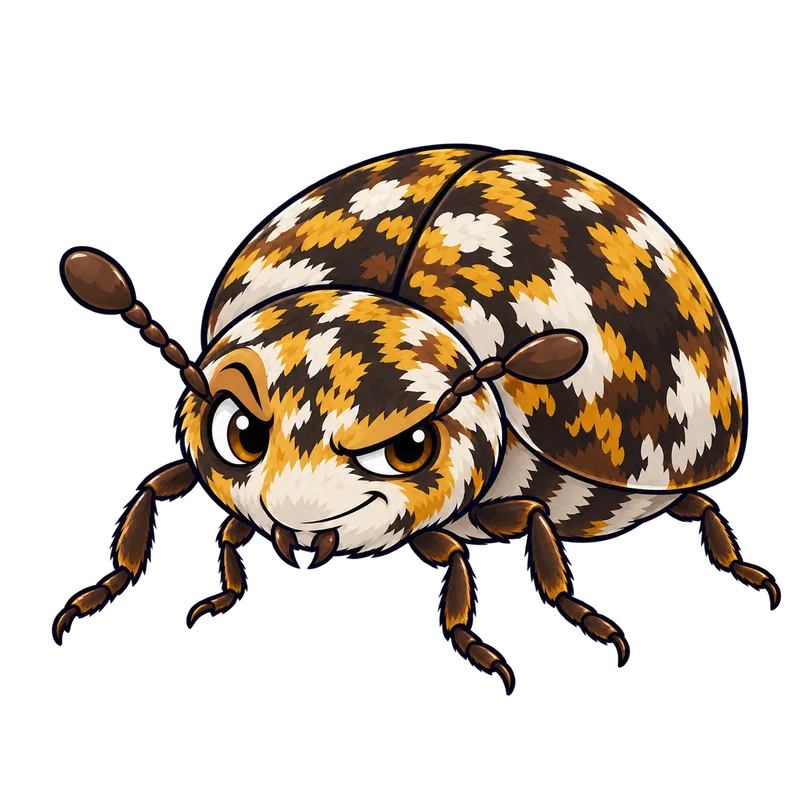
Carpet beetle larvae climb walls because they are active foragers wandering away from floor-level feeding sites or migrating down from hidden structural reservoirs like abandoned bird nests in attics. They grip textured drywall using their three pairs of thoracic legs and dense body bristles. The direction of their travel depends on whether they are searching for new food sources or leaving an overhead space.
What is actually going on
You walk down the hallway on a Tuesday evening, pause to check your phone near the thermostat, and notice a tiny, fuzzy speck slowly marching up the light gray drywall. It looks like a miniature woolly caterpillar with too much ambition. Naturally, you wonder what on earth it is doing climbing a vertical wall when there is nothing up there to eat. You might picture a tiny mountaineer trying to scale Mount Everest, but the reality is much more mundane and domestic.
Carpet beetle larvae climb vertical walls because they are active foragers wandering away from floor-level feeding sites, or they are migrating down from hidden structural reservoirs like abandoned bird nests in attics, wall voids, and chimneys. Unlike clothes moth larvae, which tend to stay put inside portable silken cases right on your favorite sweater, carpet beetle larvae are relentless crawlers. They do not have suction cups on their feet, but their three pairs of thoracic legs are equipped with tiny terminal claws, and their bodies are covered in dense bristles that provide just enough friction to grip textured drywall or wallpaper.
If your visitor started its journey from the floor, it probably came from a dark, undisturbed spot right under your baseboards or behind the sofa. Larvae feed on animal-derived materials, and when a forgotten pile of pet dander, lint, hair, and sloughed human skin cells runs dry, starvation forces them to pack up and move. They emerge from the floor cracks and use their clawed legs to scale the walls in search of a fresh food source or a dark, secluded crevice where they can finally pupate and turn into adults.
Sometimes, though, the journey goes in the reverse direction. If you spot these wandering larvae near the ceiling line in a room that has no wool carpets or rugs, they are often crawling down from an overhead space. Outdoors, carpet beetles love to live in the nests of birds, rodents, bees, and wasps, feeding on feathers, hair, and pollen. When birds set up camp in your chimney flue or attic eaves, carpet beetles often move in right behind them. Once those animal nests are abandoned or the larvae simply run out of room up there, the insects wander through structural wall cavities and utility gaps, eventually spilling out onto your living room walls.
How to tell for sure
Spotting a tiny, bristly crawler on the wall usually points straight to the larval stage of a carpet beetle, but it pays to check the details before you start overhauling your wardrobe. Adults of species like the varied carpet beetle or the black carpet beetle feed exclusively on outdoor flower pollen and nectar, meaning they do not cause any damage to your home textiles. Only the larvae have those specialized chewing mouthparts capable of digesting keratin, which is the tough protein found in wool, fur, feathers, silk, leather, and animal hair. If you are worried about synthetic fabrics like nylon or polyester, keep in mind that larvae usually ignore pure synthetics unless those items are heavily soiled with body oils, sweat, or food spills.
When you look closely at the intruder, you can usually tell it apart from a clothes moth by the mess it leaves behind. Carpet beetle larvae do not spin silken webs or build portable cases. Instead, they leave behind tiny, hard fecal pellets about the size of grains of table salt, along with hollow cast skins that look like translucent, hairy little ghost shells of the insects themselves.
Depending on your region, you will likely run into a couple of familiar larval forms roaming around the house. Larvae of the varied carpet beetle typically measure roughly 3/16 of an inch in length, showing a teardrop or carrot-like shape marked by alternating light and dark brown stripes, plus 3 distinct tufts of bristles near the rear. Black carpet beetle larvae tend to grow somewhat larger, stretching up to 1/2 inch with a sleek, elongated body shaded in golden or dark brown, finishing in a characteristic long tail of brushy hairs.
One vital distinction to keep in mind is that carpet beetles cannot bite humans, lacking both the mouthparts required to break skin and any interest in feeding on blood. If you wake up covered in itchy red bumps after noticing these insects around the house, you are likely reacting to a skin irritation known as carpet beetle dermatitis. This allergic response occurs when sensitive skin comes into contact with the sharp, barbed bristles, known as setae, that the larvae shed continuously as they mature.
What usually comes next
Finding a lone bug scaling the wall naturally makes you want to grab the nearest aerosol can, but your most effective first move is hunting down the source rather than chasing individual wanderers. Since these larvae often travel considerable distances from their actual breeding grounds, spraying a single crawler on the drywall does nothing to stop the dozens of others hiding in the dark.
Begin your search near the baseboards right under the spot where you saw the climber. Break out the vacuum and give your carpet edges, floor seams, and closet corners a deep clean, focusing heavily on those forgotten zones beneath heavy dressers and sofas where pet fur and lint accumulate. Should you discover wool garments or other susceptible textiles featuring irregular holes and tiny salt-like waste pellets, box them up for a hot wash or seal them inside a plastic bag for a week in the freezer to kill off any hidden eggs or larvae. Once you eliminate these food reserves and clear out their sheltered breeding spots, the parade of wall-climbing travelers generally comes to a halt.
When to get help
There are moments when routine vacuuming and DIY cleaning simply fall short of solving the problem. You ought to think about calling in a licensed pest control professional if you continue spotting larvae roaming across several rooms, if they keep pouring out of ceiling vents or heating ducts, or if they persist despite thorough cleaning efforts. Experts possess specialized tools required to treat hidden wall cavities and subfloor spaces that a standard household vacuum cannot access.
Health issues also call for external expertise. If anyone in your home suffers from chronic skin rashes, eye irritation, or breathing difficulties triggered by exposure to the insect hairs, make sure to consult a medical clinician or dermatologist instead of trying to push through the discomfort.
Always prioritize safety if you choose to apply chemical treatments yourself. Never spray liquid insecticides onto clothing, mattresses, or any surfaces that come into direct contact with human skin, and ensure that children and pets stay entirely away from treated baseboards until every trace of the spray has dried. Furthermore, if you suspect your wall invaders are dropping down from bird nests tucked inside your chimney or attic, keep in mind that local and federal regulations frequently protect nesting birds. You might have to wait until breeding season ends before a professional can clear out those structural nesting sites safely.