
How is an American cockroach entry problem different from German cockroach breeding indoors?
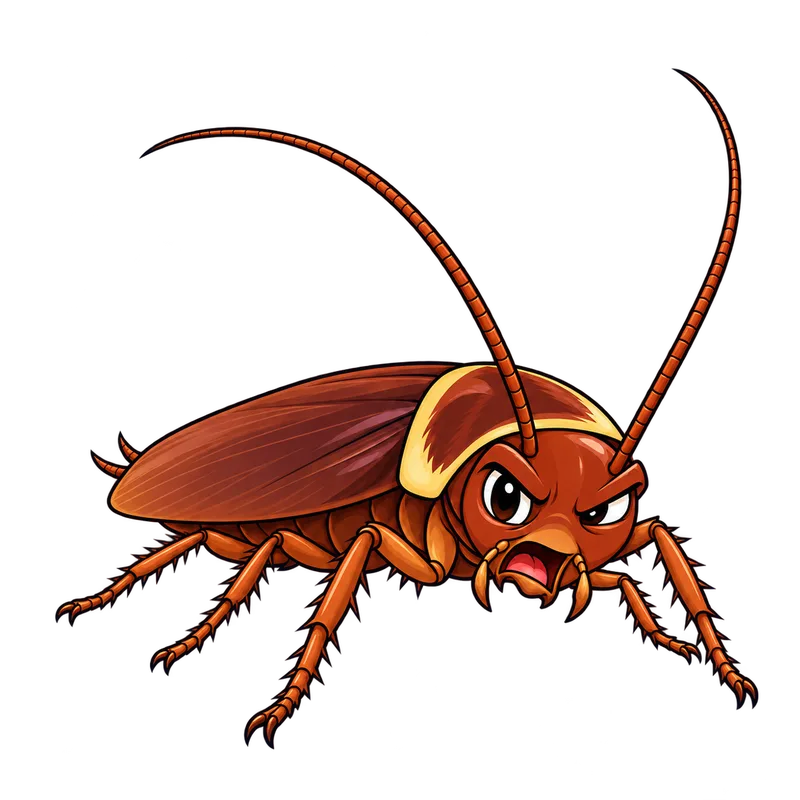
An American cockroach entry problem happens when a large, reddish-brown visitor wanders in from the outside world through a structural gap or dry floor drain. In contrast, a German cockroach issue involves a light brown or tan indoor breeding colony that lives right inside your kitchen cabinets and depends almost entirely on human buildings for survival.
What is actually going on
Imagine walking into your downstairs bathroom late at night, flicking on the light, and spotting a massive, reddish-brown bug sprinting across the floor tiles toward the sink. Naturally, you wonder how something that size managed to take over your home. The short answer is that it did not. That large visitor is an American cockroach making an occasional entry from the outside world, whereas a German cockroach problem is an indoor breeding colony that has set up camp right inside your kitchen cabinets.
Think of the American cockroach as an uninvited neighbor who wandered through an open door looking for shelter from a heavy rainstorm. These large peridomestic pests maintain their primary breeding grounds out in municipal sewer lines, damp storm drains, boiler rooms, or thick outdoor mulch. When one of them shows up in your living space, it represents an accidental perimeter breach. It crawled through a structural gap or climbed up through a dry floor drain because it was looking for moisture, not because your home is dirty.
German cockroaches operate in an entirely different league. These are strictly domestic insects that depend almost entirely on human buildings for survival. They do not wander in from the yard or the sewer. Instead, they move in quietly as hitchhikers inside grocery bags, second-hand appliances, or cardboard boxes, and they immediately set up a nursery behind your refrigerator or under the kitchen sink. While a stray American roach is a solo traveler looking for a way back outside, a German roach sighting usually means a hidden population has already moved in and is multiplying out of sight.
How to tell for sure
Relying on a quick glance under the kitchen counter usually tells you everything you need to know. An American cockroach is unmistakable due to its sheer size and reddish-brown color, often sporting a faint yellowish band right behind its head. They are fully winged, and while they rarely take to the air indoors, they can glide short distances if startled. People in Southern states often call them palmetto bugs or waterbugs, which just adds to the confusion, but their large frame sets them apart from every other common indoor bug.
German cockroaches are much smaller, light brown or tan, and usually feature two dark, parallel stripes running down their back right behind the head. Unlike their larger cousins, adult German cockroaches cannot fly at all, even though they have wings. If you spot tiny, wingless nymphs scurrying around the warm motor housing of your microwave or clustering near the hinges of your dishwasher, you are usually looking at German roaches.
Another major clue is how they handle their eggs. A female German roach carries her light tan egg case attached to the tip of her abdomen like a tiny backpack, guarding her embryos until right before they hatch. An American roach female drops or glues her dark brown egg cases near a moisture source within a day of forming them. If you see tiny nymphs of varying sizes clustered together near food debris and water, you are dealing with an active indoor breeding site.
What usually comes next
Fixing the mess depends entirely on which bug you are actually looking at. Treating an American cockroach entry problem relies on physical exclusion rather than heavy chemical sprays. Since those large travelers wander in through gaps, you need to seal up foundation cracks, put tight door sweeps on exterior thresholds, and make sure mesh screens cover your crawl space vents.
Keep a close eye on your plumbing as well. A dry basement floor drain acts like an empty moat, leaving a wide-open highway straight from the sewer main into your house. Pouring water down your floor drains and utility sinks regularly makes sure the water traps stay filled, which blocks both sewer gas and crawling insects. Clearing away heavy mulch and firewood piles from right against your exterior foundation also removes the damp outdoor shelter that attracts them in the first place.
German cockroaches demand a completely different playbook because they are already living inside your walls. Spraying random aerosol bug bombs or foggers usually makes things worse by scattering the colony into nearby wall voids and bedrooms instead of wiping them out. Getting rid of them means strict sanitation, targeted non-repellent gel baits squeezed into the dark cracks and crevices where they hide, and insect growth regulators that stop nymphs from maturing into reproducing adults. Vacuuming heavily infested areas with a machine equipped with a high-efficiency particulate filter helps pull out live insects and allergy-causing debris, but keeping your food sealed tightly in rigid containers is what stops them from returning.
When to get help
Sometimes an infestation outgrows what you can handle with a few traps and a tube of gel bait. If you start seeing German cockroaches wandering around your kitchen in broad daylight, it usually means the population has grown so large that the tight cracks and crevices are completely overcrowded, forcing them out into the open. Persistent nymph populations, strong musty odors, and dark, pepper-like fecal stains smeared along cabinet hinges are all signs of a deep, established infestation that calls for a licensed pest management professional.
In multi-family housing complexes or apartment buildings, individual do-it-yourself treatments often fail because roaches travel easily along shared utility lines and wall voids from neighboring units. In those situations, coordinated treatment across multiple apartments is required.
Regarding health concerns, keep in mind that cockroach droppings, shed skins, and saliva carry potent protein allergens that can trigger severe asthma attacks, particularly in children. If you or someone in your home experiences persistent allergic asthma, skin rashes, or suspected exposure symptoms, consult a qualified clinician, urgent care provider, or local poison control center right away.