
When should you call a professional for cockroaches?
You should call a professional exterminator once an indoor breeding population gets established, or when you see roaches during broad daylight. Outside help is also necessary when an infestation spans multi-family adjoining units, or when you encounter insecticide resistance and bait aversion.
What is actually going on
You flip on the kitchen light at midnight, and a small tan insect darts across the counter, vanishing behind the toaster before you can grab a paper towel. It is easy to convince yourself it is just a stray visitor that wandered in through the back door. Unfortunately, if that bug is a domestic cockroach, you are probably looking at the submarine periscope moment of a much larger hidden population. For every one you spot out in the open, dozens or even hundreds are usually wedged into narrow cracks behind drywall, kitchen cabinets, and refrigerator motors.
Calling a professional pest control operator becomes necessary once an indoor breeding population gets established. If you are seeing roaches during broad daylight, that is a glaring warning sign. It usually means the dark hiding spots inside your walls and under appliances are so overcrowded that weaker insects are forced out into the open just to survive. Seeing numerous small nymphs, which are the wingless immature stages, or spotting dark fecal smears around cabinet hinges also points to an advanced infestation that has outgrown simple household sprays.
You also need outside help the moment an infestation spans multi-family adjoining units, or when you encounter insecticide resistance and bait aversion. In apartment buildings and duplexes, cockroaches travel freely along plumbing lines and wall voids between neighboring homes. Treating only your own kitchen while your neighbor ignores the problem is like putting up a road sign on a busy highway. The insects simply pack up and move next door, only to return a week later. Professional technicians carry specialized equipment and legal licensing for structural voids that consumer retail products simply cannot match.
How to tell for sure
Field identification must always precede control. You cannot treat a pest effectively until you know exactly what you are dealing with, and you certainly should never try to diagnose an infestation from a skin rash or a vague mark on your body. With a bright flashlight and your own eyes, you can usually separate the common indoor pests from accidental outdoor wanderers.
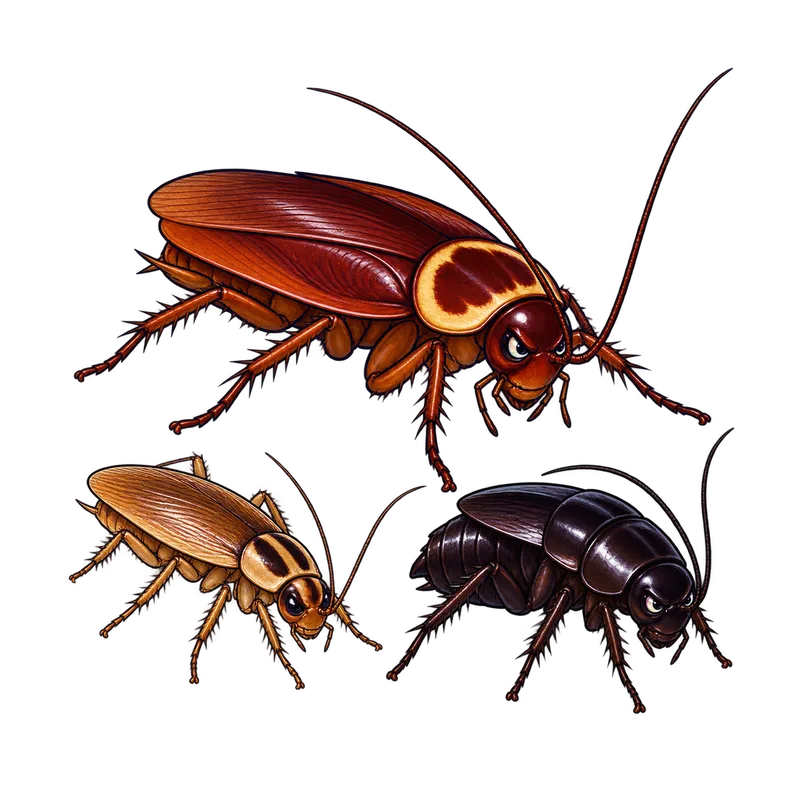
The German cockroach is about half an inch long, tan, and marked by two dark parallel stripes running down its back just behind the head. Females carry a bean-shaped egg case protruding from their rear until just before the eggs hatch. They cannot fly, and they usually live indoors near warmth, moisture, and food sources. The Brown-banded cockroach is also about half an inch long, but it features distinct transverse yellow bands across its wings and body. It prefers warm, dry microclimates high up on walls, ceilings, and inside warm electronic devices rather than damp kitchen sinks.
You will also run into outdoor species that occasionally wander inside, such as the American cockroach, which is a large red-brown insect measuring up to two inches long that favors basements and floor drains. The Pennsylvania wood roach and the Turkestan cockroach live outdoors in leaf litter or woodpiles and often wander into garages or entryways seeking shelter or water, especially during seasonal shifts. Unlike German roaches, these outdoor accidental invaders cannot establish permanent breeding colonies inside your living quarters. If you need to check fine structural details, a ten-power hand lens usually helps, though persistent mystery specimens can always be submitted to a local university extension specialist for positive identification.
What usually comes next
When you decide to handle a minor, isolated introduction yourself, your best move is a structured approach that combines sanitation, physical exclusion, and targeted baiting. Start by deploying sticky monitoring traps flush against baseboards and under sinks to map out where the insects are traveling. If you spot live roaches, you can vacuum them using a machine equipped with a high-efficiency particulate air filter, provided you add a tablespoon of cornstarch to the vacuum bag first to suffocate the captured insects before sealing the bag tightly and throwing it in an outdoor trash bin.
Sanitation is the next logical step, and it is less about living in filth and more about cutting off food and water. Store all dry pantry items in airtight glass or rigid plastic containers, wipe up grease spills immediately, and fix leaky sink pipes so the insects have nothing to drink. Seal cracks along baseboards and around pipe penetrations with silicone caulk, and install tight door sweeps.
If you choose to use consumer gel baits, place tiny drops in out-of-reach crevices and cabinet hinges where foraging insects will find them. Never spray liquid household aerosols over gel bait spots, because the chemical spray contaminates the bait matrix and repels the roaches away from it. Always read the product label carefully, as federal law requires you to follow every safety warning and application rate printed on the container.
When to get help
Certain situations demand an immediate call to a professional pest management company, a clinician, or the local health department. If you live in an apartment building, a condominium, or any attached housing structure, stop do-it-yourself treatments and notify building management so coordinated professional service can treat all adjacent units at once. Commercial food handling facilities, schools, and healthcare spaces are strictly bound by health regulations and state laws that require certified applicators to manage pests using formal notification protocols and specialized treatments.
Health concerns also change the rules quickly. Cockroach saliva, feces, and shed skins release potent protein allergens that trigger severe perennial rhinitis and dangerous asthma attacks, particularly in children. If anyone in your household suffers from cockroach-induced respiratory distress or worsening asthma symptoms, avoid sweeping or dry dusting pest debris, which only flings allergens into the air. Call a professional exterminator to use extraction methods that capture the allergens safely, and consult a medical doctor for proper clinical guidance.
If you ever experience a heavy infestation that shrugs off consumer baits, or if you simply feel outmatched by the sheer scale of the problem, bringing in a licensed professional saves you time, frustration, and unnecessary chemical exposure.