
What are woolly aphids on ornamental plants?
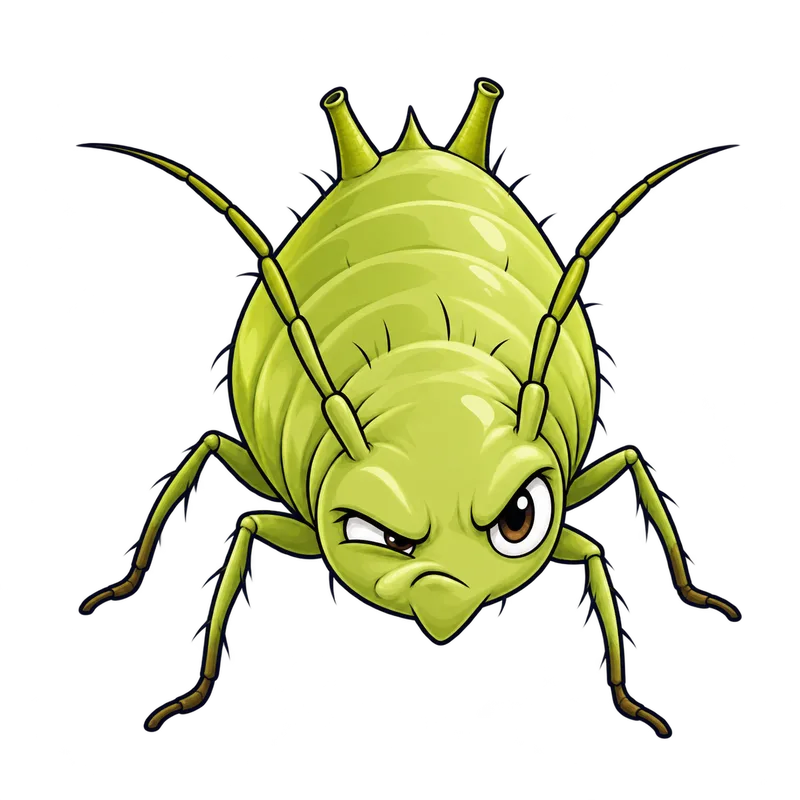
Woolly aphids are soft-bodied, sap-sucking insects that feed on the vital fluids of trees and shrubs like flowering crabapples, hawthorns, and maples. They measure roughly one-tenth of an inch long beneath a fluffy white coat of waxy filaments. These pests gather in dense colonies along bark cracks and branch crotches, where they excrete a sticky liquid that triggers black sooty mold.
What is actually going on
Imagine walking out to check your favorite flowering crabapple tree on a warm July afternoon and noticing what looks like patches of tiny gray lint or cotton candy tucked deep into the branch crotches. It looks almost as if a stray piece of loft insulation got caught in the bark. You poke at it, and instead of fuzz blowing away in the breeze, the patch smears into a reddish-purple smudge. You are not dealing with a stray bit of household debris, and it is not a patch of ordinary mold. You have found woolly aphids.
Woolly aphids are soft-bodied, sap-sucking insects that spend their lives feeding on the vital fluids of trees and shrubs. They get their name from the dense, waxy, thread-like filaments they secrete from glands on their backs, which bundle together into a fluffy white coat. Underneath that protective white fluff lie small, reddish-purple to dark bodies measuring roughly one-tenth of an inch long. This waxy jacket acts like a natural raincoat. It repels water droplets and shields the colony from environmental stress and casual predators, which is why a light summer rain or a gentle garden hose mist usually rolls right off them without causing any trouble.
These insects use specialized, needle-like mouthparts to pierce plant vascular tissues and siphon out the sugar-rich phloem sap. On ornamental hosts like hawthorns, maples, alders, beeches, and flowering fruit trees, they gather in dense colonies along pruning scars, bark cracks, trunk wounds, and the undersides of tender shoots. As they feed, they excrete a sticky, clear liquid known as honeydew. This sweet waste coats the leaves and branches below, quickly turning into a breeding ground for a dark, opportunistic fungus called black sooty mold.
To make matters more complicated, some species possess a dual-zone lifestyle. While you are busy inspecting the branches overhead, a separate population may be living entirely below ground, feeding directly on the root systems. Root-dwelling colonies cause the plant to form woody galls and trigger excessive secondary root branching, which restricts the tree from taking up water and nutrients properly. The result above ground is often a tired, stunted canopy with curled leaves and dying branch tips that leaves you wondering why the tree is struggling despite regular watering.
How to tell for sure
Telling woolly aphids apart from other garden oddities usually comes down to looking closely at what is happening beneath the fluff. If you gently rub a cottony patch with a gloved finger or a cotton swab and find a smear of reddish-purple liquid, you are looking at true aphids. If the white mass stays dry, hard, or powdery, you might be dealing with powdery mildew fungus or a different pest altogether.
You also want to pay close attention to your tree species. If you find white cottony masses clustered on a conifer like a hemlock or a white pine, you are usually looking at adelgids, such as the hemlock woolly adelgid, rather than true woolly aphids. True woolly aphids generally favor broadleaf shade trees and ornamental fruit trees.
Another common point of confusion involves mealybugs and scale insects. Mealybugs also produce a waxy white covering, but they tend to crawl around more actively and lack the tightly matted, colony-wide cotton batting look that woolly aphids form in branch crotches. Scale insects, meanwhile, often hide under hard, immovable shells rather than soft, filamentous fluff. Taking a hand lens to the colony usually reveals the tiny, pear-shaped bodies of the aphids tucked securely beneath their waxy shelter.
What usually comes next
Once you confirm you have a woolly aphid infestation, you face a practical choice about how to intervene without making things worse. Many gardeners make the mistake of buying commercial lady beetles online and releasing them into the yard to clear out the pests. Much like opening a birdcage in an open park, those purchased beetles tend to fly away to the neighbor's yard almost immediately rather than stay to clean up your tree. Relying on naturally occurring beneficial predators, such as resident ladybirds, green lacewing larvae, hoverfly larvae, and tiny parasitic wasps, is far more effective. Scouting your trees first helps; if you spot that a good portion of the aphid colonies already harbor active predators or swollen, bronze-colored parasitized husks, you are usually better off withholding treatments and letting nature do the heavy lifting.
When the infestation is heavy and natural predators are falling behind, mechanical and cultural steps come first. Washing small, accessible colonies off minor ornamentals with a forceful jet of tepid water or a mild insecticidal soap solution helps physically dislodge the insects and strip away their protective wax. Pruning out heavily damaged shoots and dead limbs removes the worst of the population.
If you decide to use chemical controls, remember that the product label is the law. Lightly misting the outside of a woolly aphid colony fails because the hydrophobic wax repels gentle liquids. Horticultural oils, insecticidal soaps, or registered foliar sprays must be applied with enough pressure to break through that waxy shield and thoroughly wet the bark and crevices. Avoid applying broad-spectrum insecticides or heavy organic sulfur and copper sprays when beneficial insects are active. If you are planting new ornamental apple or crabapple trees in an area prone to root pests, selecting rootstocks bred specifically to resist subterranean damage, such as certain disease-resistant rootstock series, can prevent root galling altogether.
When to get help
There are moments when a DIY approach is simply not enough, and bringing in outside expertise becomes necessary. If you spot white cottony egg sacs on eastern hemlocks or other native conifers, you may be dealing with the hemlock woolly adelgid, a highly destructive quarantine pest capable of killing mature trees within a few short years. In regions where these aggressive pests are heavily regulated, suspected sightings must often be reported immediately to national or regional agricultural authorities.
You should also turn to a professional commercial arborist when you are dealing with large, mature shade trees. High canopies cannot be safely or effectively treated with small garden sprayers, and specialized canopy equipment or trunk and soil injections require a licensed applicator.
If you or anyone else experiences adverse physical reactions around pesticide products, or if you have questions regarding chemical exposure or accidental contact, stop what you are doing and contact a qualified clinician, urgent care center, or your regional poison control center right away. Always store pesticides securely away from children, pets, and food preparation areas.