
Why do ants appear around aphid-covered plants?
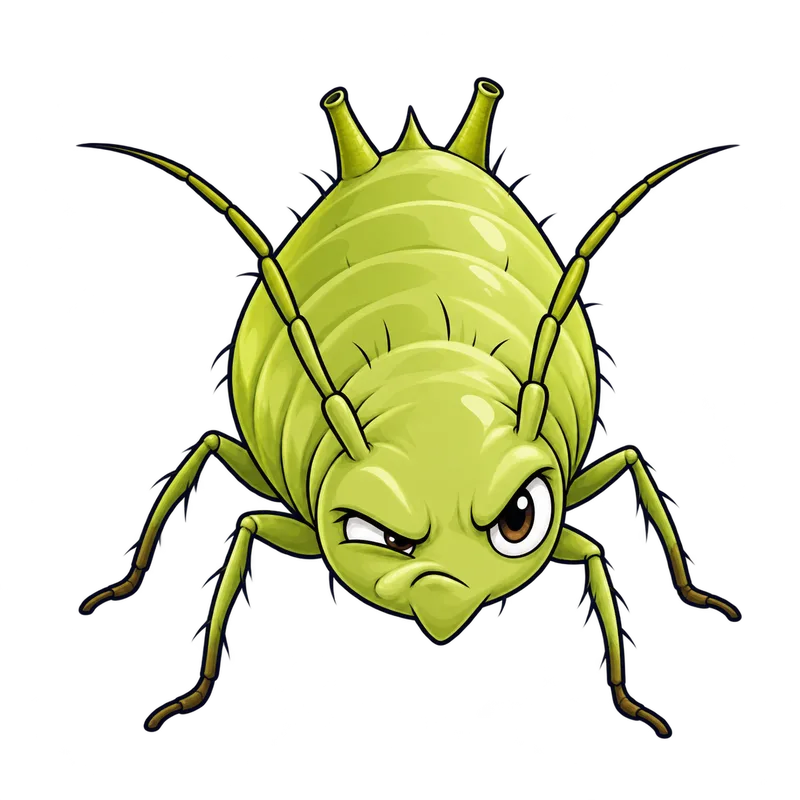
Ants appear around aphid-covered plants to feed on a sticky, carbohydrate-rich liquid called honeydew that aphids excrete. Because aphids drink massive quantities of sugary plant sap to get enough nutrition, foraging ants treat the colony like a round-the-clock open bar and actively defend the aphids from natural predators.
What is actually going on
You walk over to check the prized lemon tree in your sunroom, or perhaps the garden rose bush out front, and notice a frantic crowd of ants marching up and down the stems. Naturally, you assume the ants are eating the leaves. They are not. If you look a little closer, you will see the stems are coated in tiny, pear-shaped aphids. The ants are simply stopping by for a drink.
Aphids have a peculiar diet. They use needle-like mouthparts to pierce plant tissue and tap directly into the sugary fluid flowing through the plant system. Because this sap is mostly water and sugar with very little protein, an aphid has to drink massive quantities of it to get enough nutrition. It processes the liquid quickly and excretes the excess as a sticky, carbohydrate-rich liquid called honeydew.
For foraging ants, an aphid colony is essentially a round-the-clock open bar. Worker ants are constantly searching for fast-burning energy to fuel the colony, and honeydew fits the bill. The relationship often goes beyond casual dining. Ants appreciate a reliable sugar supply, so they routinely patrol the plant and actively defend the aphids from natural predators like ladybugs and lacewings.
If the ants harvest the honeydew efficiently, the plant stays relatively clean. When the aphid population outpaces the ants, however, excess honeydew drips onto the foliage below. This sticky residue soon attracts air-borne spores of saprophytic fungi, which grow into a superficial black coating known as sooty mold. The mold does not infect or eat the leaf tissue, but it acts like a dirty window, blocking sunlight and reducing the plant ability to make food.
How to tell for sure
Pinpointing the root of the problem requires looking past the ants and examining the plant itself. Grab a magnifying glass and inspect the tender new growth, stem tips, and undersides of leaves.
Aphids usually appear as small, soft-bodied insects measuring between one-thirty-second and one-quarter of an inch long. They usually come in shades of green, yellow, brown, or black, and they carry a pair of tiny, straw-like tubes projecting from their rear ends. If you see oval, waxy, shell-like bumps instead, you usually are dealing with scale insects. If you spot small white cottony masses, you could have mealybugs. Both scales and mealybugs produce honeydew just like aphids do, and both draw ants in the exact same way.
To confirm the ant side of the equation, follow a trailing worker backward from the plant. You usually will find them marching toward a specific entry point, such as a gap in a window casing, a crack in a baseboard, or the drainage holes at the bottom of a potted plant.
Field identification is usually enough to tell you whether you are dealing with aphids, scales, or ants. If you need an exact identification for a stubborn or unusual infestation, preserve a few specimens in rubbing alcohol and drop them off at your local university extension office or pest professional.
What usually comes next
Deciding how to respond depends on whether the problem sits on a single potted houseplant or sprawls across an entire outdoor garden bed. Spraying the ants marching up the leaves is a complete waste of time. Killing a few dozen foraging workers leaves the main nest completely untouched, and the colony will send out fresh replacements by tomorrow morning.
Lasting control requires dealing with the source of the sweet liquid the ants are after. For indoor plants, take the pot to the sink or head outside and wash the stems and leaves with a firm stream of water, or wipe them down gently with a damp cloth to physically remove the pests and strip away the sticky residue. You can also use contact biorational sprays, which are lower impact options like insecticidal soaps or horticultural oils, making sure to follow every instruction printed on the product label.
If you choose to use ant baits to knock down the colony, make sure they are slow-acting products placed right near the active trails. Fast-acting contact sprays used on outdoor ant trails often cause the colony to split up, making the overall infestation much harder to manage. Keep in mind that heavy nitrogen fertilizers can force a flush of tender plant growth that draws sap-sucking insects in the first place, so dialing back the fertilizer can help prevent future outbreaks down the road.
When to get help
Most routine aphid and ant pairings can be managed with a bit of patience and cultural care, but certain warning signs call for professional intervention.
If you spot large carpenter ants crawling indoors, especially if you notice small piles of coarse, fibrous sawdust near baseboards or windowsills, you likely have an active nest hidden inside moist or decaying structural timbers. Carpenter ants do not eat wood, but they hollow it out to build their nests. A licensed pest control operator needs to evaluate the strength of those wooden beams and trace the source of the moisture.
Stinging ants, such as fire ants, present immediate health risks through painful stings that can form pustules or trigger allergic reactions. If anyone in the household experiences a severe reaction, seek medical attention immediately.
Finally, remember that chemical pesticide labels are legally binding. If you are dealing with complex indoor infestations, heavy structural damage, or large-scale treatments, hand the job over to a licensed, certified pesticide applicator who can handle the materials safely and keep your family, pets, and local wildlife out of harm's way.