
How do you get rid of aphids on indoor plants?
To get rid of aphids on indoor plants, start by isolating the plant and washing or wiping the colonies off with water. Then, treat what remains using a contact spray such as insecticidal soap or neem oil, and repeat the process every 7 to 10 days for a few rounds.
What is actually going on
You water your ficus, notice the new leaves look a little curled and pale, and when you tilt one toward the window there are tiny green bumps clustered on the underside. They are not bumps. They are aphids, and the good news is that getting rid of them indoors is genuinely doable: isolate the plant, wash or wipe the colonies off, then treat what remains with a contact spray such as insecticidal soap or neem oil, repeating every 7 to 10 days for a few rounds. That is the whole answer. The rest is just doing it properly.
The reason aphids feel relentless indoors comes down to simple biology. In your warm living room there is no winter to slow them down, and female aphids do not even need a mate. They give birth to live young, and each newborn can become a mother herself in roughly 10 days. Think of it less as an infestation and more as a small factory that doubles its workforce every few days. This is why one satisfying Saturday afternoon with a spray bottle never finishes the job. You are not fighting the aphids you can see, you are fighting the ones still being born.
You will often spot the problem before you spot the insects. Aphids drink plant sap, which is mostly sugar, and they excrete the surplus as a sticky clear liquid called honeydew. If the leaves feel tacky, or the windowsill under the plant has a faint sheen, as if someone flicked sugar water at it, that is honeydew. Left alone, a black fungus called sooty mold grows on it. The mold does not infect the plant directly, but it coats the leaves and blocks light, which a struggling plant does not need. So the sticky countertop is not a cosmetic issue. It is a warning light, and it means the colony has been there longer than you think.
How to tell for sure
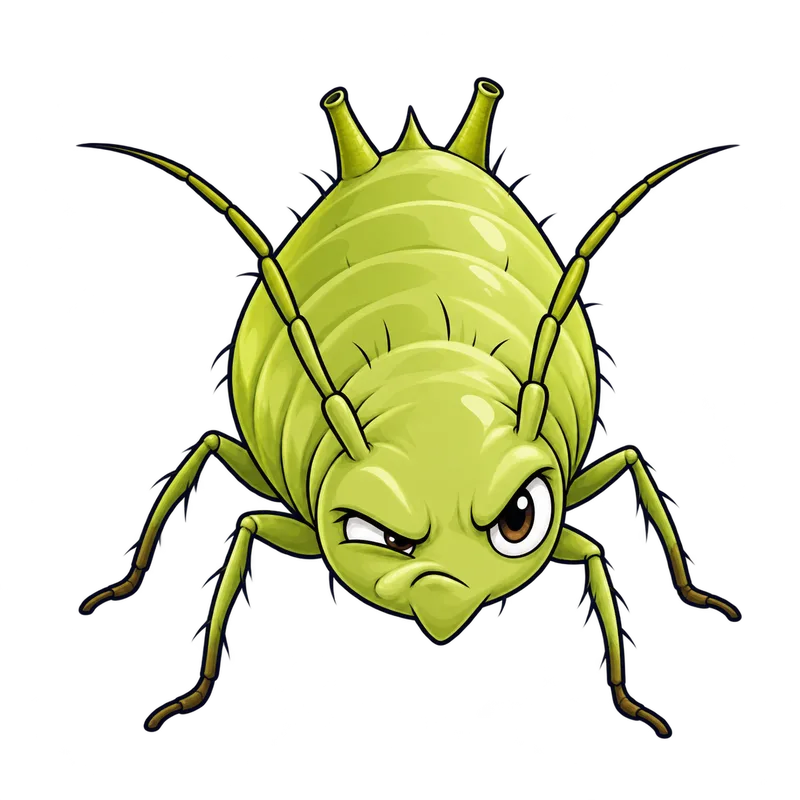
Aphids are soft-bodied, pear-shaped little insects, usually around a tenth of an inch long, and they cluster on the tender parts: new shoots, leaf undersides, and the joints where leaves meet stems. Color is not a reliable clue, since they come in green, black, pink, yellow, gray and more, depending on the species and the plant. What gives them away is the combination of soft bodies, slow movement and that tight clustering habit on fresh growth. If the dots scatter and leap when you touch the leaf, you are probably looking at something else.
A cheap 10x hand lens is worth owning here. Under magnification you can see two small tube-like structures sticking out of the rear of the aphid's body, called cornicles, which are basically the aphid's tailpipes. No other common houseplant pest has those. The lens also keeps you honest, because whitefly nymphs, scale crawlers and spider mite colonies can all read as "tiny dots on a leaf" to the naked eye, and the right treatment differs between them. Two minutes with a lens beats two weeks of spraying the wrong pest.
Two things are worth checking before you commit to a plan. First, look for swollen, papery, tan or bronze husks sitting among the live aphids. Those are mummies, meaning tiny parasitic wasps have already moved in and are killing the colony from the inside. If you see them, hold off on spraying, because a broad spray will kill your unpaid helpers along with the aphids. Second, check whether any aphids have wings. Most indoor aphids are wingless, but crowded colonies usually produce winged ones that can drift to your other plants, which is your cue to quarantine faster.
One honest limit: identifying the exact aphid species is not something you can do at the kitchen table, and you do not need to. The control method is the same for the common indoor species. Leave the Latin names to diagnostic labs and spend your energy on the sink instead.
What usually comes next
Start at the sink or in the shower. Get the plant away from your other plants first, then rinse it gently but properly with tepid water, aiming up into the undersides of the leaves where the colonies sit. That alone knocks off a big share of the aphids and costs you nothing. For the stubborn ones tucked into the joints where stems meet, a cotton swab dipped in rubbing alcohol does the job as a spot treatment. Go easy, though, because soaking the foliage in alcohol can scorch it. And if a shoot tip is completely crusted with aphids, cut it off, bag it and put it in the trash. Nobody hands out medals for rescuing the most infested inch of the plant.
Then go after whatever is left with a commercial insecticidal soap or a neem-based spray. Insecticidal soap works by stripping the waxy coating off the aphid's body so it dries out, and oils smother them, which means both products only kill what they actually touch while wet. Coverage is the whole game: leaf undersides, crowded growth deep inside the plant, all of it. It also means a single pass never finishes things, because the spray stops working the moment it dries and there are always a few nymphs you missed. Plan to repeat every 7 to 10 days, two to four rounds, until you see no live aphids and no fresh stickiness.
About that famous homemade dish soap recipe: skip it. Dish detergent is not insecticidal soap. It is built to cut grease, and it cuts the leaf's own protective coating right along with it, which is how people end up with scorched foliage and an aphid colony that is still very much alive. Real insecticidal soaps are cheap, and the label is a legal document, so follow it exactly, including which plants it is meant for. The internet's favorite recipe is mostly a hands-on course in leaf burn.
Before you spray the whole plant, treat a couple of leaves and wait three or four days. Ferns, waxy succulents, schefflera and a few other houseplants are sensitive to sprays and oils. Keep the plant out of harsh direct sun and very hot rooms while you treat it, and if the plant is an edible herb, use only a product labeled for edible crops and respect the waiting period before harvest. Two more traps worth dodging: releasing ladybugs indoors sounds delightful, but they head straight for your windows and quit the job, and heavy nitrogen fertilizer pushes out exactly the soft, sappy new growth aphids love most. Feed modestly, and let the ladybugs work outdoors, where they actually earn their keep.
When to get help
Most indoor aphid problems are firmly do-it-yourself territory, but a few situations change that. If you have a large or valuable collection and the infestation keeps bouncing back despite repeated, thorough treatments, calling a licensed pest control operator or a professional interiorscaper is a sensible move, especially when dense or tall plants make full spray coverage impossible. There is no shame in it. Some plants are simply too big to rinse in a kitchen sink.
On the safety side, treat every pesticide with respect, even the botanical ones. If a product gets in someone's eyes, on their skin or is accidentally swallowed, contact Poison Control or a clinician straight away instead of waiting to see how it plays out. And if anyone in the household has a reaction after handling a treated plant, that is a medical question, not a gardening one.
Otherwise the formula stays the same: isolate, wash, treat, repeat, and give it two or three weeks of patience. Aphids are persistent, but they are also soft, slow and entirely beatable once you stop expecting one spray to do the whole job.