
What are milkweed aphids?
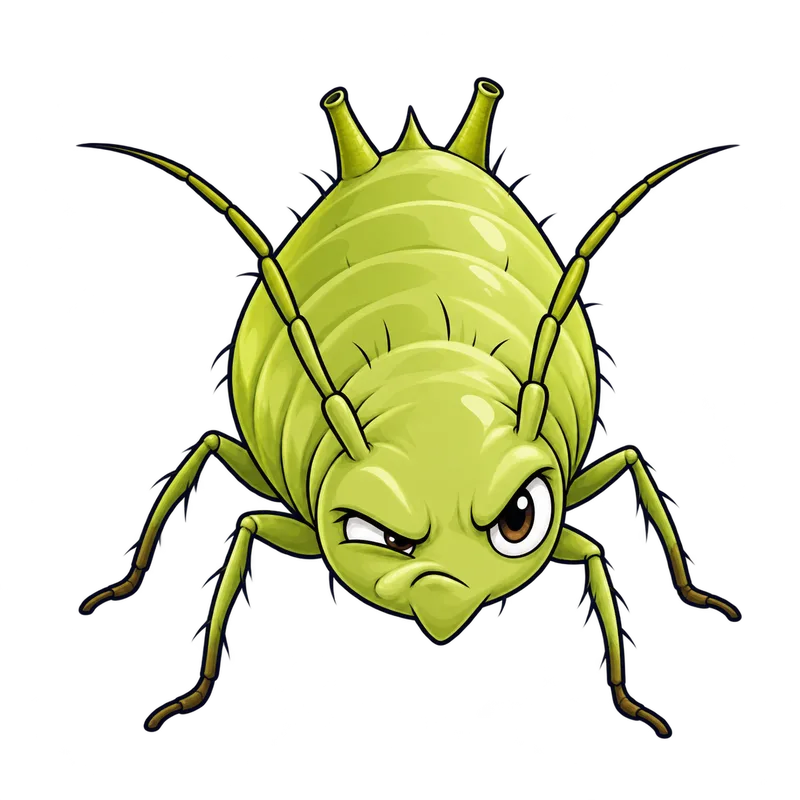
Milkweed aphids are small, soft-bodied, sap-sucking insects that are roughly 1/10 inch or 2.54 mm long. They feed on milkweed by plugging into the plant sap line, often clustering on tender tips and young buds.
What is actually going on
You walk out to check the milkweed you planted for butterflies, and the newest growth looks like it has been dipped in glue. The tips are curled, the stems feel tacky, and a crowd of tiny soft insects is packed around the buds like commuters who all got off at the same stop. That is usually the milkweed aphid moment.
Milkweed aphids are aphids feeding on milkweed. In garden talk, people often mean the aphid commonly called the milkweed or oleander aphid, but the useful point is simpler: they are small, soft-bodied, sap-sucking insects, roughly 1/10 inch or 2.54 mm long, that plug into the plant and drink from the plumbing. Think of each one as a living little siphon. It pushes threadlike mouthparts into the phloem, the plant's sugary sap line, and lets the pressure do the work.
The plant pays for that in a few ordinary ways. Tender shoots can pucker, curl, yellow, stall out, or look generally offended. The insects also excrete the extra sugar they cannot use as honeydew, a clear sticky liquid that coats leaves and anything underneath. If you have ever parked under an infested tree and found the windshield glazed by morning, you already know the texture. Honeydew is not a disease by itself, but it is a perfect food film for black sooty mold, which sits on the surface and makes leaves look dirty while cutting into photosynthesis.
Aphid colonies are usually built for speed. Most of the crowd is wingless females producing more females, with winged ones appearing when crowding or conditions push them to move. That is why a clean-looking stem on Monday can look like a tiny convention by Friday. The better news is that the same yard often sends in a cleanup crew: lady beetles, lacewing larvae, syrphid fly larvae, and small parasitic wasps. If you see swollen bronze husks that look like hollow beads or puffed rice stuck among live aphids, those are mummies, meaning a parasitic wasp has already been at work inside the colony.
How to tell for sure
Start with the pattern, not the color. Aphids come in green, black, gray, brown, pink, red, lavender, yellow, and other shades, so color alone is a lousy witness. What usually gives them away is the cluster: many small, oval, soft bodies crowded on tender tips, young buds, curled leaves, and the undersides of foliage. They do not chew holes like caterpillars or beetles. They suck sap, so the damage looks more like distortion, curling, yellowing, stickiness, and slow vigor than missing leaf chunks.
A 10x hand lens helps if you want to be more certain. Under magnification, aphids usually show a pair of little rear tailpipes called cornicles sticking out from the abdomen. You may also see cast skins, wing buds on developing youngsters, winged adults mixed with wingless ones, and the bronze mummies left by parasitic wasps. Exact species identification is a different matter. Separating look-alike aphids can require a specialist, microscope work, or a diagnostic lab, especially if the question involves a crop, virus risk, or regulated plant movement. For a home milkweed patch, aphid colony on milkweed is usually enough to guide the first decision.
There is a clue people often misread. Black coating on leaves does not automatically mean the plant has a fungal disease that needs spraying. If the black layer sits on sticky honeydew and rubs or washes off the surface, sooty mold is the likely explanation. Treat the insects and wash the foliage, and the mold problem usually fades because its food source is gone. Spraying fungicide at honeydew is like mopping the floor while the sink is still overflowing.
Ants are another useful tell. If ants are marching up and down the stems, they may be farming the aphids for honeydew and chasing away predators that would otherwise eat them. That does not mean ants caused the aphids, but heavy ant traffic can keep the colony going longer than it should. Also check the broader scene before blaming the insects for everything. Over-fertilizing with nitrogen can push soft, lush growth that aphids love, and very young milkweed plants can be set back harder than established clumps.
If monarchs are part of why you planted milkweed, look before you touch anything. Flip leaves and scan stems for eggs and caterpillars. A plant can hold aphids on the tip and a monarch larva three leaves down, which changes what doing something should mean.
What usually comes next
The real choice is not between spraying and surrendering. Most of the time it is watch for a bit, then reach for the least heavy-handed tool that can still do the job. A few aphids on a few leaves rarely earn an immediate chemical response. If the plant is established and otherwise healthy, give it about 3 to 5 days and check for lady beetles, lacewing larvae, syrphid larvae, or those bronze mummies. That pause is not neglect; it is reconnaissance. Help is often already on the way, even if it does not arrive with a tracking number.
If the cluster is dense, the tips are twisting, or the plant is still young, start mechanical. A firm stream of water can knock aphids loose and rinse honeydew off the leaves. Repeat as needed, aiming at undersides and curled tips without shredding the plant. It is boring, which is exactly why people skip it, and also why it works. Aim, rinse, walk away, come back tomorrow. It removes insects without leaving behind a residue that keeps punishing whatever shows up after lunch.
If water is not enough, insecticidal soap or horticultural oil can be an option, but treat them as contact tools and follow the label exactly. Read the label before the sprayer, not after. These products work by coating soft-bodied insects and disrupting or smothering them, so coverage matters and aphids tucked inside curled leaves can be missed. Once dry, they are not still poisoning the neighborhood, which is the point, but they can still hurt insects they directly hit while wet. Do not spray open blooms when bees or other pollinators are active, and do not treat milkweed before checking for monarch eggs and caterpillars.
Skip the two classic shortcuts. Buying a tub of ladybugs feels decisive, but released adults often lift off and visit the neighbor's tree before your aphids finish their first meeting. Keeping the predators already living in your yard is usually more useful; the garden is not short on predators so much as short on patience. And do not confuse dish detergent with insecticidal soap. Household detergents are not formulated as pesticides, can burn foliage, and are not a clever hack just because they live under the sink.
Ease up on pushing growth, too. Heavy nitrogen feeding can create the soft, sappy tips aphids reproduce on fastest. If ants are guarding the colony, reducing ant access around the base can help predators reach the aphids, but use methods appropriate for the site and keep baits or barriers away from kids, pets, and pollinator traffic. Think balance, not scorched earth. The goal is a plant that can carry a few aphids without turning into a sticky black mess, not a sterile yard where nothing with six legs is allowed.
When to get help
Get help when the stakes are bigger than a curled milkweed tip. If plants show severe mosaic yellowing, strange stunting, or virus-like symptoms spreading beyond the aphid cluster, contact your local extension service or a university plant diagnostic lab rather than guessing. If this is a commercial planting, a nursery shipment, fruit production, or anything involving plant movement across state or national lines, precise identification and official guidance matter because some aphids are regulated mainly as virus vectors or quarantine concerns.
Call a licensed applicator when the job involves restricted-use products, high-volume equipment, or a site where drift, runoff, bloom, or bystander exposure is hard to control. The label is the legal and safety boundary for any pesticide, including pre-harvest intervals and bee protection language, and a professional is the right person when the label and the real world do not fit together cleanly.
For health issues, keep it simple. If someone has pesticide exposure, trouble breathing, swelling, faintness, or a severe reaction, contact poison control or emergency services and bring the product label. For bites, rashes, or illness, do not let an aphid conversation turn into a diagnosis; a clinician should decide what is going on. For the garden itself, most milkweed aphid outbreaks are a patience problem first and a chemistry problem last.