
Thrips vs aphids: how can you tell the damage apart?
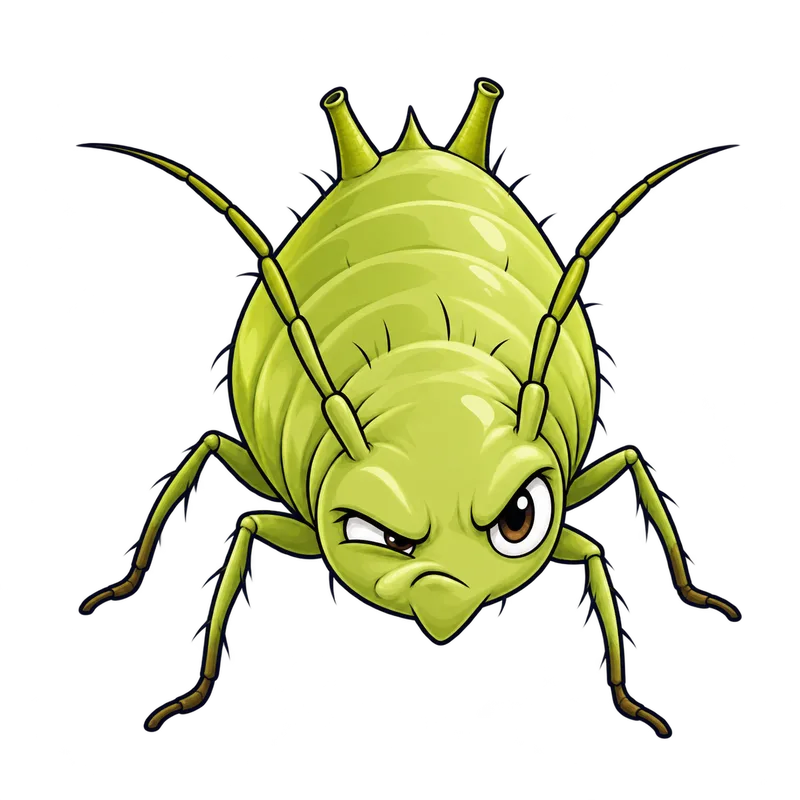
Aphid damage is wet and sticky while thrips damage is dry and silvery. Aphids plug into plant sap and produce a sugary honeydew residue that can grow sooty mold. Thrips scrape surface cells to drain them, leaving a bleached look alongside tiny black spots of dried droppings.
What is actually going on
Picture a Saturday morning, watering can in hand, and the tomato leaves look wrong. Some are curling in on themselves, others have gone a strange pale silver, and when you brush one leaf your fingers come away sticky. Two different pests, two completely different kinds of damage, and they get blamed for each other's work all the time. So here is the short answer before anything else: aphid damage is wet and sticky, thrips damage is dry and silvery. That single contrast settles most cases before you ever reach for a magnifying glass.
Aphids are soft little insects that plug their mouthparts straight into the plant's plumbing, the vessels that move sugary sap around. Sap travels under pressure and is mostly sugar and water, so an aphid ends up drinking far more sugar than it can possibly use. The excess comes out the back end as a clear, sticky liquid called honeydew. That is the tacky film on your fingers, on the leaves below the colony, sometimes on the patio chair parked under an infested tree. Give it a few days and a black fungus called sooty mold grows on that sugary coating, as if someone dusted the plant with charcoal. Meanwhile the feeding itself, plus irritants in aphid saliva, makes new leaves curl, pucker, cup downward and yellow, and growing tips stall out looking stunted.
Thrips work on another principle entirely. Instead of tapping the plumbing, they scrape and pierce individual surface cells and drain the contents, one cell at a time. Think of a microscopic sandblaster crossing the leaf. The emptied cells collapse and fill with air, which is why the damage looks silvery, bleached or white, usually starting as fine speckling that merges into larger pale patches. Thrips produce no honeydew at all. What they leave instead is their own calling card: tiny black specks of dried droppings, hard and tar-like, sitting right on top of the silvery areas. Leaf tips may brown and wither, and flowers or young fruit often come out scarred or deformed.
So the same "my plant looks sick" moment splits cleanly in two. Curling, yellowing, stickiness, black mold: aphids. Dry silvering, bleached stippling, little black dots, no stickiness: thrips. One is a soda fountain leaking syrup, the other is a sandblaster leaving a dry scar.
How to tell for sure
Start with the touch test, because it is the fastest clue in the garden. Run a finger across the damaged leaf. If it feels tacky or greasy, you are almost certainly looking at aphids, since honeydew is their signature. If the surface feels dry, slightly rough or papery, think thrips. This works before you have spotted a single insect.
Then look at the black stuff, because both pests involve black marks and people mix them up constantly. Aphid-related black is a widespread, powdery or sooty coating that smears, the mold growing on honeydew, and it usually sits on leaves below the colony where the drips landed. Thrips black is a scatter of isolated, hard little dots, like someone flicked a fine-tipped pen at the leaf, sitting directly on the silvery damage. Widespread smudge versus neat little dots. Once you have seen both, you will not confuse them again.
Now check the leaf shape. Aphid feeding distorts growth: leaves curl downward, pucker and cluster at the shoot tips, and whole new shoots can look bunched and stunted. Thrips feeding scars what was already there, so the leaf stays flatter but shows bleached stippling and silver patches, and the worst of it often appears on flower petals and young fruit as silvery or bronzed scarring.
If you want to see the culprits themselves, use a 10x or 20x hand lens, or your phone's macro mode in good light. Aphids are the easy ones: soft, pear-shaped, sluggish, about a tenth of an inch long, green, black, pink, yellow or gray depending on the species, usually clustered on shoot tips and leaf undersides, often with white shed skins mixed in. Thrips are far smaller, around a twenty-fifth of an inch, slender and quick, pale yellow to dark brown, and they hide in tight places like flower buds and leaf creases. A handy trick is to hold a white sheet of paper under a flower or leaf and tap it. Tiny slender slivers that scurry across the page are thrips.
A few honest caveats, because real gardens rarely read the manual. Both pests can be on the same plant at once, so you might see curling and silvering together. Heavy rain can wash honeydew away and hide the aphid evidence for a while. And some damage that looks pest-related is actually fertilizer burn, drought stress or spider mites, which leave fine yellow speckling plus delicate webbing that neither aphids nor thrips produce. If you see webbing, that is a third suspect entirely.
What usually comes next
So you have your culprit. The good news is that the opening move is the same for both pests, and it costs exactly nothing: a strong jet of water from the hose. Aphids are soft-bodied and slow, and a decent blast knocks them off the plant, and most of them never make the climb back. It works on thrips too. Free, harmless to everything else in the bed, and for a light infestation it is often the whole job, done before lunch.
Before you reach for anything stronger, take a second look at that aphid colony. You are hunting for swollen, bronze, papery husks sitting among the live aphids. Those are aphid mummies, and each one means a tiny parasitic wasp has already laid an egg inside that aphid and its offspring is finishing the job from within. Finding mummies is like discovering the cleanup crew clocked in before you did. Spray now and you kill the wasps along with everything else, and the aphids that survive bounce back with nobody left to keep them honest. Ladybugs, lacewing larvae and hoverfly larvae also eat aphids by the hundreds, so if you spot them on the job, the smart play is usually to give it a few days and let them work.
If the infestation is heavier and you do treat, insecticidal soap and horticultural oils are the usual first line against both pests, but here is the catch: they only work on contact, which means coverage is everything. Spraying just the tops of the leaves is like washing one side of a dirty plate. The pests tucked underneath carry on untouched, mildly refreshed. Whatever you use, the product label is the instructions, full stop, including how long you have to wait before picking anything edible. And skip the broad-spectrum sprays unless things are truly out of hand, because wiping out the beneficial insects often buys you a worse outbreak a couple of weeks later.
One more decision is worth making, and people skip it constantly: how much damage can you actually live with? A few curled leaves on one rose bush is cosmetic. A stunted vegetable crop dripping honeydew is a real problem. Matching your response to the actual harm, rather than to the mere sight of a bug, saves you money and keeps the garden's own pest control running for free.
When to get help
Most thrips and aphid problems sit comfortably within a home gardener's ability to handle. A few situations deserve backup, though.
If you are growing commercially, or even semi-seriously for market, and the numbers keep climbing no matter what you do, call your county extension office or a certified crop advisor. They can confirm the pest, tell you whether you have crossed the threshold where treatment actually pays for itself, and keep you on the right side of the harvest-interval rules for edible crops.
If you suspect something unusual, say a thrips you cannot match to anything common, or a pest on imported plants or citrus showing strange symptoms, do not just treat it and move on. Some thrips are regulated quarantine pests, and reporting a suspected sighting to your state agriculture department or the USDA is genuinely the right call, not an overreaction. What they will want is a clear photo plus a physical sample in a sealed bag, because photos alone usually cannot confirm a species at that level. Real identification happens under a lab microscope, not on your phone screen.
And the health side, briefly: if anyone in the household gets a skin reaction or feels unwell after handling or applying a pesticide, rinse the skin, follow the first-aid directions on the label, and call poison control or a doctor. That stopped being a gardening question the moment it started, so do not treat it like one.
The rest of the time, trust your fingertips. Sticky means aphids, silvery and dry means thrips, and the hose is usually the right first answer to both.