
What are little green bugs on roses?
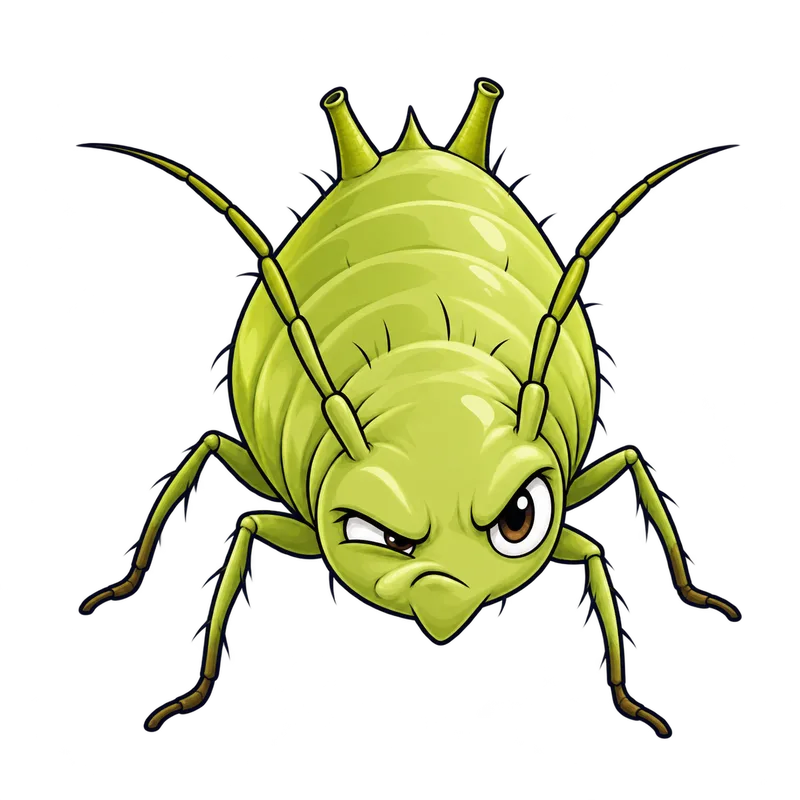
Little green bugs on roses are usually aphids, which are soft-bodied, sap-sucking insects about a tenth of an inch long that gather in colonies on stems and leaf undersides. You might also be looking at immature rose leafhoppers or green sawfly larvae, depending on whether you spot sticky residue, sideways scuttling, or chewed leaf tissue.
What is actually going on
You step outside with your morning coffee, walk over to your favorite rose bush to check on those tight new flower buds, and notice a crowd of tiny, pear-shaped green specks clustered densely along the stems and the undersides of the leaves. It looks like someone spilled a dusting of bright green beads across the tender growth. If you look closer, you might even see that the foliage feels sticky to the touch, or has developed a faint dusting of dark, sooty grime.
Those little green bugs are usually aphids, which are soft-bodied, sap-sucking insects about a tenth of an inch long. They gather in colonies on the most succulent parts of the plant, sinking needle-like mouthparts directly into the phloem to drink the plant juices. Think of it like dozens of tiny straws draining a juice box at the exact same time. While a few of them will not hurt a mature plant, a massive cluster can drain enough turgor pressure from expanding tissues to pucker the leaves, stunt the stems, and ruin a promising flower bud before it ever opens.
Of course, aphids are not the only suspects when you find green insects on a rose. You might also be looking at immature rose leafhoppers, which are pale green, wedge-shaped bugs up to an eighth of an inch long that scuttle sideways across the leaf in a crab-like rush when disturbed. Another possibility is the rose slug, which is actually a green sawfly larva with chewing mouthparts that leaves behind a windowpane skeleton of transparent leaf tissue rather than sticky residue.
How to tell for sure
Pinpointing the culprit requires a closer look at the bugs and their handiwork, and a simple 10x magnification hand lens usually makes the job much easier. If the creatures are stationary or moving sluggishly, pear-shaped, and feature two tiny tailpipe-like projections near their rear end, you are usually looking at aphids. They come in various shades of green, pink, or gray, and their heavy feeding habits typically leave behind a clear, sticky liquid called honeydew.
That sticky honeydew leads directly to the next major clue. Because aphids ingest massive quantities of plant sap to get enough nitrogen, they excrete excess sugars that coat the leaves below. If you notice a dark, powdery black coating on the lower foliage, that is sooty mold feeding on the honeydew. It does not infect the plant directly, but it blocks sunlight and weakens the leaves.
If the insects jump or fly rapidly when you brush past the foliage, or if the nymphs scamper sideways across the leaf surface rather than crawling forward, you are usually dealing with leafhoppers. Their feeding does not cause sticky leaves, but it leaves behind a distinct pattern of pale white or yellow stippling across the upper leaf surface. If you see ragged holes or chewed edges instead of stippling or sticky sap, look for the smooth, green, slug-like larvae of the rose sawfly hiding on the underside of the leaves.
What usually comes next
Finding a handful of green bugs on a rose bush tends to trigger an immediate panic and a frantic search for something to spray, but the most sensible first step is usually to do nothing at all except watch and wait. Small, localized aphid colonies rarely cause permanent structural harm to a healthy, established shrub, and rushing to chemical controls often disrupts the local ecosystem before it has a chance to balance itself out.
Take a moment to inspect those aphid clusters closely. If you spot tiny, swollen, bronze, or parchment-like husks among the living pests, you are looking at aphid mummies, which mean that native parasitic wasps have already moved in to lay eggs inside the pests. You might also notice beneficial predators like lady beetles, lacewing larvae, or hoverfly maggots crawling nearby. Letting these natural defenders work for a few days frequently solves the problem for free, saving you time, money, and effort.
When the population gets out of hand and physical damage starts to mount, the safest intervention is usually a strong, direct blast of water from a garden hose aimed at the infested stems and leaf undersides. This mechanical wash physically dislodges the pests, and once knocked to the ground, soft-bodied aphids rarely manage to climb back up the plant. It clears the bugs away without introducing any foreign substances to the garden or harming the beneficial insects patrolling your flower beds.
When to get help
Most garden pest issues on ornamental roses remain a minor backyard nuisance, but certain situations call for outside expertise. If a rose bush displays thick, bright red shoot elongation, abnormal clusters of dense thorns often called witches brooms, severely deformed flowers, and rapid dieback, it may be infected with Rose Rosette Virus, which is a serious plant disease transmitted by a microscopic eriophyid mite. In the United Kingdom and Northern Ireland, this is a regulated quarantine threat that requires immediate notification to official plant health authorities. In the United States, suspected cases should be confirmed by a local university extension diagnostic lab before the plant is dug up and destroyed.
You should also consider involving a licensed commercial arborist or custom spray applicator when dealing with large, mature climbing roses, extensive park-style plantings, or severe infestations that require specialized high-pressure spray equipment or systemic soil treatments. On the human health side, common rose pests do not bite, sting, or transmit diseases to people or domestic pets. However, if anyone experiences accidental pesticide exposure, eye contact, or ingestion while handling garden treatments, do not attempt home remedies. Contact a qualified medical clinician, an urgent care facility, or the regional poison control center right away.