
Why are ants tending aphids on a plant?
Ants tend aphids on plants to harvest honeydew, which is a sweet, carbohydrate-rich liquid waste that aphids excrete after feeding on plant sap. The ants drink this liquid to fuel their underground colonies while acting as bodyguards that protect the aphids from predators like ladybugs and lacewings.
What is actually going on
Imagine walking over to your favorite potted houseplant to water it, only to notice a busy highway of ants marching up the stem. When you look closer, you see small, pear-shaped bugs clustered tightly on the tender new growth, and the leaves feel sticky to the touch. You might assume the ants are chewing up your plant, but the reality is much stranger. The ants are actually farming.
Ants tend aphids on plants to harvest honeydew, which is a sweet, carbohydrate-rich liquid that aphids excrete after feeding on plant sap. Think of aphids as tiny, living sugar factories. They puncture plant stems with needle-like mouthparts to drink the sugary sap flowing inside. Because that sap contains way more water and sugar than protein, the aphids have to process massive volumes of it just to get enough nutrition. They filter out what they need and pass the rest as a sticky liquid waste.
For an ant colony, this waste is liquid gold. Worker ants patrol the plant stems, gently stroking or tapping the aphids with their antennae to encourage them to release a drop of honeydew. The ants drink it up to fuel their bustling underground colonies. In exchange, the ants act as ruthless bodyguards. They chase away ladybugs, lacewings, and parasitic wasps that would otherwise eat the soft-bodied aphids.
You might wonder why the ants do not just eat the aphids themselves if they are guarding them so closely. For these ants, a living aphid is far more valuable as a renewable sugar dispenser than as a single meal. By keeping predators away, the ants secure a steady, daily supply of high-energy food right outside their door.
How to tell for sure
Spotting this arrangement usually starts with clues you can see with your unaided eye. You will usually notice shiny, sticky patches on the leaves or even dripping onto the furniture or floor beneath the plant. Over time, that sticky residue often turns into a black, powdery coating that looks like fireplace soot.
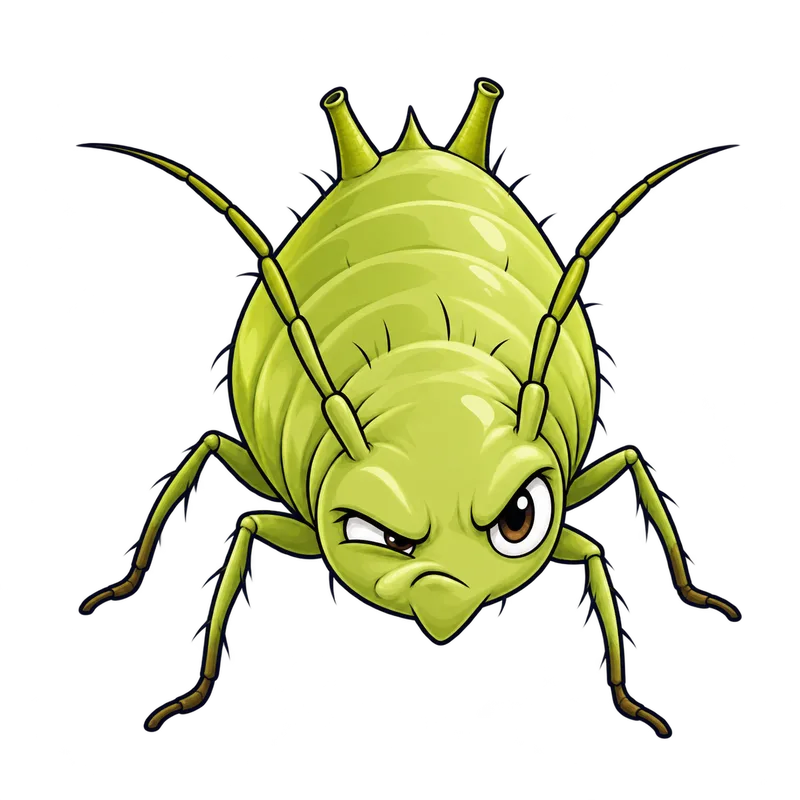
When you peer closely at the stems or the undersides of the leaves, you will usually see clusters of small, pear-shaped insects. They are usually green, yellow, brown, or black, and they sit quietly while the ants scurry around them. If you pull out a hand lens with 10x magnification, you can usually spot a pair of tiny, tube-like structures sticking out of the rear end of the aphids. Those little pipes are called cornicles, and they are a dead giveaway for aphid identification.
People often mistake carpenter ants for wood-destroying menaces when they find them climbing up a potted plant indoors. While carpenter ants are large and impressive, usually measuring a quarter of an inch to half an inch long with dark or reddish bodies, they do not usually eat plant leaves or wood. They are simply climbing up your houseplant to harvest the sweet aphid secretions or look for other food scraps.
What usually comes next
Breaking up this tiny livestock operation means you have to tackle both ends of the partnership at once. If you only deal with the wandering ants, more will show up because the aphid buffet is still wide open. If you just knock the aphids off the leaves, hungry ants will either bring new ones up or defend any survivors with real aggression.
Start with the plant itself. Carry that potted plant right over to the kitchen sink or shower and wash the leaves with a gentle stream of lukewarm water, or wipe them down carefully with a damp cloth. This physical rinse clears away the sticky honeydew, washes off most of the aphids, and cleans up that dark, sooty mold starting to coat the foliage.
Once the leaves dry off, look closely at the label on a bottle of approved household or ornamental insecticidal soap or horticultural oil. These sprays work purely on contact, meaning you actually have to hit the pests directly, and they must be explicitly rated for indoor use by the manufacturer. Never mix your own home chemistry experiments or try to make the spray stronger than the label allows.
To keep the ants from marching back up into the soil, pull the potted plant away from any neighboring houseplants so the insects cannot use crowded stems as a bridge. Keeping your plant consistently watered also helps it bounce back, since dry, stressed plants pack their sap with extra sugars and pull in even more pests.
When to get help
Sometimes a quick rinse and a bottle of insecticidal soap are simply not enough to save the day. If your houseplant is dealing with severe leaf yellowing, heavy curling, or dropping its foliage by the handful, the damage might be too advanced for simple home care.
You also need to look at the bigger picture if large carpenter ants keep trailing across your floors and windowsills. While they could just be visiting your potted plants for a sugary snack, carpenter ants build their nests inside damp, rotting wood. Spotting them indoors can sometimes point you toward hidden water leaks, wet window frames, or decaying structural lumber that calls for a serious look.
If you suspect carpenter ants are setting up house inside your walls or if an aggressive swarm of ants has taken over your living space, bring in a licensed pest control professional. For prized indoor plants that keep declining no matter what you try, reach out to a local university extension agent or a certified plant expert for tailored advice. Should you ever run into accidental chemical exposure, severe allergic reactions, or strange health symptoms while handling pest products, stop guessing and call a doctor or your local poison control center immediately.