
Are aphids bad for plants?
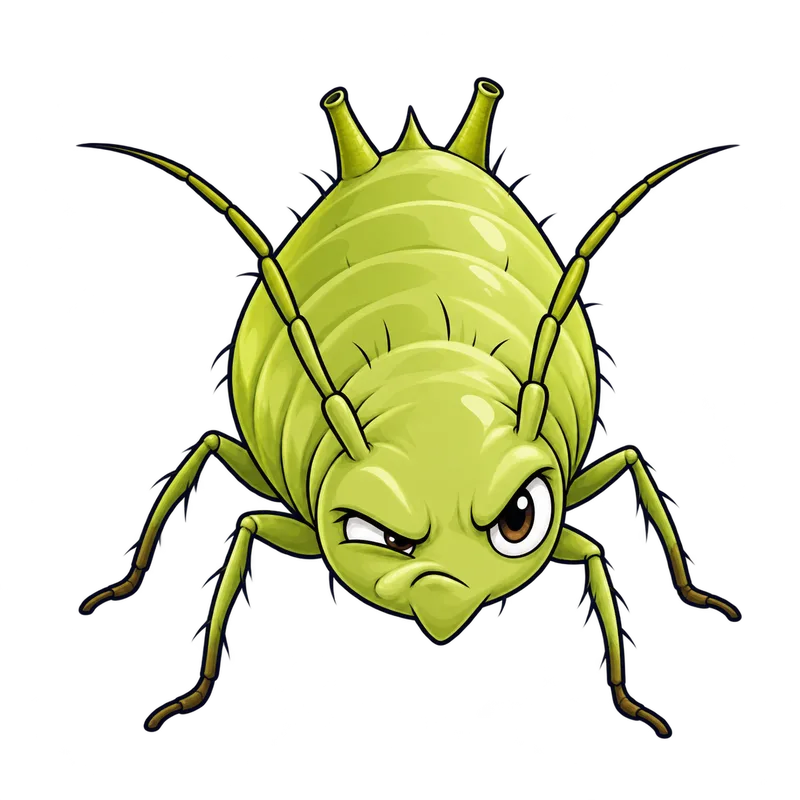
Yes, aphids are bad for plants, causing curled leaves, stunted growth, and sooty mold by drinking sugary sap. The harm depends on the size of the infestation, how young the plant is, and whether natural predators are present to eat the soft-bodied insects.
What is actually going on
You lean over the rose bush or the pepper seedlings one morning and notice the new growth looks wrong. The tips are crowded with tiny green or black specks, the young leaves are curling under, and the stem feels faintly sticky when you brush it. Congratulations, you have aphids. And yes, they are bad for plants, but probably not in the dramatic, plant-is-doomed way you are imagining.
Here is what is actually happening. Aphids are small, soft-bodied insects, roughly a tenth of an inch long, and they do not chew. If your leaves have holes or missing chunks, that is a caterpillar or a beetle, not an aphid. Aphids work more like a crowd of kids with straws stuck into a juice box. Each one pushes a needle-fine mouthpart into the plant's plumbing and sits there drinking the sugary sap that the plant was trying to send to its new leaves, roots and fruit. Take enough of that sap, and the plant shows it: leaves yellow, pucker and curl downward, shoots stall out, and young transplants or newly planted trees can be genuinely stunted.
The drinking is only part of the problem. Because sap is mostly sugar with very little protein in it, aphids have to process a huge volume to get what they need, and they excrete the surplus as a clear, sticky liquid called honeydew. That is the tacky film on the leaves below the colony. Honeydew itself is harmless, but a black fungus called sooty mold grows on it, the way grime builds up on a car parked under a sappy tree. The mold does not infect the plant; it sits on the surface and blocks sunlight, which slowly starves the leaf. Worse than either of these, some aphids carry plant viruses from one plant to the next as they feed, and a virus is a much bigger problem than a few missing cups of sap.
Now the part that surprises people: a small colony on a healthy, established plant usually does not matter much. Aphids have an enormous fan club of natural enemies, including lady beetle larvae, lacewings, hover fly maggots and tiny parasitic wasps, and those predators often clear a colony before it does real harm. The danger zone is heavy infestations on young, tender or stressed plants, and the virus risk in certain crops. So the honest answer is: aphids are bad for plants in proportion to how many there are, how young the plant is, and whether anyone is left alive to eat them.
How to tell for sure
Aphids are one of the easier pests to confirm with your own eyes. Check the places they prefer: the tender growing tips, the undersides of young leaves, the joints where leaves meet stems, and unopened buds. You are looking for clusters of soft, pear-shaped insects, usually green, black, yellow or pinkish, sitting shoulder to shoulder and barely moving. Some will have a pair of small tubes sticking out of the rear end like tiny exhaust pipes, which is a classic aphid feature, though you may want a 10x hand lens to see that kind of detail clearly.
The supporting evidence is often easier to spot than the insects. Look for shiny, sticky residue on leaves below the colony (that is honeydew), a black powdery or sooty coating on top of it, and pale, papery shed skins caught in the leaf curls, since aphids molt as they grow. Ants marching up and down the stem in an organized line are another giveaway. Ants farm aphids the way people keep dairy cows: they protect the colony from predators and harvest the honeydew. A busy ant trail on a plant usually means aphids somewhere above.
One more thing to look for, because it changes what you should do. Scan the colony for aphids that look swollen, tan or bronze, and slightly papery, like little inflated balloons among the green ones. Those are called mummies, and they are aphids that a parasitic wasp has already turned into a nursery for its offspring. Mummies mean free pest control is underway, and spraying at that point would mostly kill your allies.
A word of caution on certainty. Aphids do not chew leaves, so holes, notched edges or skeletonized foliage point somewhere else entirely. And curled or yellowing leaves can also come from drought, overwatering or nutrient problems. Usually the combination of visible clusters, sticky leaves and cast skins settles it, but if you are seeing decline without clear colonies, or you suspect a root-feeding aphid on a struggling plant, a sample sent to your local extension service can confirm what you are dealing with.
What usually comes next
The real decision is not which spray to buy. It is whether to do anything at all. If the plant is mature and healthy, the colony is small, and you can see lady beetle larvae or mummies in the mix, the best move is often to wait and check again in a few days. Spraying at the first sight of ten aphids usually kills the predators and leaves the aphid eggs, which is like firing the security staff because you spotted a shoplifter.
If numbers are climbing or the plant is young and struggling, start physical. A firm jet of water from the hose knocks soft-bodied aphids off the plant, and most never find their way back. It is unglamorous and genuinely effective, especially repeated every few days. If ants are guarding the colony, deal with them too, because a sticky band on a tree trunk or baiting ants away from a bed removes the aphids' bodyguards and lets the predators in. And ease up on the nitrogen fertilizer: lush, overfed growth is aphid candy, and heavy feeding is one of the most reliable ways to turn a few aphids into an explosion, since these insects can reproduce without mating and a new generation can mature in about a week.
When water and patience are not enough, the gentler products are the sensible next step, used exactly as their labels direct. Insecticidal soap, meaning the real stuff made from potassium salts of fatty acids, works only by directly wetting the aphid and has no lasting effect once dry, so coverage of the leaf undersides matters. Two warnings are worth keeping. Do not substitute dish detergent, which is a degreaser, not a soap, and can scorch foliage. And do not spray soaps or oils in hot weather above about 90 degrees or on drought-stressed plants, because the cure can burn the patient. Pyrethrin products give fast knockdown but are rough on bees and beneficial insects while wet, so if you use them, apply at dusk and keep them off anything in bloom.
Set your expectations on one point: spraying does not uncurl leaves. Tissue that has already puckered stays puckered. What treatment does is protect the new growth, which is where the plant's future lives anyway.
When to get help
Most backyard aphid situations never need a professional, but some clearly do. Call in help when a young fruit tree, a new hedge or a whole bed is declining despite your efforts, when you suspect aphids feeding on the roots (wilting, pale plants with no visible colonies above ground), or when a large tree needs treatment you cannot safely reach or apply. Anything involving restricted-use or commercial-strength pesticides belongs to a licensed applicator, full stop.
If you grow food commercially, or you suspect a virus moving through a crop, that is a different category. Aphid-vectored plant diseases can be serious, and some are regulated, so the right move is to contact your state department of agriculture or extension service for diagnosis and reporting rather than guessing. And a general rule that applies everywhere: the product label is the law, and when label directions and a blog post disagree, the label wins.
For the everyday version, the answer stays reassuringly dull. Yes, aphids harm plants, through sap loss, sticky mold and occasionally viruses. But a watched colony on a healthy plant, with its predators intact, usually sorts itself out. Look closely, count honestly, and save the spray bottle for when the numbers actually justify it.