
Are aphids harmful to humans?
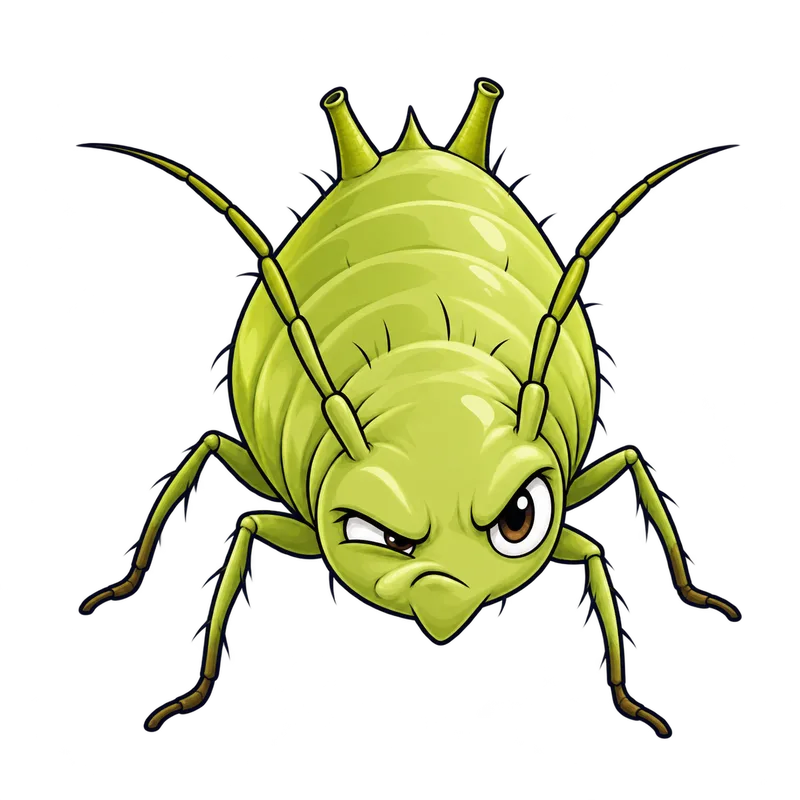
No, aphids are not harmful to humans. Aphids do not bite, sting, or carry any disease that affects people, and their mouthparts are far too delicate to pierce human skin. The biggest risks come from panic spraying pesticides without gloves or from heavy mold exposure on unwashed fruit during harvest.
What is actually going on
You're rinsing lettuce from the garden and notice tiny green specks clustered along the stem. Or you lean against the apple tree and come away with sticky fingers and a sleeve full of little soft-bodied bugs. The question arrives fast: are these things dangerous to me?
Short answer: no. Aphids do not bite, sting, or carry any disease that affects people. Their mouthparts are essentially a microscopic drinking straw, built to slide between plant cells and tap into the plant's sugar supply. They have no jaws, no stinger, no venom, and no interest in you whatsoever. Human skin offers them nothing, and even if one wanted to pierce you, its equipment is far too delicate for the job. If you picked up an itchy bump while gardening, blame a mosquito, a midge, or a mite. The aphids are innocent, which is not a sentence you get to say often about garden pests.
So why does the question come up at all? Partly because anything small and numerous feels threatening, and partly because aphids do create real problems, just not the kind that land on your skin. The genuine risks around aphids are indirect, and the biggest one is self-inflicted: what people spray on their plants in a panic. Aphids themselves are harmless, but a gardener who reaches for a strong insecticide without gloves, then picks strawberries the same afternoon, has manufactured a hazard out of thin air. Skin contact is actually the most common way people absorb pesticide during home spraying, and every product label carries a waiting period between the last spray and safe harvest for exactly this reason.
There's also the sticky stuff. Aphids excrete a sugary liquid called honeydew, which coats leaves, fruit, car windshields, and patio furniture beneath an infested tree. Left alone, a dark fungus called sooty mold grows on it, like grime settling on a syrup spill nobody wiped up. The mold is not a human pathogen, but heavily coated fruit should be washed well before eating, and sensitive people can get respiratory or stomach irritation from heavy mold exposure during harvest. Annoying, yes. Dangerous, generally not.
How to tell for sure
If you're worried the bugs on your plants might be something that bites, the identification is refreshingly easy. Aphids are small, soft, and pear-shaped, usually around a tenth of an inch long. They cluster densely on tender new growth, flower buds, and the undersides of leaves, and they barely move when you approach. Colors vary by species: green and black are common, but you will also see gray, pink, red, yellow, or a waxy white woolly coating on some apple-infesting types.
The giveaway signs are usually around the insects rather than on them. Look for curling or puckering leaves, a shiny sticky film on the foliage below the colony, and that black powdery mold growing on the stickiness. Ants marching up and down the stems are another clue, since ants farm aphids for their honeydew like tiny, six-legged dairy ranchers.
If you have a magnifying glass or a cheap jeweler's loupe, look for two small pipe-like structures sticking up from the rear of the body. Those are called cornicles, and they are unique to aphids. You might also spot swollen, bronze, papery husks among the live aphids. Those are aphid mummies, the leftover shells after a tiny parasitic wasp developed inside and chewed its way out. It sounds like a horror film, but it is actually good news: nature's cleanup crew is already on the job, free of charge.
One honest caveat. Telling one aphid species from another, say a green apple aphid from a spirea aphid, takes a specialist with a microscope, and detecting the plant viruses some aphids carry takes a laboratory. For a home gardener, that level of detail usually does not matter. What matters is confirming you have aphids and not a biting insect, and the soft bodies, plant clustering, honeydew, and cornicles settle that question.
What usually comes next
Here is the real fork in the road: the aphids are on your plants, so how do you respond without turning a mild nuisance into a bigger mess?
First, do not reach for the nuclear option. A small colony on a healthy, established plant usually causes little lasting harm, partly because ladybugs, lacewing larvae, and parasitic wasps are often already clocked in and working. A broad-spectrum spray wipes out those helpers along with the aphids, and the aphids, which breed at an insulting speed, are usually the first ones back. Then the gardener sprays again, and the whole routine starts rewarding the pest while punishing the person holding the bottle. The exception is young, newly planted trees: a heavy infestation there can genuinely stunt growth and deserves quicker action.
For an ordinary garden outbreak, start with a firm jet of water from the hose. That blast breaks their delicate feeding straws, and aphids knocked to the ground rarely make the climb back up. Cut out and trash any shoot tips that are completely smothered, and go easy on heavy nitrogen fertilizer, since the soft, lush growth it pushes is basically aphid candy. If you still need to spray, insecticidal soap or neem oil are the gentler choices, and both carry a zero-day wait before harvest, meaning you can pick and eat the same day after washing. Coat the undersides of leaves well, because these products only work where they touch the insect.
Two warnings belong in the middle of this, not buried at the bottom. Natural does not mean harmless: botanical pyrethrins can trigger allergic skin reactions, and old-fashioned nicotine-based sprays are acutely toxic and carcinogenic, which is why organic standards ban them. And whatever product you use, the label is the law. Wear the protection it specifies and respect the harvest waiting period it lists, because some synthetic products require days or even weeks between spraying and picking. Then wash everything you harvest under running water. That one step removes stray aphids, honeydew, and surface mold.
When to get help
Most aphid situations never need a professional, but a few lines are worth drawing in ink.
If you develop a rash, swelling, breathing difficulty, or any unexplained skin reaction after working in the garden or handling a spray product, do not try to match it to a bug or diagnose it yourself. See a clinician. If anyone swallows a pesticide or gets a significant exposure, call Poison Control at 1-800-222-1222 right away. No photograph or description can identify what caused a skin lesion, and anyone who claims otherwise is guessing.
On the plant side, bring in help when the job outgrows the garden hose. Large-scale spraying, restricted-use products, and commercial orchard treatments belong to licensed applicators with the training and insurance for that work. And if you spot an insect you suspect is an unusual or invasive plant pest, report it to your state agriculture department or extension service instead of experimenting on it yourself.
For everyone else, the honest bottom line stays simple: the aphids on your roses are a nuisance for the plant, not a threat to you. Wash your produce, treat anything you spray with respect, and let the ladybugs earn their keep.