Skip to content
The Pest Guide logo: an orange ant behind a magnifying glass The PestGuide

Springtails

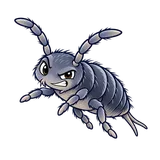
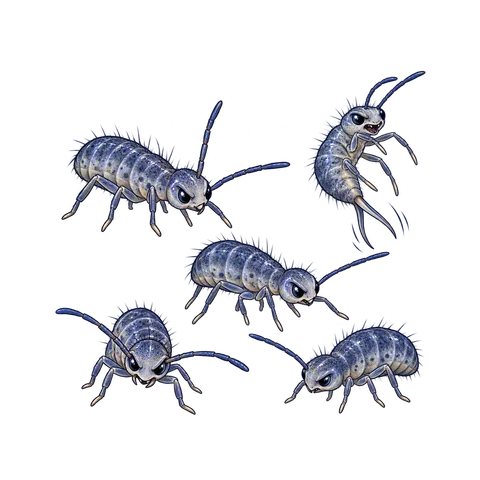
Stylized illustration of springtails

By The Pest Guide Team · Updated
Edited by Fellipe Antequera · Editorial policy

Springtails earn their place as a single group through their absolute dependence on moisture and a startling defense mechanism, which is their ability to launch themselves into the air with an energetic jump when disturbed. If you spot a cluster of tiny, wingless specks measuring roughly an eighth of an inch or less across a damp basement floor or inside the soil of an overwatered houseplant, you are likely looking at these harmless detritivores, or organisms that feed on decaying organic matter. They do not bite people, chew through drywall, or threaten your home structure, acting instead as living indicators that a particular area holds excess moisture.

Telling springtails apart from other tiny creatures sharing the same damp spaces comes down to observing how they move. Booklice and mites might share that same minute size and pale or dark coloration, but booklice simply crawl and never jump, while mites possess eight legs instead of the six seen on springtails. Silverfish also inhabit similar damp indoor zones, yet they grow much larger, feature metallic scales with three tail filaments, and run in a distinct fish-like wiggle rather than springing away.

Explore springtails
Illustration of SpringtailsSpringtailsClass CollembolaIllustration of Snow fleaSnow fleaHypogastrura nivicola

Questions about springtails

SpringtailsHow do you get rid of springtails in a house?Learn how to get rid of springtails in a house by addressing moisture, sealing entry points, and vacuuming active invaders.SpringtailsTiny jumping bugs in a bed: fleas or springtails?Jumping bugs in bed that bite are fleas. Tiny non-biting jumpers near damp spots or houseplants are usually springtails. Here is how to tell.SpringtailsHow do you reduce springtails in a bathroom?Learn how to reduce and eliminate springtails in your bathroom by controlling moisture, sealing entry points, and removing active pests.SpringtailsDo springtails bite?Learn whether springtails bite, why they enter homes, and how to control these harmless moisture-loving pests.SpringtailsDo springtails jump?Yes. Springtails snap a fork-like organ under the body and pop several inches into the air to escape. They are harmless and under 1/8 inch long.SpringtailsDo springtails eat mold?Yes. Mold and fungi are a core part of the springtail diet, along with algae, bacteria and decaying matter. Lots of them can mean hidden moisture.SpringtailsWhy are springtails found in soil?Springtails live in soil because damp topsoil and leaf litter give them moisture and food: fungal spores, bacteria, algae and decaying plants.SpringtailsWhat are snow fleas?Learn what snow fleas are, why they appear during winter thaws, and how to manage them safely without harsh indoor chemicals.SpringtailsWhy are snow fleas in the house?Snow fleas, a kind of springtail, come inside to escape flooded yards in late winter or drought in summer, through cracks and pipe gaps.SpringtailsDo snow fleas bite?No. Snow fleas are springtails 1 to 2 mm long with no mouthparts able to pierce skin. They eat decaying organic matter and are harmless.SpringtailsCan snow fleas get on dogs?Learn why snow fleas hitch a ride on dogs during winter thaws, how to identify them, and what practical steps to take next.SpringtailsWhy do snow fleas appear in winter?Snow fleas appear in winter when melting snow floods their homes in the topsoil, pushing millions of these springtails up onto the snow.SpringtailsSnow flea vs springtail: what is the difference?Every snow flea is a springtail. The name is a nickname for cold-tolerant springtails that hop with a fork-like organ. They are not true fleas.SpringtailsAre snow fleas common in Michigan?Discover why snow fleas appear in Michigan during winter thaws, how to identify these harmless springtails, and what steps to take if they wander indoors.SpringtailsTiny jumping bugs in a bathroom: springtails or fleas?Find out whether those tiny jumping bugs in your bathroom are springtails or fleas, how to tell them apart, and what to do next.SpringtailsWhat does a springtail look like on a bathroom sink?Learn what springtails look like on a bathroom sink, why they gather there, and how to manage the moisture attracting them.SpringtailsWhy are springtails appearing after a moisture leak?Learn why springtails appear after a moisture leak, how to identify them, and practical steps to resolve the issue safely.SpringtailsSpringtails vs booklice: which humidity clues differ?Learn the difference between springtails and booklice, what they reveal about home moisture, and how to address the underlying humidity issues.SpringtailsHow can you reduce indoor springtails by addressing moisture?Learn how to control indoor springtails by targeting moisture sources rather than using sprays.SpringtailsBlack vs white springtails: what is different?Discover the differences between black and white springtails, their habits, and how to manage them effectively in your home.SpringtailsWhy do springtails gather in bathrooms?Find out why springtails appear in bathrooms, how to identify them, and what practical steps you can take to keep them out.SpringtailsDrain flies vs springtails: how can you tell?Learn how to distinguish drain flies from springtails by observing their movement and physical traits, and discover practical ways to manage moisture issues.SpringtailsHow do you tell springtails from fleas?Learn how to tell springtails from fleas through simple identification cues, safe collection methods, and practical next steps for your home.

Research sources

This page was researched with publications from these institutions, then written and reviewed by The Pest Guide Team: