
Are mealybugs on outdoor plants handled differently from houseplant mealybugs?
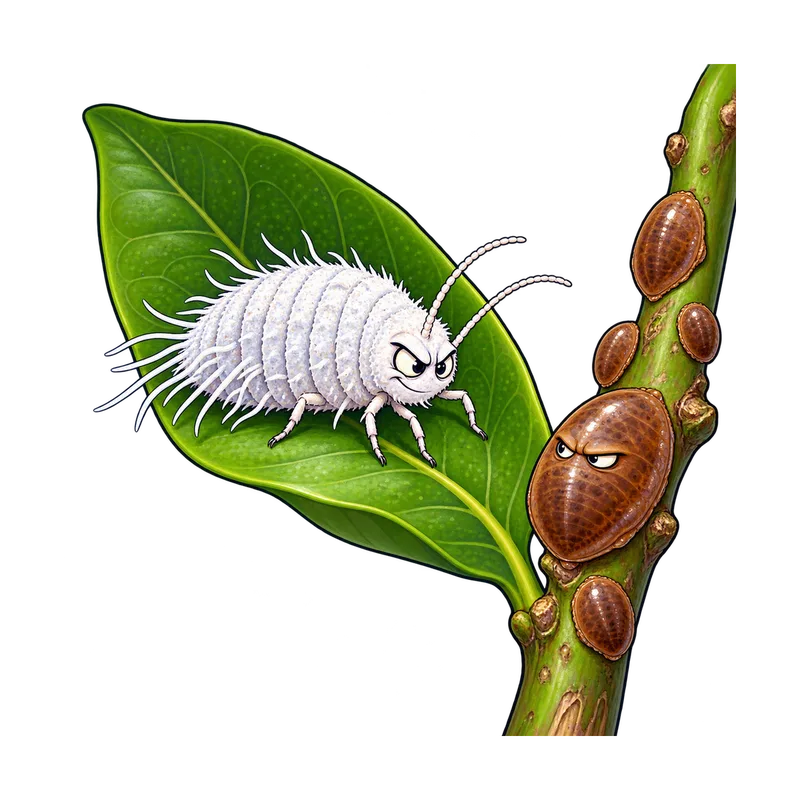
Yes, outdoor mealybugs are handled differently from houseplant mealybugs. Outdoor management relies on conserving natural predators, dealing with ants, and using targeted sprays, while houseplant control depends on physical quarantine, manual removal with alcohol swabs, and indoor safe spot treatments in a closed environment.
What is actually going on
Imagine walking over to your prized fiddle-leaf fig or kitchen-window succulent, only to spot a patch of what looks suspiciously like tiny tufts of cotton wedged into the stem joints. You lean in closer, and one of those fluffy little specks actually moves. You are dealing with mealybugs, and if you have ever tried to deal with them on a houseplant versus a shrub in the yard, you know it feels like two completely different operations. A friend recently asked whether outdoor mealybugs need a totally different playbook than the ones living on indoor plants, and the short answer is yes. Outdoor mealybug management relies on conserving natural predators, watching outdoor temperatures, dealing with honeydew-seeking ants, and applying targeted sprays, whereas houseplant control depends almost entirely on physical quarantine, manual mechanical removal with alcohol swabs, and indoor-safe spot treatments in a closed environment devoid of native predators.
Think of your indoor houseplant as an apartment with zero security. Once a mealybug gets inside, there are no natural predators to stop it, meaning you have to act as the sole security guard with a cotton swab and rubbing alcohol. Chemical pesticide use indoors is severely restricted by human exposure risks, poor ventilation, and the very real chance of burning tender indoor leaves. On the flip side, an outdoor garden operates like a busy neighborhood watch. Ladybugs, lacewings, and parasitic wasps are constantly hunting down pests for a free meal, provided we do not accidentally wipe out the patrol with broad-spectrum chemical sprays.
The physiological feeding mechanism is identical in both settings, as these unarmored, soft-bodied insects extract plant sap and excrete a sticky waste called honeydew. Yet the environment changes everything about how you fight them. Indoors, you are dealing with a stable, isolated microclimate where pests reproduce in overlapping generations without weather interference. Outdoors, you face UV degradation, rainfall that washes away contact sprays, and complex ecological webs where ants act as protective dairy farmers guarding their mealybug livestock from beneficial insects.
How to tell for sure
Spotting these pests usually starts with the naked eye, where you will notice small, oval, soft-bodied insects covered in white, powdery or cottony wax. On houseplants, look closely at leaf axils, petiole junctions, and the undersides of leaves. In outdoor settings, you will usually find them tucked under loose tree bark, along stem nodes, or causing sticky residue on foliage. In turfgrass, they often look like white prill-like specks at the crown nodes and base of stems, accompanied by yellowing or browning grass blades.
You usually need a ten-times to thirty-times hand lens to confirm the details. A magnifying loupe lets you distinguish mobile crawlers from ordinary debris and check for live eggs inside the cottony egg sacs. The microscopic stage, such as identifying specific species by examining dermal pores and ducts, cannot be done at home and usually requires a university diagnostic laboratory. Never try to diagnose a mealybug infestation based solely on a plant bite mark or leaf lesion, because sap-sucking damage can easily mimic other plant maladies.
What usually comes next
Your next moves depend entirely on whether your infested green is sitting on a sunny windowsill or planted right out in the yard. For indoor houseplants, start by moving the affected pot into a strict thirty-day quarantine away from all other vegetation in the room. Grab a cotton swab or toothpick dipped in seventy percent isopropyl alcohol and dab individual bugs, which instantly dissolves their waxy coat. Wash the foliage under a gentle, tepid water stream to dislodge tiny crawlers, and follow up with a labeled insecticidal soap or ready-to-use neem oil spray every week or two for up to four applications.
For outdoor plants, the strategy shifts away from manual alcohol swabs and toward protecting your beneficial insects. Avoid broad-spectrum synthetic pyrethroids or organophosphates, because wiping out ladybugs and lacewings will only trigger a worse pest flare-up later. Use a forceful jet of water from your garden hose to dislodge heavy crawler colonies and rinse away sticky honeydew. If you need to use horticultural oil, insecticidal soap, or botanical pyrethrins, time your applications for late spring when crawlers emerge. Ensure ambient temperatures stay above forty degrees Fahrenheit for twelve to twenty-four hours, but keep them below ninety degrees Fahrenheit to prevent severe leaf burn. If ants are farming your outdoor mealybugs for honeydew, suppress those ant colonies so your native predatory insects can do their job.
When to get help
Certain situations require stepping back and letting professionals handle the workload. If you are managing large shade trees, extensive hedges, or commercial orchards, residential hand-pump sprayers will not cut it, and high-volume canopy treatments or specialized systemic soil injections require the equipment, protective gear, and licensing of a commercial arborist or certified applicator.
Keep a close eye on environmental safety rules as well, since synthetic pyrethroids are extremely toxic to fish and aquatic invertebrates and should never be applied near ponds, streams, or storm drains. When treating edible fruits and vegetables in your garden, you must strictly respect the pre-harvest interval listed on the pesticide label to ensure food safety. Always treat the pesticide label as a legally binding document, never inventing custom mixtures or guessing concentrations. If an accidental human exposure, eye contact, or ingestion occurs, contact a medical clinician, urgent care, or your local poison control center immediately.