
Root mealybugs vs above-ground mealybugs: what is different?
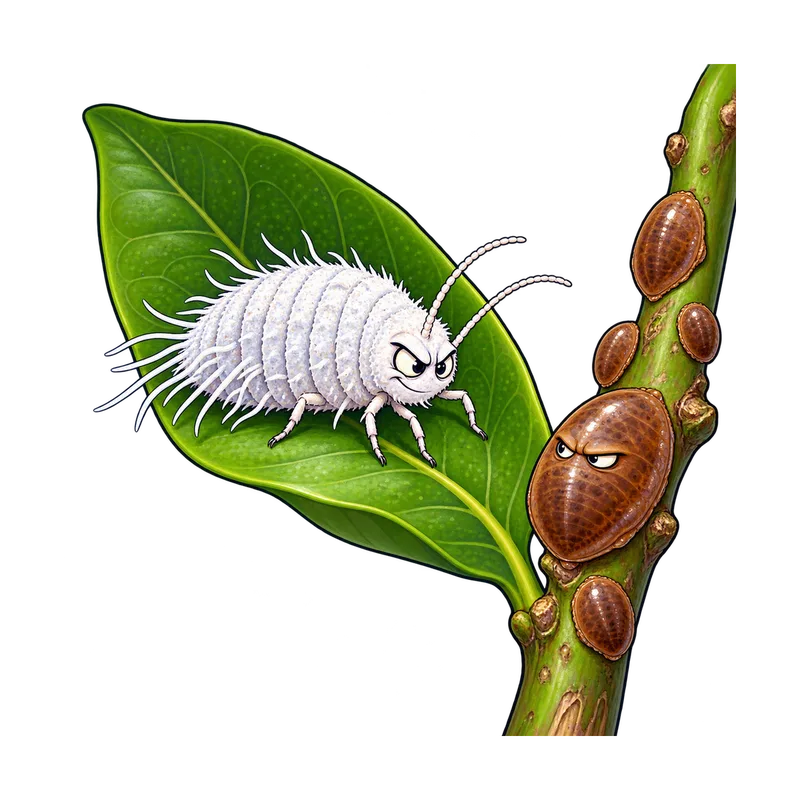
Above-ground mealybugs live on foliage and stems where they appear as cottony white masses, while root mealybugs inhabit the soil and feed directly on roots out of sight. Deciding how to manage them depends entirely on where the bugs are hiding, because spraying leaves will not help pests living underground.
What is actually going on
You notice your favorite potted parlor palm looking a bit sad. The leaves are losing their crisp green, and it seems to be dragging even though you just watered it. When you lean in close to check, you might spot some fluffy white cotton stuck in the leaf joints. That is the classic sign of above-ground mealybugs sitting out in the open like uninvited guests on your living room sofa. But what happens when a plant acts thirsty, droops, and turns yellow despite your best watering habits, yet you inspect every single leaf and find absolutely nothing? That is usually when root mealybugs are at work down below, operating like termites inside the floorboards where you cannot see them.
The difference between these two groups comes down to a matter of real estate and how they manage to ruin your plants. Above-ground mealybugs belong to the family of soft-bodied, piercing-sucking insects that camp out on foliage, stems, node junctions, and crowns. They protect themselves with a waterproof, waxy coating, gorge on plant sap, and leave behind sticky honeydew that quickly grows a layer of black sooty mold. Root mealybugs choose the subterranean route. They inhabit the soil matrix and growing media, anchoring themselves directly onto roots, tubers, and rhizomes. Because they feed entirely out of sight, their presence is masked by dirt. The only clue you get is a generalized physiological decline that looks suspiciously like a severe drought or root rot, even when the potting mix is properly damp.
Both types share a formidable reproductive strategy, starting with tiny mobile juveniles called crawlers. These microscopic youngsters can wander on foot or catch a ride on air currents to find new feeding grounds. Adult females can lay hundreds of eggs inside a protective cottony sac. To make matters worse, garden ants often act like miniature dairy farmers. Ants tend to sap-sucking pests for their sugary honeydew, defending them against natural predators and physically carrying individuals down into the soil to establish new root pastures.
How to tell for sure
Finding out which pest you are dealing with requires a bit of magnification. Above-ground mealybugs are usually straightforward to spot with the naked eye once a population builds up, appearing as small cottony white masses on leaf undersides or stem cracks. In turfgrass, certain mature female mealybugs look remarkably like small slow-release fertilizer prills tucked into crowns and leaf sheaths, often complete with a tiny waxy thread extending from the body. You might mistake these prills for actual garden nutrients at first glance, which is a common trap.
If the leaves are turning yellow and falling off, but everything above the soil line looks clean, you are forced to look underground. Tip the plant carefully out of its container and examine the root ball. Root-dwelling mealybugs leave behind a distinct white, powdery, or cottony wax clinging to the dirt and roots, sometimes with the insects themselves clustered right on the root tips. A hand lens is usually necessary here to tell the tiny young insects and waxy trails apart from ordinary specks of dirt. If you ever need absolute confirmation of the exact species, that usually requires specialist laboratory work, which is hardly ever necessary for regular plant care.
What usually comes next
Deciding what to do next depends completely on where the bugs are hiding, since treating the wrong zone is a waste of effort. If you spray a contact soap on the leaves when the real trouble is happening on the roots down below, the insects will just keep feeding undisturbed. For pests living above ground on houseplants, you can usually isolate the plant, wash the leaves with warm water, and wipe down the stems and undersides using a cotton swab dipped in rubbing alcohol or soapy water. Just avoid soaking delicate leaves in heavy alcohol to prevent leaf burn, and prune away any parts that are too damaged to save.
Contact sprays like insecticidal soaps or horticultural oils can work well on exposed, soft-bodied young pests, as long as you thoroughly wet every single crack and leaf underside where they might hide. However, contact sprays stop working the moment they dry, and they cannot cut through the thick waxy shields of mature adults or reach anything living underground. Pests in the root zone require a different approach entirely. Controlling them usually involves letting the top layer of soil dry out between waterings to stress the insects, paired with soil treatments using approved systemic products or biological agents like helpful microscopic worms and specialized fungi. Always check the product label for specific application rules and crop listings before you begin.
When to get help
While most household and garden problems can be handled with careful physical removal or targeted treatments, certain situations call for outside assistance. If you are managing high-value commercial crops, large golf greens, or sports turf suffering from widespread, unexplained dieback, calling a turf specialist or local agricultural extension agent is usually the smartest path forward.
You should also bring in professionals or local plant health authorities if you suspect a regulated, invasive alien plant pest that requires mandatory reporting. Remember that pesticide product labels are legal documents. Never exceed labeled application rates, use products on unlisted crops, or ignore safety warnings regarding pollinators and sensitive ornamental plants. If a treatment involves restricted chemicals or large-scale systemic applications near sensitive areas, a licensed professional has the proper equipment and training to handle the task safely.