
How do you get rid of mealybugs on orchids?
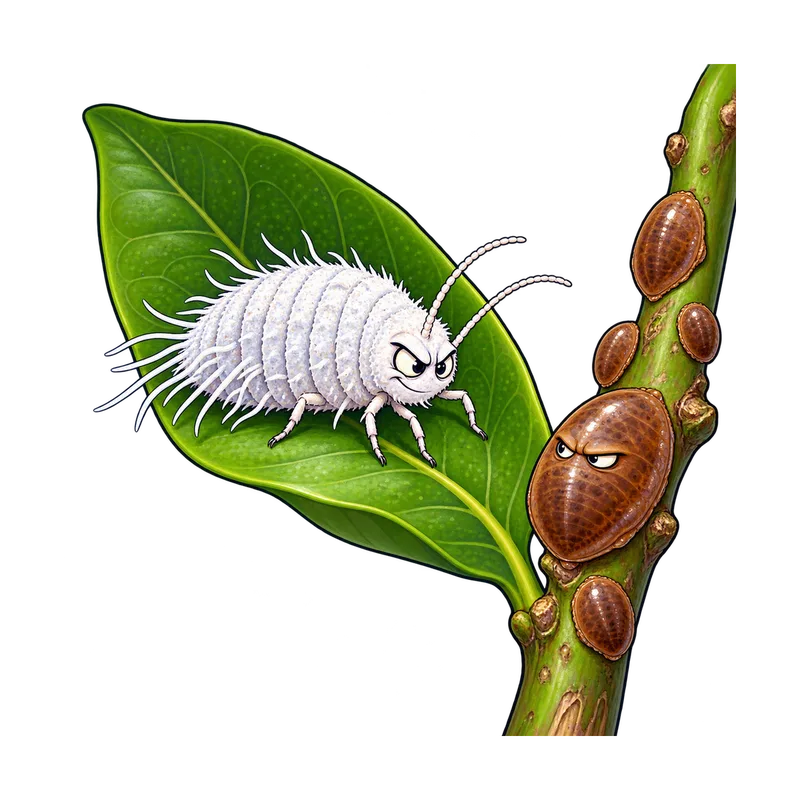
To get rid of mealybugs on orchids, isolate the plant immediately and dab every visible bug and white mass with a cotton swab dipped in 70 percent isopropyl alcohol. Follow up with a thorough spray of insecticidal soap or horticultural oil, repeated every 7 to 10 days for three or four rounds.
What is actually going on
You lean in to admire the new flower spike on your Phalaenopsis and notice something odd tucked into the nook where a leaf meets the stem. It looks like a tiny speck of white fluff, a crumb-sized piece of cotton candy that has no business being there. You touch it with a fingernail and it wobbles. Congratulations, you have mealybugs.
Here is the short answer, because that is what you actually came for: isolate the orchid right now, dab every visible bug and white mass with a cotton swab dipped in 70% isopropyl alcohol, then follow up with a thorough spray of insecticidal soap or horticultural oil, repeated every 7 to 10 days for three or four rounds. That is the whole playbook. Everything else is just explaining why each step matters, because mealybugs are one of those pests where doing half the job is the same as doing nothing.
What you are dealing with is a soft-bodied little insect that feeds by pushing needle-like mouthparts into the plant and drinking the sap. Over time that shows up as yellowing leaves, stunted growth and dropped buds. They also excrete a sticky, sugary residue called honeydew, and if you have ever noticed a strange shine on a leaf or a black dusty film developing on it, that is sooty mold growing on the honeydew. The mold is ugly and it blocks light, which is the last thing a weakened orchid needs.
The reason mealybugs are annoying rather than merely gross is their outfit. Adult females coat themselves and their egg sacs in a white, water-repellent wax, essentially a tiny waterproof raincoat. Plain water beads off them, and so do a lot of casual sprays. Meanwhile a single female can tuck away hundreds of eggs in one of those cottony sacs, and the babies, called crawlers, are pale specks smaller than a grain of salt that wander off to set up new colonies in the leaf sheaths, the stem joints, even down around the roots. So the white blobs you can see are only the visible tip of a much quieter operation.
How to tell for sure
The classic sign is that white fluff, usually sitting in sheltered spots: where a leaf joins the stem, underneath the leaves, inside the folds of a leaf sheath, or along the flower stem. If you gently touch one of the blobs with a swab, it should come away as a soft waxy smear, sometimes with a pinkish or grayish oval bug inside. That bug, a few millimeters long, segmented, slow-moving, is your mealybug. The fluff is not mold, though people reasonably mistake it for that at first.
A few supporting clues help confirm it. Sticky leaves or a sticky surface under the pot point to honeydew. A black, dusty coating that wipes off with a damp cloth is sooty mold, which almost always means a sap-sucking insect was there first. Ants paying unusual attention to an indoor orchid are another hint, since ants farm honeydew producers the way we keep dairy cows. None of these alone is proof, but fluff plus stickiness plus a wobbly bug is about as close to a signed confession as houseplant pests give you.
One honest caveat: you usually cannot identify a pest problem from damage alone. Yellowing leaves and drooping can come from overwatering, too much sun, or a dozen other things, and treating the wrong cause wastes weeks while the real one gets comfortable. What confirms mealybugs is seeing the insects or their waxy sacs, ideally with a cheap 10x magnifying loupe, which also happens to be the best ten dollars you will spend on plant care. Check the plant you suspect, then check its neighbors, because crawlers can walk surprising distances and get carried on air currents, watering cans and your own hands.
What usually comes next
First move: quarantine, and I mean a real one. Pick up the orchid and carry it away from every other plant, ideally into another room entirely. People skip this because it feels fussy, and then they spend a month chasing white fluff across an entire windowsill. One plant in time-out is a minor inconvenience. A shelf-wide outbreak is a hobby you did not sign up for.
If the infestation is light, the cotton swab method is honestly satisfying. Dip the swab in 70% isopropyl alcohol, the plain rubbing alcohol from any pharmacy, and touch each bug and white mass directly. The alcohol melts through the waxy coating and dries the insect out on contact. Two cautions, though. Dab the pests, do not slosh alcohol across the foliage, because too much on the leaf can burn the tissue. And plan on repeating the inspection every few days, because you will miss some. Everyone misses some. That is not a failure, it is just how mealybugs work.
Then comes the spray phase, which is where most treatments quietly fall apart. Use an actual insecticidal soap (potassium salts of fatty acids, in label language) or a horticultural or neem oil product, and read the label before a drop touches the plant. The label is not a polite suggestion; it is the legal and practical instruction sheet, including whether the product is even safe on orchids. Some conventional insecticides carry explicit warnings about leaf burn on orchids and other soft houseplants, so grabbing whatever happens to be under the sink is a gamble. And no, dish soap is not a substitute. Dish detergent is a degreaser, not a true soap, and it strips the protective oils off orchid leaves. It is the classic money-saving trick that ends up costing you a plant.
Coverage matters more than quantity. Mealybugs tuck themselves under leaves, into joints and inside sheaths, so misting the tops of the leaves is like locking the front door and leaving every window open. Spray in the cool of early morning or evening, never in direct hot sun or when temperatures climb above about 85°F (29°C), because soap and oil films on hot leaves cause scorching. Skip the open flowers too, since petals are delicate and can spot or collapse.
Now the part nobody wants to hear: repetition. Contact sprays kill what they touch and then stop working the moment they dry. They do nothing to eggs sealed inside those waxy sacs. The crawlers that hatch over the following days are the vulnerable stage, soft and unwaxed, and catching them is the whole point of the schedule. So treat again every 7 to 10 days, three or four times, and think of it like finishing a course of antibiotics. Stopping after one round because the plant looks clean is exactly how the infestation strolls back in wearing a smug expression. Set a recurring reminder on your phone. Future you will be grateful.
If bugs keep reappearing near the base of the plant no matter what you do, suspect the roots. Unpot the orchid, throw away the old bark or moss, rinse the roots in lukewarm water, clean or replace the pot, and repot in fresh medium. And if a plant is so far gone that the leaves are collapsing and the colony covers everything, the kind choice for the rest of your collection is to seal it in a bag and throw it out. One orchid is replaceable. Twenty infested orchids are a lifestyle.
When to get help
A few mealybugs on one windowsill orchid is a home project, full stop. But there are situations where handing it off is the smart move. If the infestation has spread through a large or valuable collection, if you run a greenhouse or maintain plants commercially, or if you are tempted by systemic insecticides that get absorbed into the plant's tissues, talk to a licensed pest control operator or your local cooperative extension service. Systemic products come with application rules, protective equipment requirements and legal restrictions that exist for good reasons, and a professional deals with those routinely.
On the safety side, give every pesticide basic respect: follow the label, wear what it tells you to wear, keep products away from kids and pets, and store them properly. If a concentrated product gets in someone's eyes, flush with clean water for 15 minutes. If any pesticide is swallowed or someone feels unwell after exposure, call poison control or get medical care right away instead of waiting to see how it goes.
Most of the time, though, this story ends well. Isolate, swab, spray on schedule, and keep inspecting for a few weeks after the last sighting. The orchid forgives, the fluff disappears, and the next time a suspicious white speck shows up, you will know exactly what to do about it.