
How do mealybugs spread between indoor plants?
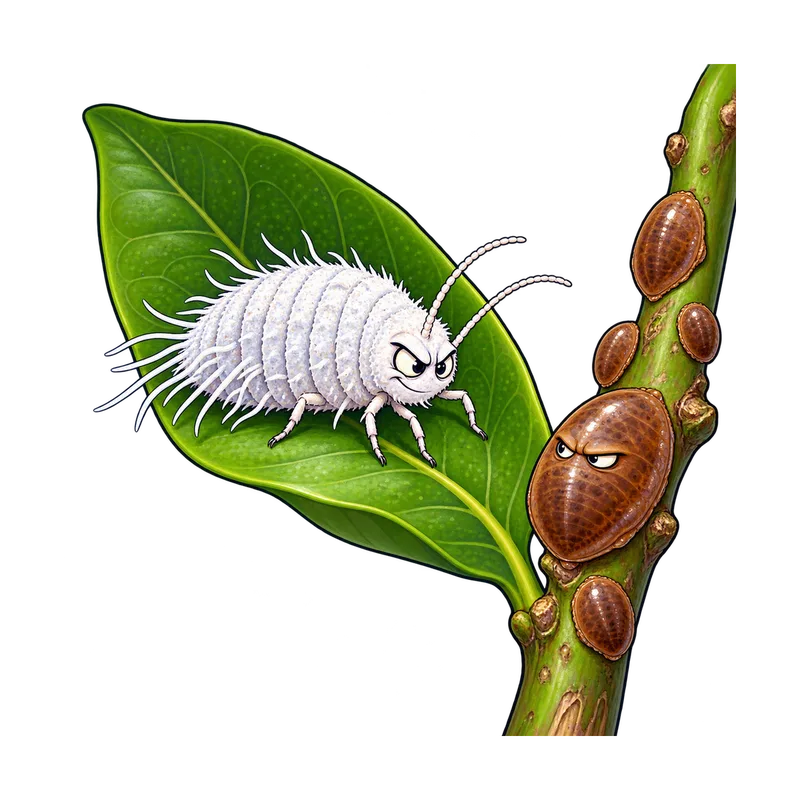
Mealybugs spread between indoor plants primarily through the active crawling of microscopic first instar nymphs across touching foliage and passive transport via indoor air currents and HVAC drafts. They also travel by mechanical hitchhiking on human hands, clothing, and tools, or through the introduction of uninspected infested nursery stock and contaminated potting media.
What is actually going on
Picture walking into the living room on a quiet Sunday, holding your favorite watering can, and noticing a strange, fuzzy white smudge tucked right where the stem meets the leaf on your prized philodendron. You lean in closer, thinking it is just a speck of dust or stray lint, only to watch the little speck slowly wander away. That is a mealybug, and if you have ever wondered how these uninvited guests manage to conquer an entire indoor plant collection when you barely bring anything new home, the answer comes down to tiny travelers and a bit of physics.
Mealybugs spread between indoor plants primarily through the active crawling of microscopic first-instar nymphs across touching foliage, passive transport via indoor air currents and HVAC drafts, mechanical hitchhiking on human hands, clothing, and tools, and the introduction of uninspected infested nursery stock or contaminated potting media. Think of two houseplants sitting too close on a windowsill with their leaves overlapping. To a tiny, newly hatched mealybug, often called a crawler, that overlapping leaf is a multi-lane highway leading straight to an untouched dining room.
Adult female mealybugs are mostly sedentary, spending their lives anchored in tight leaf axils, node junctions, and root crowns, pumping out up to six hundred eggs protected inside a dense, cottony waxy sac. Once those eggs hatch, the tiny crawlers emerge looking for fresh plant sap. Because these crawlers are weightless and active, they easily catch the breeze from a ceiling fan or an air conditioning vent, drifting through the air to land on neighboring pots across the room. They also stick to your fingertips, garden shears, or watering cans when you tend to your plants, turning your own hands into transit vectors without you ever realizing it.
How to tell for sure
Spotting a mealybug problem early usually requires more than a casual glance across the room, especially since these pests love to hide in the tightest, most shadowy architecture of your plants. You usually need to inspect leaf undersides, stem joints, and pot rims using a hand lens to catch them before a massive population takes over.
The most common sign is the appearance of small, white, cottony tufts tucked into crevice joints or along leaf veins. If you look closely, you can usually distinguish living mealybugs from dust or fungal mildew because the bugs have distinct, segmented bodies and will leave a yellowish smear if crushed. Another dead giveaway is the presence of honeydew, a sticky, clear residue that drips down from the feeding sites onto lower leaves and tabletops, which quickly grows a layer of black sooty mold. If your plant is dropping leaves, looking stunted, or showing yellow, crinkled new growth despite proper watering, it is usually time to turn your hand lens toward the hidden folds of the stem.
What usually comes next
Once you find a confirmed infestation, you have to make a practical choice about how to handle the affected plants without risking your entire indoor collection. If the problem is light and localized to just a couple of leaves, you can usually manage it by physically dabbing individual bugs with a cotton swab dipped in rubbing alcohol, which dissolves their protective wax and finishes them off on contact. For broader spot treatments, washing the foliage with water and diluted insecticidal soap can help, but you have to force the spray into every nook and cranny where eggs and adults might hide.
People often assume a single spray wipes out the trouble, but those waxy egg sacs act like waterproof raincoats, protecting the eggs from casual contact liquids. If you decide to treat the plant with insecticidal soaps, horticultural oils, or other registered products, you usually have to repeat the application a few times, spaced a week apart, to catch newly hatched crawlers before they grow their own protective armor. If a plant is overwhelmingly infested throughout its roots and crown, the most sensible choice is often to prune it back severely or double-bag it in plastic and toss it out to save the rest of your indoor jungle.
When to get help
Most household plant pests can be managed with patience, quarantine, and careful cleaning, but certain situations call for stepping back and letting professionals or specialists take over. If you manage a large indoor conservatory, a commercial office plantscape, or a greenhouse collection where stubborn mealybug strains threaten hundreds of valuable specimens, consult a licensed pest control operator or a local university extension entomologist for guidance.
Keep in mind that working with pest treatments and rubbing alcohol requires basic safety precautions, such as wearing protective gloves and making sure your living space has enough ventilation. Never apply agricultural synthetic insecticides indoors unless the product label explicitly approves them for residential houseplant use. If anyone in your household or a pet accidentally swallows chemical pesticides, contact a doctor or your local poison control center right away.