
Whiteflies vs mealybugs: how can you tell?
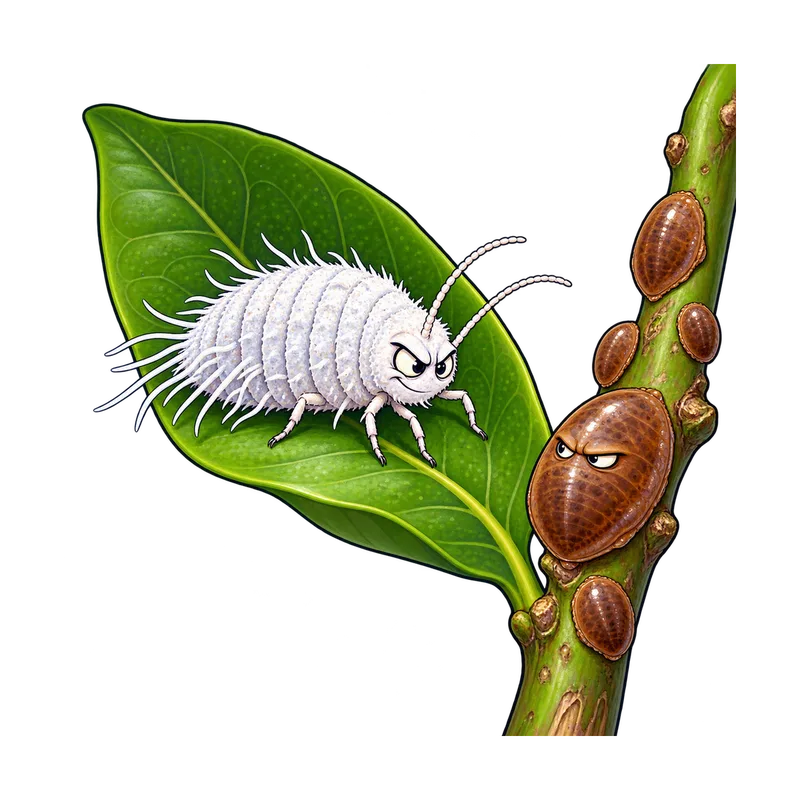
You can tell whiteflies and mealybugs apart by giving the plant a gentle shake, because adult whiteflies flutter into the air in a tiny white cloud, while mealybugs stay put or crawl very slowly. Mealybugs have an oval, segmented body covered in dense cottony wax and prefer tight structural spots, whereas whiteflies are winged and cluster on the shaded undersides of leaves.
What is actually going on
You are standing in the sunroom, coffee cup in hand, leaning over your favorite potted hibiscus. When your sleeve brushes against a stem, a tiny white cloud puffs into the air, settles back down on the foliage, and leaves you wondering what just moved in. Or perhaps you notice a few sticky spots on the windowsill and spot what looks like bits of shredded cotton tucked tightly into the crotches where the leaves meet the stems. You want to know whether you are dealing with whiteflies or mealybugs, and more importantly, whether the same trick will get rid of them.
Both of these pests belong to the same insect family tree and share a nasty habit of piercing plant stems to drink the sugary sap running through the vascular system. Because they feed on liquids rather than solid tissue, they process massive amounts of sugar and excrete a sticky waste called honeydew that coats leaves and draws black sooty mold.
Despite those matching habits, they live very different lives on your plants. Whiteflies are winged insects that prefer to hang out exclusively on the shaded undersides of leaves. Mealybugs are wingless, slow-moving creatures that prefer tight, protected structural spots like stem joints, leaf axils, and crowns. Knowing which one you have changes how you inspect the plant and what you need to do next, because a spray that rolls right off a mealybug's waxy shield will not work the same way against a winged whitefly.
How to tell for sure
The easiest way to tell them apart is to give the plant a gentle shake in broad daylight. If a small cloud of tiny, moth-like white insects flutters into the air before landing right back on the foliage, you are looking at adult whiteflies. If nothing flies away when you disturb the plant, but you still see white specks, look closer with a ten-power hand lens.
Mealybugs usually stay put or crawl very slowly. Under magnification, you will see an oval, segmented body covered in a dense, cottony wax, sometimes with short white fringe filaments around the edges. Whitefly nymphs, by contrast, look like flat, pale yellow, translucent ovals glued permanently to the leaf underside. They do not look like fuzzy cotton at all.
You usually find whiteflies clustered by the dozens on the lower surfaces of younger leaves. Mealybugs prefer enclosed spaces such as beneath loose bark, inside fruit calyxes, or deep within the crown of the plant. If you find bright yellow or orange raised spots that look like tiny fried eggs on your whiteflies, do not panic. That is usually a beneficial fungus doing its job, not a new plant disease.
What usually comes next
Once you have figured out what is living on your plant by using the flight test and a hand lens, your next move depends entirely on where the bugs choose to hide. Adult whiteflies are easy to trap with yellow sticky cards hung right near the leaves, and you can even suck them up with a handheld vacuum early in the morning when the cool air keeps them sluggish. Mealybugs simply ignore those sticky cards because the females lack wings and never take flight.
If you only have a mild mealybug problem on a houseplant on the windowsill, you can usually dab them individually with a cotton swab soaked in rubbing alcohol. When you face heavier numbers of either pest, you typically need to wash the entire plant down with warm water or apply an insecticidal soap spray.
Remember that mealybugs sport a thick, water-repelling wax coat that acts just like a tiny raincoat, making ordinary water mists bead up and roll away without doing much. If you decide to use soap or oil sprays on mealybugs, you usually have to spray with enough pressure to force the liquid into those tight stem joints and break through the wax barrier. Whiteflies demand a different kind of patience because you need to coat the underside of every single leaf, knowing that any missed insect will quickly rebuild the population.
When to get help
Most indoor plant problems and garden flare-ups clear up nicely with a bit of patience, physical cleaning, and targeted sprays, but some situations really do require an expert eye. If you are watching valuable orchard trees or large commercial crops suffer from severe leaf drop, dying branches, or a heavy black coating of mold, your best bet is to call a local extension office or a licensed pest management professional.
If you suspect you have stumbled across an unusual, highly destructive, or regulated exotic mealybug species on new nursery stock, imported produce, or greenhouse plants, you might actually be legally required to report the discovery to your national agricultural or biosecurity authority.
Whenever you reach for a chemical treatment, always read the product label carefully and follow the instructions for safety gear, waiting periods before eating home-grown produce, and rules to protect bees and other pollinators. If anyone in your house suffers an accidental chemical exposure or a severe allergic reaction, do not waste time trying home remedies. Contact a medical clinician, an urgent care clinic, or your regional poison control center right away.