
Can mealybugs spread between houseplants?
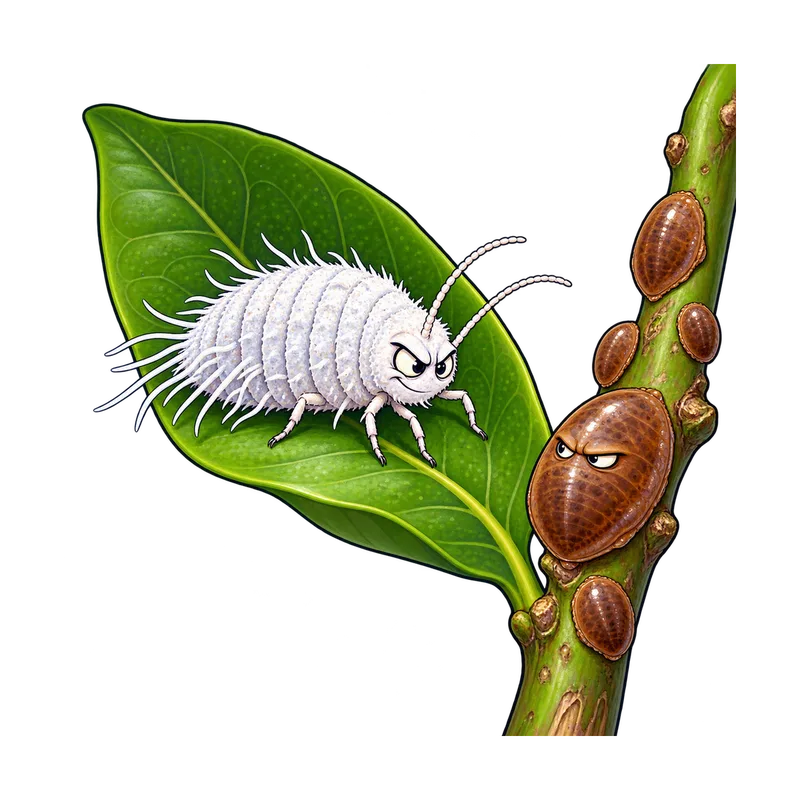
Yes, mealybugs spread readily between houseplants. Their young offspring, called crawlers, walk freely across leaves and tabletops to find a fresh plant, or catch indoor air currents from fans and vents to drift to nearby pots.
What is actually going on
You are watering your fiddle-leaf fig on a quiet Sunday morning when you notice a tiny, powdery white patch tucked into the joint where a leaf meets the stem. You lean in closer, scrape it off with a fingernail, and think nothing of it. Two weeks later, the pothos sitting three pots down on the same bookshelf is covered in the exact same cottony fluff, and you are left wondering how on earth the pests managed to cross open air to find a new home.
The short answer is yes, mealybugs spread readily between houseplants, and they do not even need wings to do it. These soft-bodied, sap-sucking insects are surprisingly mobile during their earliest life stage. When eggs hatch, the tiny, unarmored offspring, often called crawlers, emerge looking like microscopic grains of pepper. These young bugs walk freely across leaves, stems, and tabletops, covering distances independently to find a fresh, uninfested host plant.
If the pots are crammed tightly together on a windowsill, touching foliage acts like a direct footbridge across a highway, letting the pests march straight from one plant to the next without ever touching the shelf below. Beyond walking, crawlers and adults frequently climb to the highest tips of a host plant to catch indoor air currents. Oscillating fans, heating vents, and drafts from open windows pick up these tiny wanderers and drift them across the room to nearby pots.
Humans also act as accidental delivery vehicles during routine plant care. Pruning shears, stakes, watering wands, and even gloved hands carry unseen crawlers or microscopic egg clusters from an infested specimen right into the canopy of a healthy one. Reusing old potting soil or unsterilized containers from a discarded plant introduces dormant stages left behind in organic debris, which explains why an isolated plant can sometimes turn up with an infestation seemingly out of nowhere.
Catching mealybugs early usually depends on looking past the obvious upper surfaces of the leaves and checking the hidden, dark microhabitats where the insects prefer to feed. You will usually find them tucked away tightly inside leaf axils, petiole bases, stem nodes, and the undersides of leaves, protected from casual glances.
The most common visual cue is a distinct white, cottony, or powdery waxy substance that looks like a stray tuft of lint or mold. Unlike common dust, this fluff sticks firmly to the plant tissue. When you look closer, usually with a hand lens or magnifying glass, you can spot the segmented, oval-shaped bodies of the insects moving slowly or anchored firmly into the plant veins.
Another reliable sign is the sticky, clear liquid they excrete as they feed on plant sap. This sweet substance coats nearby leaves and the furniture underneath, soon turning black as sooty mold colonizes the residue. If your plants feel sticky to the touch or develop dark, dusty patches on the lower foliage, mealybugs are usually the culprits even before you spot the white waxy egg sacs.
How to tell for sure
Once you figure out that mealybugs are crawling through your indoor jungle, your biggest call is deciding whether to quarantine the sick plants or just throw them out. If the bugs are hanging out on just a few leaves or a single stem of a favorite plant, wiping them out by hand is usually your best bet. You can take a cotton swab soaked in 70 percent rubbing alcohol and dab each bug you see, which melts their protective waxy coat right on contact.
When the pests have dug down into the root crowns, inner stems, and every tight nook of a thick plant, trying to clean every inch turns into a frustrating, losing game. Plants that are completely overrun usually need to be sealed up in a bag and tossed in the garbage so the rest of your houseplants stay safe from a never-ending cycle of bugs.
If you decide to fight the infestation instead of tramping the plant out to the bin, remember that one round of treatment rarely fixes everything. Mature females drop hundreds of eggs inside hidden waxy shells, and since sprays cannot always punch through those barriers, fresh crawlers will pop out a week or two later. Any solid plan means repeating your treatments every 7 to 10 days to catch the new batch of bugs before they grow up and start laying eggs. Always test any spray on one leaf first and wait a few days to make sure the plant does not burn before you treat the whole thing.
What usually comes next
Most houseplant invasions can be handled right at home if you stay patient, set up a quarantine zone, and keep up with spot treatments. Still, some setups need extra backup. If you are taking care of massive, expensive indoor statement plants or managing an office interior where bugs are threatening your favorite greenery, you will want to talk to a licensed pest control pro or a local university extension bug expert for advice.
Whenever you deal with pest products, from insecticidal soaps to natural oils, always stick strictly to the safety instructions printed on the product label. Throw on long sleeves, long pants, and chemical-proof gloves to keep the stuff off your skin, and spray your plants in a well-ventilated garage or outside instead of inside your living room. Never dump leftover mixes or rinse water down indoor sinks, toilets, or storm drains.
When to get help
If anyone in your home gets strange skin rashes, nagging irritation, or what looks like an allergic reaction after messing with buggy plants or putting on treatments, stop right away and check in with a doctor, an urgent care clinic, or a Poison Control Center. Never try to figure out or treat human health symptoms on your own.